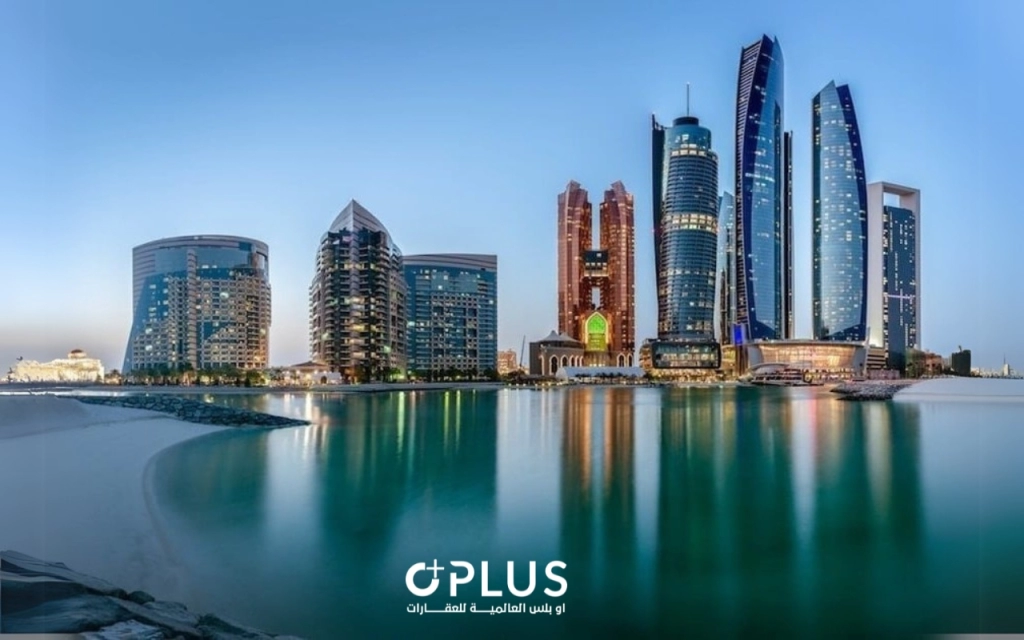
The future of real estate in Abu Dhabi to 2030 is now being shaped by a much larger and more international market than the one buyers were analysing only a few years ago.
Abu Dhabi Real Estate Centre reported AED 117 billion in total real estate transactions during the first half of 2026, up 112% year on year. Sales accounted for AED 86.1 billion, while foreign direct investment reached AED 13.8 billion — already higher than the amount recorded during the whole of 2025.
That growth does not mean every property in Abu Dhabi will appreciate at the same rate.
The stronger long-term case is concentrated around areas with identifiable demand engines: employment, tourism, waterfront lifestyle, financial-sector growth, established rental markets and carefully phased new communities.
Buyers comparing locations can start with Oplus’s Abu Dhabi area guides before narrowing the decision to a project or individual property.
The Short Answer: What Is the Future of Real Estate in Abu Dhabi?
Abu Dhabi enters the second half of 2026 with record transaction activity, rapidly expanding foreign investment and a residential market where demand is currently absorbing a high level of new off-plan supply.
The strongest official evidence comes from ADREC’s H1 2026 market report.
The report shows approximately 409,000 existing residential units, with around 71,000 additional units projected through 2030.
That is an important number.
It means Abu Dhabi is not facing a future with no new supply. A meaningful pipeline is coming.
The investment question is therefore not simply whether Abu Dhabi needs more housing. It is whether demand, employment and population growth can absorb new supply in the specific location and property type a buyer chooses.
Our current view is that Abu Dhabi has strong structural support through 2030, but property selection will become more important as supply expands.
Abu Dhabi Real Estate Has Accelerated Sharply in 2026
The scale of the change is visible in the transaction data.
ADREC reported AED 117 billion of total real estate transactions during H1 2026.
Sales transactions represented AED 86.1 billion across 16,838 deals, while mortgage transactions reached AED 26.7 billion.
For context, the entire Abu Dhabi market recorded AED 142 billion during the whole of 2025.
Oplus covered the earlier acceleration in its Abu Dhabi Real Estate Q1 2026 report, when the market reached AED 66 billion in transactions during only the first three months of the year.
The H1 figures show that the Q1 surge was not simply an isolated month or quarter.
However, investors should distinguish transaction growth from guaranteed future price appreciation.
High transaction value can reflect new launches, larger-ticket projects, stronger mortgage activity and investor demand at the same time.
Off-Plan Property Is Driving Most Residential Sales
One of the most important findings in ADREC’s H1 2026 report is the scale of off-plan activity.
Residential sales reached AED 70.4 billion, and off-plan transactions represented:
89% of residential sales value and 82% of residential transaction volume.
This matters for the 2030 outlook because the market is currently heavily influenced by projects that buyers will receive in future years.
That creates both an opportunity and a risk.
The opportunity is that major masterplans can create new residential destinations and capture demand before areas fully mature.
The risk is that buyers can mistake strong launch sales for proven future rental and resale liquidity.
Before purchasing an off-plan unit, a buyer should examine the developer, payment plan, delivery timeline, competing future supply and likely end-user demand — not only the launch price.
For buyers comparing the two UAE markets, our Abu Dhabi vs Dubai property investment analysis explains why transaction depth, pricing and resale liquidity differ between the two cities.
Abu Dhabi Has About 71,000 New Homes Projected Through 2030
This may be the most important number for long-term investors.
ADREC’s H1 2026 report estimates current residential supply at approximately 409,000 units and projects roughly 71,000 additional residential units by 2030, with deliveries expected to peak around 2028.
The conclusion should not be “oversupply is coming” or “supply will stay tight.”
Neither conclusion can be applied uniformly across the emirate.
Supply risk has to be evaluated by area, property type and delivery year.
A large apartment pipeline on one island does not necessarily weaken villa demand elsewhere.
Likewise, an area with thousands of planned homes can still perform well if jobs, schools, infrastructure and tenant demand expand at the same time.
The practical question for an investor is:
How much competing stock similar to my unit will be delivered before I want to rent or resell it?
That is a better question than simply asking how many homes Abu Dhabi will build.
Rental Demand Is Strong — But Rent Growth Cannot Be Assumed Forever
ADREC recorded approximately 233,000 active residential lease contracts in H1 2026, with a combined lease value of AED 9.3 billion.
The same report showed new-lease prices increasing year on year by approximately:
| Property type | Abu Dhabi | Investment zones |
|---|---|---|
| Apartments | +17% | +21% |
| Villas | +9% | +16% |
These figures help explain why investors are paying more attention to Abu Dhabi’s income-producing property market.
But rising rents also create affordability risk.
If purchase prices continue to grow faster than rents, yields can compress even while headline rental values increase.
That is why buyers should calculate net yield using the actual unit price, service charges, vacancy assumptions and management costs rather than relying on an area-wide advertised ROI.
Investors focused on established apartment demand can compare the detailed Al Reem Island area guide and our Al Reem Island apartments guide.
Foreign Investment Is Becoming a Bigger Part of the Market
Foreign direct investment into Abu Dhabi real estate reached AED 13.8 billion in the first half of 2026, according to ADREC.
That represented a 309% year-on-year increase and exceeded the FDI value recorded during the entire previous year.
Non-resident investors from 116 nationalities participated in the market.
Investment zones attracted approximately AED 75 billion during H1 2026.
This matters because Abu Dhabi’s growth story is becoming less dependent on a narrow domestic buyer base.
International buyers are increasingly part of transaction activity, particularly in designated investment zones.
Foreign purchasers should still understand that ownership rules depend on the exact location and property structure.
Oplus’s guide to buying property in Abu Dhabi as a foreigner explains investment zones, ownership checks and the transaction process in more detail.
ADGM Is Strengthening Housing Demand Around Al Reem and Al Maryah
Abu Dhabi Global Market continues to expand as an employment and financial-services centre.
In its latest H1 2026 update, ADGM reported:
13,974 active licences, a workforce of 49,027 professionals, and a 54% year-on-year increase in assets under management.
That does not automatically translate into higher property prices.
What it does create is a stronger underlying employment base for residential and commercial demand around the financial district.
This is particularly relevant for Al Maryah Island and nearby Al Reem Island.
Al Reem already has a large established apartment market, while Al Maryah is more concentrated around premium commercial, hospitality and residential assets.
For investors, the practical advantage is not simply being “near ADGM.”
Building quality, parking, service charges, unit layout, management and tenant competition remain critical.
Which Abu Dhabi Areas Could Matter Most Toward 2030?
There is no single “best” Abu Dhabi area for every buyer.
Al Reem Island
Al Reem Island combines established apartment stock, city access and proximity to ADGM.
It may suit investors who prioritise a deeper tenant pool and a more established secondary market.
The main risk is inconsistency between individual buildings.
Two towers on the same island can have materially different management, maintenance, service charges and resale demand.
Looking for the perfect property? Contact us now for a free consultation!
Contact us via WhatsAppYas Island
Yas Island apartments combine residential demand with tourism, entertainment and lifestyle infrastructure.
The island can suit both end-users and investors, but buyers should monitor the relationship between entry prices and achievable rents as new projects launch.
Saadiyat Island
Saadiyat Island villas represent a more premium, lower-volume part of the market.
The area’s long-term case is linked to beach access, the cultural district, limited prime land and high-end lifestyle demand.
The trade-off is a smaller resale buyer pool at very high ticket sizes.
Hudayriyat Island
Hudayriyat Island represents a different type of investment case.
Much of its value proposition depends on long-term masterplan delivery and community maturity rather than today’s established rental market.
That makes it more relevant to patient buyers than investors who need immediate income.
Al Raha and Other Established Family Areas
Established communities can be less dramatic than major new launches but may offer a clearer end-user demand profile.
For buyers focused on apartments, our Abu Dhabi apartment buying guide compares the major areas on rental demand, ownership and exit liquidity.
Buyers seeking larger homes can use the Abu Dhabi villa buying guide to compare family-oriented locations and ownership considerations.
What Could Support Abu Dhabi Property Demand Through 2030?
The market has several demand engines operating at the same time.
Economic diversification creates employment outside the traditional oil sector.
ADGM and other business centres bring financial-services and professional workers.
Tourism and cultural investment strengthen lifestyle-led destinations.
Foreign ownership in designated investment zones expands the potential buyer base.
New infrastructure and master-planned communities create additional residential options.
But none of these factors guarantees the performance of an individual apartment or villa.
The most important distinction to make is between a strong city-level story and a strong property-level investment.
Both need to be true.
The Main Risks Between Now and 2030
Supply timing
Approximately 71,000 additional residential units are projected through 2030.
Some locations may absorb this comfortably. Others may face periods where competing stock grows faster than tenant or buyer demand.
High off-plan concentration
With off-plan representing 89% of residential sales value in H1 2026, a large part of current buyer activity relates to future delivery.
Investors should consider what happens when multiple projects complete during similar periods.
Price-to-rent pressure
Rapid price appreciation can reduce investment returns if rental income does not rise at the same pace.
Building-level differences
Area performance does not eliminate weak building management, high service charges or poor layouts.
Exit liquidity
Luxury and specialist properties can appreciate while still taking longer to resell because fewer buyers can afford them.
A project can therefore be attractive for a ten-year owner and unsuitable for someone who may need to exit in two years.
Ready Property or Off-Plan Toward 2030?
The choice depends on what the buyer needs.
Ready property provides more certainty around the building, actual rent, service charges and existing tenant demand.
Off-plan property may offer staged payments and access to newer communities, but requires stronger assumptions about future delivery, rental demand and resale competition.
A buyer seeking income today should analyse a ready property very differently from an investor who is intentionally purchasing a five-to-seven-year masterplan story.
The fact that the wider Abu Dhabi market is growing does not remove this distinction.
Is Abu Dhabi Better for Long-Term Investors Than Short-Term Flippers?
Abu Dhabi can suit long-term buyers particularly well because many of its strongest investment cases depend on gradual area development, infrastructure and employment growth.
That does not mean short-term resale opportunities do not exist.
It means short-term buyers need to be more sensitive to launch pricing, developer inventory and competing off-plan supply.
Long-hold buyers can potentially benefit from community maturity, but they also need to budget for service charges, market cycles and periods where capital growth slows.
The right holding period comes from the asset, not from a blanket rule for the city.
What Should Buyers Watch Between 2026 and 2030?
Instead of trying to predict one Abu Dhabi-wide appreciation percentage, monitor the indicators that actually change the investment case:
Residential deliveries: Is competing supply arriving faster than expected?
Rental contracts and new-lease prices: Is tenant demand absorbing the stock?
Off-plan share: Does the market remain dependent on launch activity?
Mortgage activity: Is end-user financing continuing to support demand?
Foreign investment: Is Abu Dhabi continuing to broaden its international buyer base?
ADGM employment and business growth: Is professional housing demand around the financial district expanding?
Area-level transactions: Which communities continue generating both primary and secondary activity?
These indicators provide a stronger basis for decision-making than a single price forecast.
Abu Dhabi Real Estate Outlook to 2030
The evidence available in 2026 supports a constructive long-term case for Abu Dhabi real estate, but not a blanket prediction that every property will rise.
The market reached AED 117 billion of transactions in only the first half of 2026. Foreign investment expanded sharply. Rental demand remains strong, and major employment and lifestyle centres continue to grow.
At the same time, around 71,000 additional residential units are projected through 2030, and off-plan property already dominates residential sales.
That combination makes selection the central issue for the next phase of the market.
The properties best positioned toward 2030 are likely to be those where price, real end-user demand, supply, building quality and holding period remain aligned.
Buyers should therefore move from asking:
“Will Abu Dhabi real estate grow?”
to asking:
“Will this specific property still have a clear buyer or tenant five years from now?”
For buyers still deciding between the country’s two largest markets, the Abu Dhabi vs Dubai property investment comparison is the logical next step.
Frequently Asked Questions
What is the future of real estate in Abu Dhabi?
Abu Dhabi’s real estate market enters the second half of 2026 with record transaction activity, stronger foreign investment, rising rents and continued new development. The long-term outlook is supported by demand growth, but performance through 2030 will vary significantly by area, property type and supply.
How large is Abu Dhabi’s real estate market in 2026?
ADREC reported AED 117 billion in total real estate transactions during the first half of 2026, including AED 86.1 billion in sales transactions.
How many new homes are expected in Abu Dhabi by 2030?
ADREC’s H1 2026 market report projects approximately 71,000 additional residential units through 2030 on top of an existing supply of around 409,000 units.
Is Abu Dhabi facing an oversupply risk?
There is a significant development pipeline, but oversupply cannot be judged at emirate level alone. Supply needs to be compared with demand in each area and property type. Some locations may absorb new stock more easily than others.
Is off-plan property driving the Abu Dhabi market?
Yes. ADREC reported that off-plan transactions represented 89% of residential sales value and 82% of residential sales volume during H1 2026.
Are rents rising in Abu Dhabi?
ADREC reported year-on-year increases in new lease prices during H1 2026, including approximately 17% for apartments and 9% for villas across the wider market.
Which areas should investors watch toward 2030?
Al Reem Island, Yas Island, Saadiyat Island, Al Maryah and Hudayriyat each have different demand drivers. The correct choice depends on the buyer’s budget, income requirements, holding period and appetite for development risk.
Is Abu Dhabi good for foreign property investors?
Foreign investment has grown significantly, and foreign buyers can own qualifying property within designated investment zones. Buyers should confirm the ownership structure and exact project eligibility before purchasing.
Will Abu Dhabi property prices keep rising until 2030?
There is no reliable basis for guaranteeing property-price growth through 2030. Official data supports strong current demand, but future pricing will depend on supply, affordability, economic conditions and asset quality.
Last reviewed: 22 September 2026
Disclaimer: This article provides general real estate market information and does not constitute financial, legal or investment advice. Market conditions, project availability, regulations and property performance can change.