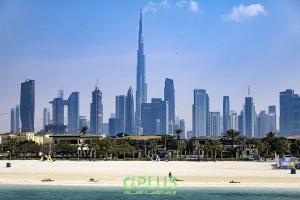

Foreign nationals can purchase freehold property in Abu Dhabi’s designated investment zones, a right established under Law No. 13 of 2019 and administered through the Abu Dhabi Real Estate Centre (ADREC). The government registration fee is 2% of the purchase price — half of Dubai’s 4% DLD fee — and the full buying process for a ready property typically completes in four to eight weeks. Oplus International Realty operates in Abu Dhabi’s investment zone market and this guide reflects the legal framework and cost structure as of June 2026.
Who Can Buy — and What the Law Actually Permits
Foreign nationals — including non-UAE residents — can buy property in Abu Dhabi without a local sponsor, without UAE residency, and without restriction on nationality. The right is limited to designated investment zones. Outside those zones, ownership remains restricted to UAE and GCC nationals.
Law No. 13 of 2019 established freehold ownership rights for foreigners in approved investment areas for the first time in Abu Dhabi. Before that change, non-GCC buyers could only access 99-year usufruct or leasehold arrangements. The 2019 reform aligned Abu Dhabi closer to Dubai’s framework, and the market has grown substantially since — ADREC recorded AED 66 billion in total transactions across 13,518 deals in Q1 2026, with foreign direct investment reaching AED 8.27 billion from buyers of 99 nationalities in the same quarter, according to ADREC’s official April 2026 press release.

Three Ownership Structures Available to Foreign Buyers
Abu Dhabi offers three distinct ownership types. Understanding which applies to your specific unit is not optional — it appears on your title deed and determines what you can do with the property.
Freehold gives full ownership of both the property and the land it sits on, with no expiry date. It is transferable, inheritable, and mortgageable. This is the most common structure in designated investment zones and the one most international buyers expect. Your title deed will state freehold ownership registered with ADREC.
Usufruct grants the right to use and benefit from a property for a defined period — typically up to 99 years — without owning the land. At the end of the term, the property reverts to the landowner. Some communities in Abu Dhabi operate on a usufruct basis rather than full freehold, particularly in older developments predating the 2019 reform. Usufruct can be sold, leased, and in many cases mortgaged within the term, but it is not the same as owning the land.
Musataha is a long-term right to use and develop a plot of land, typically for commercial or mixed-use purposes. It is less common in residential transactions but relevant for buyers considering land development or commercial property.
The practical advice: before signing any agreement, confirm in writing which structure applies to the specific unit, not just the development. Some master developments contain both freehold and usufruct units within the same masterplan.
Confirmed Investment Zones for Foreign Buyers
The following areas are confirmed as designated investment zones where freehold ownership is available to foreign nationals, based on ADREC’s official records and the Oplus ADREC complete guide for 2026:
- Yas Island
- Saadiyat Island
- Al Reem Island
- Al Raha Beach
- Hudayriyat Island
- Ramhan Island
- Al Maryah Island
- Masdar City
- Al Reef
One material point for buyers targeting Al Reem Island: since January 1, 2025, property registration on Al Reem Island is handled by the Abu Dhabi Global Market (ADGM) Registration Authority — not ADREC or DARI. The transfer process takes place through ADGM’s AccessRP platform, and the relevant office is located at Al Khatem Tower on Al Maryah Island. This change was confirmed through ADGM’s official announcement and legal commentary from Al Tamimi & Company. The registration fee structure remains 2%, but the procedural pathway is different from all other Abu Dhabi investment zones. Buyers targeting Al Reem Island specifically should confirm current ADGM procedures before proceeding.
The Eight-Step Buying Process
Step 1 — Confirm the investment zone. Before any offer, verify that the specific unit sits within a designated investment zone and that the ownership structure is freehold. Do this through DARI (dari.ae), ADREC’s digital real estate platform, or directly via the developer’s ADREC registration number. Do not rely on marketing brochures alone.
Step 2 — Agree terms and sign the MOU. For secondary market properties, the buyer and seller sign a Memorandum of Understanding (MOU) that sets out the agreed price, deposit (typically 10%), and key conditions. This document is binding and the deposit is held by the agent. For off-plan, the developer’s Sales and Purchase Agreement (SPA) is the primary contract.
Step 3 — Apply for a No Objection Certificate. The seller obtains a No Objection Certificate (NOC) from the developer confirming the property is free of service charge arrears and the developer consents to the transfer. NOC fees typically range from AED 500 to AED 5,000 depending on the developer.
Step 4 — Arrange financing if required. If using a mortgage, the bank issues a pre-approval letter before the NOC stage and confirms a formal offer after property valuation. All Abu Dhabi mortgage transactions are registered through the DARI platform. The bank arranges the mortgage contract and registers it before transfer.
Step 5 — Transfer through ADREC (or ADGM for Al Reem). Both buyer and seller, or their authorised representatives with a notarised Power of Attorney, attend the transfer. All documentation is submitted through DARI for most zones. For Al Reem Island, the transfer goes through ADGM’s AccessRP system. The 2% registration fee is paid at this stage.
Step 6 — Pay all fees. Registration fee, agency commission, NOC fee, and any applicable mortgage registration charges are settled at or before transfer.
Step 7 — Receive the title deed. ADREC issues the title deed (or ADGM for Al Reem Island) confirming the buyer’s ownership. The title deed certificate incurs an additional charge of AED 1,000.
Step 8 — Register tenancy if leasing. If the property will be rented out, the tenancy contract must be registered through ADREC’s Tawtheeq system via the TAMM platform. An unregistered tenancy is not legally enforceable in Abu Dhabi.
For ready properties, the full process from MOU signing to title deed receipt typically runs four to six weeks, depending on NOC processing times and financing. Off-plan purchases follow a different track — the SPA is registered with ADREC at launch, and title is issued at handover.
The Full Cost Breakdown
Every buyer should budget for these costs before making an offer. All figures are confirmed from Tier 1 sources as of 2026.
| Cost Item | Amount | Paid to |
|---|---|---|
| Registration fee | 2% of purchase price (split equally between buyer and seller by convention, so 1% each) | ADREC / ADGM |
| Title deed certificate | AED 1,000 | ADREC |
| Agency commission (secondary market) | 2% of purchase price | Licensed agent |
| NOC fee | AED 500 – AED 5,000 | Developer |
| Mortgage arrangement fee (if applicable) | ~1% of loan amount | Bank |
| Mortgage registration fee | 0.1% of loan amount | ADREC via DARI |
| Property valuation (if mortgaged) | AED 2,500 – AED 3,500 | Bank-appointed valuer |
| VAT on services | 5% on agent and legal fees | N/A |
Sources: Executive Council Resolution No. 49 of 2018 (registration fee); Bloom Properties official fee guide 2026 (title deed, mortgage registration); CBUAE mortgage regulations (mortgage fees).
For a cash purchase at AED 2 million, total transactional costs typically run between 4% and 5.5% of the purchase price, based on ADREC guidance. Mortgage buyers should budget an additional 2% to 3.5% for financing-related charges. Dubai’s equivalent total cost for a cash buyer runs higher — the DLD transfer fee alone is 4% before any other charges.
Mortgage Framework for Foreign Buyers
Foreign buyers resident in the UAE can borrow up to 80% of the property value for a first purchase under AED 5 million, under the Central Bank of the UAE’s mortgage framework. The minimum down payment is 20%.
Non-resident buyers — those without UAE residency — face stricter terms. Loan-to-value ratios for non-residents typically run between 50% and 65%, meaning a minimum down payment of 35% to 50%. Income documentation requirements are more extensive, and most lenders require international income verification through bank statements, tax returns, or equivalent documentation from the buyer’s country of residence.
The banks most consistently active in foreigner-focused mortgage products in Abu Dhabi include First Abu Dhabi Bank (FAB), Abu Dhabi Commercial Bank (ADCB), and Emirates NBD. All three have established expatriate lending programmes with English-language documentation.
Non-residents are often limited to ready, completed properties within approved freehold zones. Off-plan mortgage products exist but are less common and typically available only from select lenders at or near handover.
Off-Plan vs. Secondary Market — The Practical Difference
For buyers considering an off-plan purchase in Abu Dhabi, the regulatory framework is materially stronger than many markets globally — and has been tightened further in 2025 and 2026.
Under Law No. 3 of 2015 as amended by Law No. 2 of 2025, all buyer payments for off-plan properties must be deposited into an ADREC-supervised escrow account. Developers cannot withdraw from that escrow until at least 20% of construction has been verified complete by an ADREC-approved engineering inspector. Under Administrative Decision No. 24 of 2025, developers seeking access to escrow funds before the 20% threshold must provide bank guarantees and submit approved cost estimates to ADREC. These rules mean buyer funds in Abu Dhabi’s off-plan market are ring-fenced from the developer’s operating finances from the moment of booking.
Buyers should verify three things before signing any off-plan SPA in Abu Dhabi: that the developer holds a current ADREC off-plan licence, that the project has a registered ADREC escrow account with a licensed escrow agent, and that the project appears in DARI’s project registry. All three can be checked through dari.ae before committing any funds.
Secondary market purchases carry no construction risk but do require careful title verification. Run a title search through DARI or ADGM (for Al Reem Island) to confirm no registered encumbrances, unpaid service charges, or disputes before signing the MOU.
Three Mistakes Foreign Buyers Make in Abu Dhabi
Based on the inquiries Oplus receives from international buyers considering Abu Dhabi, the same three errors appear repeatedly — and each is avoidable with the right verification.
Mistake 1 — Assuming “UAE freehold” applies everywhere. Marketing materials frequently describe a development as “freehold” without specifying whether the specific unit is freehold, usufruct, or in a zone where foreign ownership is permitted. In Abu Dhabi, only properties within designated investment zones qualify for foreign freehold. Verify the zone status and ownership structure through DARI before signing anything.
Mistake 2 — Treating Abu Dhabi and Dubai as the same regulatory environment. They are not. Abu Dhabi’s registration fee is 2%, not 4%. Abu Dhabi’s off-plan escrow framework operates under different legislation from Dubai’s Law No. 8 of 2007. Al Reem Island registers through ADGM, not ADREC. The process, the platform, and the governing law differ — and a buyer who assumes Dubai rules apply in Abu Dhabi will encounter friction at the transfer stage.
Mistake 3 — Skipping DARI verification on off-plan purchases. Some buyers sign off-plan SPAs based on developer presentations without checking whether the developer has an active ADREC licence or whether an escrow account exists for the specific project. In Abu Dhabi, this check takes under five minutes on dari.ae and is the single most important step a foreign off-plan buyer can take before committing funds.
For a broader picture of Abu Dhabi’s regulatory environment, Oplus’s ADREC guide covers the full regulatory framework. For current properties available in Abu Dhabi’s investment zones, Oplus maintains active listings across Hudayriyat Island and other key freehold districts.
FAQ
Do I need UAE residency to buy property in Abu Dhabi?
No. Foreign nationals can purchase property in Abu Dhabi’s designated investment zones without UAE residency. You need a valid passport and identification for registration. Non-residents can buy, own, sell, and lease property in approved freehold zones. Residency is not a legal requirement for property purchase, though mortgage terms are stricter for non-residents, with loan-to-value ratios typically capped at 50–65% versus 80% for UAE residents.
What is the registration fee for property in Abu Dhabi?
The registration fee is 2% of the purchase price, confirmed under Executive Council Resolution No. 49 of 2018 and maintained as the standard rate in DARI registration flows as of 2026. By convention, this is split equally — 1% paid by the buyer, 1% by the seller. An additional AED 1,000 is charged for the title deed certificate. This compares to Dubai’s 4% DLD transfer fee, making Abu Dhabi’s transaction cost lower on the government fee component.
How long does buying property in Abu Dhabi take?
For ready (secondary market) properties, the full process from MOU signing to title deed receipt typically takes four to six weeks, depending on NOC processing by the developer and any financing requirements. Cash purchases are faster than mortgage-backed purchases. Off-plan purchases do not involve a transfer at the time of signing — the SPA is registered, and title is issued at handover, which follows the project’s construction timeline.
What is the difference between freehold and usufruct in Abu Dhabi?
Freehold gives full, indefinite ownership of the property and land, with no expiry and full transferability. Usufruct grants the right to use and benefit from a property for a set period (up to 99 years) without owning the land; at term end, it reverts to the landowner. Both can be sold and leased within the term, but usufruct does not appear on a standard title deed as ownership. Buyers should confirm which structure applies before signing any agreement, as some Abu Dhabi developments include both types.
Is Al Reem Island different from other Abu Dhabi investment zones?
Yes, materially. Since January 1, 2025, Al Reem Island property registration is handled by the Abu Dhabi Global Market (ADGM) Registration Authority through its AccessRP digital platform, not ADREC or DARI. The transfer office is at Al Khatem Tower, Al Maryah Island. The 2% registration fee applies, but the process, the platform, and the governing law (ADGM Real Property Regulations 2024) differ from all other Abu Dhabi investment zones. Buyers targeting Al Reem Island should verify current ADGM procedures before proceeding.
How are off-plan buyer payments protected in Abu Dhabi?
Under Law No. 3 of 2015 as amended by Law No. 2 of 2025, all off-plan buyer payments must be deposited into an ADREC-supervised, project-specific escrow account. Developers cannot withdraw funds until at least 20% of construction is verified complete by an approved inspector. Administrative Decision No. 24 of 2025 added further conditions for early escrow access, requiring bank guarantees. Before signing any off-plan SPA in Abu Dhabi, verify through dari.ae that the developer has an active ADREC licence and a registered escrow account for the specific project.
Can I get a mortgage as a non-resident buying in Abu Dhabi?
Some UAE banks will lend to non-residents, but terms are stricter. Loan-to-value ratios for non-residents typically run at 50–65%, versus up to 80% for UAE residents buying a first property under AED 5 million. Non-residents need stronger income documentation — often including international bank statements, tax returns, or equivalent proof from their country of residence. Banks with active non-resident programmes include First Abu Dhabi Bank, ADCB, and Emirates NBD, though terms vary by applicant profile.
What documents does a foreign buyer need for the property transfer?
A standard document set for a foreign buyer includes: valid passport (minimum six months validity recommended), proof of address, bank statements or proof of funds for a cash purchase, and a notarised Power of Attorney if a representative is acting on the buyer’s behalf. Mortgage buyers additionally need the bank’s offer letter, property valuation report, and mortgage registration documentation. All documentation is submitted digitally through DARI (or ADGM AccessRP for Al Reem Island transactions).
Does buying property in Abu Dhabi qualify me for the Golden Visa?
Buying property valued at AED 2 million or more can qualify a buyer for a UAE Golden Visa. In Abu Dhabi, the ADRO (Abu Dhabi Residents Office) requirement is that the investor’s equity — not just the property value — must be at least AED 2 million, and the property must be completed (not under construction). This is stricter than Dubai’s post-February 2026 framework, where the total property value counts regardless of mortgage balance. Buyers targeting the Golden Visa through Abu Dhabi property should verify current ADRO requirements at adro.gov.ae before purchase.
Written by: Oplus International Realty Editorial Team
About Oplus: Licensed UAE real estate brokerage based in Abu Dhabi, covering Abu Dhabi and Dubai off-plan, secondary market, and investment properties. RERA registered. oplusrealty.com
Last reviewed: June 2026
Disclaimer: This article is for informational purposes only and does not constitute financial, legal, or investment advice. Consult a RERA-licensed professional and a qualified UAE lawyer before any property decision.
Sources: Abu Dhabi Real Estate Centre (ADREC) — official site: adrec.gov.ae; Q1 2026 press release (AED 66B, 13,518 transactions, FDI AED 8.27B), April 7, 2026 Law No. 13 of 2019 — Abu Dhabi foreign freehold ownership reform Executive Council Resolution No. 49 of 2018 — 2% property registration fee Law No. 3 of 2015 as amended by Law No. 2 of 2025 — Abu Dhabi off-plan escrow framework Administrative Decision No. 24 of 2025 — ADREC early escrow conditions ADGM official site: adgm.com — Al Reem Island real estate registration (effective January 1, 2025) Al Tamimi & Company — legal briefing on Al Reem Island ADGM transition, December 2024 Bloom Properties official fee guide 2026 — bloomoroperties.ae (registration fee, title deed, mortgage registration) Central Bank of the UAE (CBUAE) — mortgage LTV regulations ADRO (Abu Dhabi Residents Office) — adro.gov.ae — Golden Visa real estate investor requirements