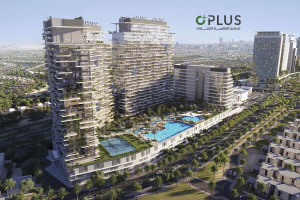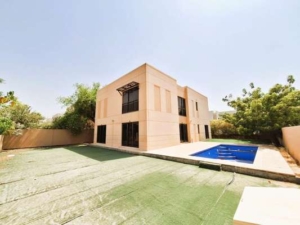

Dubai real estate investment in 2026 is no longer a simple “buy anywhere” market. Oplus International Realty analyses DLD and Savills data to explain where investors should look, how to compare ROI, and which risks matter before buying apartments, villas or off-plan property.
Dubai investment in 2026 needs a sharper filter
Dubai’s property market is still active, but buyers need better selection. DLD reported AED 252 billion in total real estate transactions in Q1 2026, up 31% year on year. That confirms market depth, not a free pass to buy every project.
The same DLD update reported AED 173 billion in real estate investments across 57,744 investments during Q1 2026. It also recorded 29,312 new investors, up 14%.
Those numbers show capital is still entering Dubai. Yet Savills reported that Dubai recorded around 45,208 residential transactions in Q1 2026, down 17% quarter on quarter, while off-plan accounted for 72% of transactions.
This is the real picture. Dubai is strong, but more selective. A good investment in 2026 depends on rent depth, resale demand, entry price and holding period.
For official transaction basics, start with Oplus’s Dubai Land Department guide.
The 2026 investor question is not “where is the highest ROI?”
The better question is: “Which area fits my capital, tenant profile and exit plan?” Many investors lose money by chasing a headline yield without checking building quality, service charges or resale liquidity.
Dubai has several investment paths:
- Rental income from ready apartments
- Capital growth from off-plan property
- Family rental demand from villas and townhouses
- Short-term rental income in tourism-led areas
- Golden Visa-linked property ownership
- Below-market buying in resale pockets
- Long-hold assets in master communities
Each path needs a different area. A studio in JVC, a villa in Dubai Hills Estate and an off-plan townhouse in DAMAC Islands are not the same investment type.
For area-level comparison, use Oplus’s best Dubai investment areas 2026 guide with this article.
Dubai market metrics investors should read first
Investors should read three layers of data before choosing an area.
First, transaction depth. DLD’s Q1 2026 figures show the scale of market activity. A deep market gives investors more pricing signals and a wider buyer pool.
Second, off-plan versus ready balance. Savills reported that off-plan accounted for 72% of residential transactions in Q1 2026. This shows developer launches still shape demand, but it also means investors must check future supply.
Third, rental index data. DLD’s Rental Index lets users calculate average rental values and possible rent increases by area, property type and contract details. It should support rent assumptions before purchase.
A buyer who ignores rental data may overpay for projected income. A buyer who ignores supply may struggle at resale.
Best-fit areas by investor type
Dubai’s investment areas should not be ranked as one simple list. The right area depends on the buyer.
| Investor type | Better-fit areas | Why it fits | Main risk |
|---|---|---|---|
| Entry-level rental investor | JVC, Arjan, Dubai Silicon Oasis, Al Furjan | Larger tenant pool and lower entry price | High competition from similar units |
| Mid-budget family investor | Dubai Hills Estate, Town Square, Mudon, Arabian Ranches 3 | Family demand and stronger community use | Entry price can reduce yield |
| Luxury long-hold buyer | Palm Jumeirah, Dubai Marina, Downtown Dubai, Business Bay | Global demand and stronger resale story | Smaller buyer pool at high ticket size |
| Off-plan growth buyer | DAMAC Islands, Dubai South, Dubailand, Dubai Islands | Payment plans and future community growth | Delivery and supply timing |
| Short-term rental investor | Downtown, Dubai Marina, Palm Jumeirah, JBR, Business Bay | Tourism and business-travel demand | Licensing, seasonality and management costs |
The table is a starting point, not a recommendation. A weak unit in a strong area can still underperform.
For discounted-entry analysis, read Oplus’s Dubai below-market areas 2026 guide.
Apartments: better for liquidity and rental depth
Apartments are usually easier for first-time Dubai investors because the entry price is lower and tenant demand is wider. They can work well in areas with job access, transport links, retail and active leasing demand.
Good apartment-investment filters include:
- Building age
- Service charges
- Maintenance quality
- Parking
- Chiller setup
- Layout efficiency
- Metro or road access
- Number of similar listings
- Actual rent achieved, not only advertised rent
Apartments can suit investors who want easier resale and more tenant choice. The downside is competition. If a building has many identical units, rent pressure can rise quickly.
Areas such as JVC, Arjan, Dubai Marina, Business Bay, Al Furjan and Dubai Hills Estate can all work, but for different budgets and tenant profiles.
For price-sensitive buyers, compare Oplus’s affordable 1-bed apartments in Dubai and affordable 2-bedroom apartments in Dubai guides.
Villas and townhouses: better for end-user demand
Villas and townhouses can offer a stronger end-user story, especially for families seeking space, schools, parks and quieter community living. They may not always give the highest rental yield, but they can hold demand well when supply is limited.
The stronger villa and townhouse investment areas usually have:
- Community facilities
- Schools or school access
- Family-sized layouts
- Parking and storage
- Park or green-space access
- Clear entry and exit routes
- Established resale demand
Dubai Hills Estate, Arabian Ranches 3, Mudon, Tilal Al Ghaf, DAMAC Hills 2 and selected Dubailand communities often appear in investor shortlists for this reason.
The main risk is affordability. If prices rise faster than rents, the yield becomes weaker. Service charges and maintenance also matter more as unit size increases.
For a family-led master community view, use Oplus’s Dubai Hills Estate property guide 2026.
Off-plan property: stronger upside, higher timing risk
Off-plan property remains a major part of Dubai’s investment market. Savills reported that off-plan transactions made up 72% of residential transactions in Q1 2026.
That does not mean every off-plan project is safe. It means investors are still using payment plans and future delivery as part of their strategy.
Off-plan can work when:
- The developer has a strong delivery record
- The payment plan matches the buyer’s cash flow
- The location has a clear demand reason
- The launch price is fair against ready comparables
- The exit plan is realistic
- The investor can hold beyond handover if needed
Off-plan is risky when the buyer depends on quick flipping, ignores transfer rules or assumes every launch will reprice upward.
For project-specific checks, see Oplus’s DAMAC Islands buyer guide and DAMAC Islands Dubai 2026 project guide.
ROI should be calculated after costs, not before
Dubai ROI should be calculated after ownership costs. Many investors compare gross rent against purchase price only. That gives a cleaner number, but not a true decision.
A better ROI check includes:
| Cost / factor | Why it matters |
| Purchase price | Determines yield base |
| DLD transfer costs | Raises entry cost |
| Agency commission | Affects total acquisition cost |
| Service charges | Can reduce annual net income |
| Maintenance | Higher for older or larger units |
| Vacancy | No unit is rented every day forever |
| Property management | Needed for overseas investors |
| Mortgage cost | Can change net cash flow |
| Cooling and utility setup | Affects tenant demand |
| Resale fees | Affects exit return |
DLD’s Rental Index can help test rent assumptions. It does not replace a building-level rent check, but it helps investors avoid unrealistic income claims.
For a deeper comparison, use Oplus’s rental yield vs capital growth Dubai 2026 guide.
Golden Visa can support the strategy, but should not be the only reason
DLD’s Golden Visa Investor service allows a real estate investor who owns property with a purchase value of AED 2 million or more to apply for a 10-year renewable residence permit, subject to conditions.
The service page also states that if the property is mortgaged, a bank letter may be required showing the paid amount and balance. The applicant must also be inside the UAE.
This can make Dubai property more useful for investors who want residency planning. Yet the visa angle should not make a weak property look strong.
A property should first make sense as an asset. The Golden Visa is an added benefit, not a substitute for location, rent, resale demand and legal checks.
For visa details, see Oplus’s UAE Golden Visa guide.
Mortgage buyers need a different investment model
A cash buyer and a mortgage buyer do not face the same risk. Mortgage costs can reduce net income, especially if the rent does not cover repayments, service charges and vacancy.
Before applying, investors should check:
- Down payment
- Debt-burden ratio
- Bank valuation
- Interest rate type
- Mortgage tenure
- Early settlement terms
- Rental income assumptions
- Service charges
- Emergency cash buffer
A strong rental yield on paper can become weak after finance cost. This is why mortgage buyers should stress-test the unit with lower rent and higher vacancy.
For finance checks, read Oplus’s Dubai mortgage eligibility guide 2026.
Short-term rental investment needs stricter checks
Short-term rental can produce higher gross income in strong tourism areas, but it also carries higher management effort and seasonal risk.
It can work in areas such as Downtown Dubai, Dubai Marina, Palm Jumeirah, JBR and Business Bay. It can also fail if the building has heavy competition, weak furnishing, poor management or strict building rules.
Short-term rental investors should check:
- Building permission
- Holiday-home licensing route
- Furnishing cost
- Cleaning and guest management
- Platform fees
- Seasonality
- Occupancy assumptions
- Damage and maintenance costs
- Local competition
- Net income after management
Do not compare short-term gross revenue with long-term net rent. They are different models.
For this route, use Oplus’s Dubai Airbnb investment communities 2026 guide.
What Oplus is seeing from Dubai investor enquiries
Based on Oplus investor enquiries in 2026, buyers are becoming more cautious. They still want Dubai exposure, but they are asking better questions about rent, resale, payment plans and oversupply.
The most common enquiry patterns are:
- Buyers under AED 1.5M looking for apartment income
- Investors around AED 2M asking about Golden Visa fit
- Families comparing townhouses against larger apartments
- Overseas buyers asking about off-plan payment schedules
- Short-term rental buyers asking about net income
- Investors checking whether 2026 is too late to enter Dubai
This is a healthier market. Buyers who ask about service charges, tenant demand and exit timing are less likely to overpay.
Risk framework before buying in Dubai
Dubai property investment still carries risk. The question is whether the risk is priced correctly.
Use this framework before choosing a unit.
| Risk | How to reduce it |
| Overpaying at launch | Compare with ready transactions and nearby supply |
| Weak rental demand | Check actual rents, not advertised rent only |
| High service charges | Request latest service-charge data before offer |
| Delivery delay | Review developer track record and escrow details |
| Low resale liquidity | Check how many similar units are listed |
| Mortgage pressure | Stress-test interest rate and vacancy |
| Short-term rental weakness | Model net income after costs |
| Poor building management | Inspect common areas and reviews |
| Area immaturity | Check schools, roads, retail and handover pipeline |
A good deal survives stress testing. A weak deal only works in a perfect scenario.
2026 decision model
Use this decision model before buying.
| Your goal | Better property type | Better area type | Holding period |
| Stable rental income | Ready apartment | Mature rental area | 3 to 5 years |
| Family tenant demand | Townhouse or villa | Master community | 5 to 7 years |
| Capital growth | Off-plan unit | Growth corridor | 5 years or more |
| Golden Visa | AED 2M+ qualifying asset | Strong resale area | Long term |
| Short-term rental | Furnished apartment | Tourism/business district | 3 years or more |
| Lower entry price | 1-bed apartment | Emerging rental community | 3 to 5 years |
This model prevents one common mistake: buying an off-plan unit while expecting ready-property rental income.
Final verdict
Dubai real estate investment in 2026 still offers strong opportunity, but the market is more selective than it was during the fastest growth phase. DLD data shows deep activity and strong investor inflows, while Savills data shows moderation and a more cautious buyer mood.
The best investment is not always the cheapest unit or the newest launch. It is the asset with a clear tenant, realistic rent, fair entry price, manageable costs and a believable exit plan.
Dubai rewards investors who think in systems. Area, building, unit, rent, costs and timing all need to work together.
FAQs
Is Dubai real estate still a good investment in 2026?
Dubai real estate can still be a good investment in 2026 for selective buyers. DLD reported AED 252 billion in total transactions in Q1 2026, showing strong market depth. Investors should still check rent, service charges, resale liquidity and supply before buying.
What is the best area to invest in Dubai in 2026?
There is no single best area for every investor. JVC, Arjan and Al Furjan may suit entry-level apartment buyers. Dubai Hills Estate and Mudon may suit family demand. Palm Jumeirah, Dubai Marina and Downtown Dubai may suit luxury or short-term rental strategies.
Is off-plan property a good investment in Dubai?
Off-plan can work if the developer, location, payment plan and entry price are strong. Savills reported that off-plan made up 72% of Dubai residential transactions in Q1 2026. That shows demand, but buyers still need to check delivery risk and resale competition.
How should I calculate ROI in Dubai property?
Calculate ROI after costs. Include purchase price, DLD fees, commission, service charges, maintenance, vacancy, mortgage cost and management fees. Gross yield alone can mislead investors because it ignores the costs that reduce net annual income.
Is Dubai better for rental yield or capital growth?
Dubai can support both, but not in every area. Entry-level apartments may offer stronger rental yield, while prime or growth areas may suit capital growth. Investors should decide whether they want income, appreciation or a balanced strategy before choosing a unit.
Can a Dubai property investment help with Golden Visa?
Yes, subject to official conditions. DLD’s Golden Visa Investor service allows property investors with purchase value of AED 2 million or more to apply for a 10-year renewable residence permit. Mortgaged properties may need a bank letter showing the paid amount and balance.
Are Dubai villas better than apartments for investment?
Villas and townhouses can suit family demand and long-hold investors, but they often require higher capital. Apartments can be easier for first-time investors because entry prices are lower and tenant pools are wider. The better option depends on budget and target tenant.
What is the biggest risk for Dubai property investors in 2026?
The biggest risk is buying based on a headline promise instead of net numbers. Weak rent assumptions, high service charges, poor building quality, oversupply and unclear exit plans can reduce returns even when the wider Dubai market is active.
Written by: Oplus International Realty Editorial Team
About Oplus: Licensed UAE real estate brokerage based in Abu Dhabi, covering Abu Dhabi and Dubai off-plan, secondary market, and investment properties. RERA registered. oplusrealty.com
Last reviewed: 3 June 2026
Disclaimer: This article is for informational purposes only and does not constitute financial or investment advice. Consult a RERA-licensed professional before any property decision.
Sources
- Dubai Land Department — Dubai real estate transactions Q1 2026
- Dubai Land Department — Real Estate Data
- Dubai Land Department — Rental Index service
- Dubai Land Department — Frequently Asked Questions
- Dubai Land Department — Golden Visa Investor service
- Savills — Dubai Residential Market Report Q1 2026