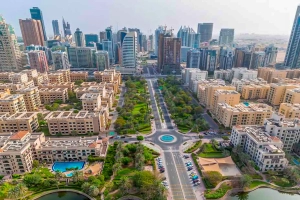
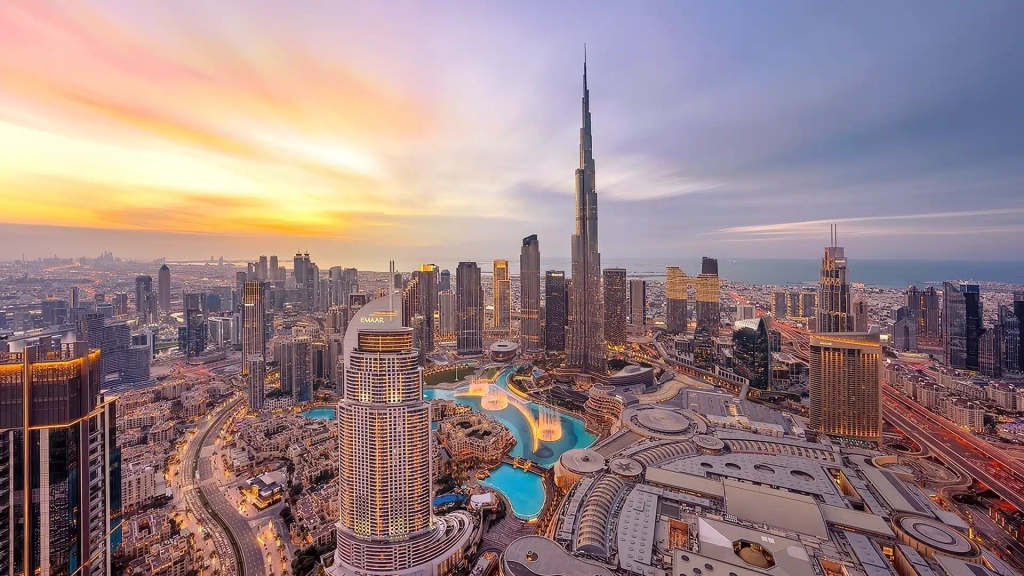
Dubai recorded AED 252 billion in real-estate transactions during Q1 2026, according to Dubai Land Department, including AED 173 billion in property investments. But market growth does not make every community equally suitable. Oplus International Realty compares seven Dubai areas using the factors that actually change a purchase decision: entry budget, property type, completion horizon and intended exit.
Dubai Investment Areas 2026: Quick Comparison
The figures below are current Oplus project examples, reviewed on 10 September 2026.
They are not claims that every property in an area starts at the same price.
| Area | Current Oplus Project Example | Property Type | From | Handover |
|---|---|---|---|---|
| Dubai South | Samana South Haven | Studio–2BR | AED 599K | Q2 2028 |
| Al Furjan | SAMANA California 2 | Studio–2BR | AED 769K | Q4 2026 |
| Jumeirah Village Triangle | Binghatti Flare | Studio–1BR | AED 775K | Q3 2027 |
| Business Bay | Canal Heights 2 | Studio–4BR | AED 1.23M | Q3 2027 |
| Dubai Hills Estate | Parkland | 1–3BR | AED 1.50M | Q4 2028 |
| Dubai Creek Harbour | Valia Tower | 1–4BR | AED 1.80M | Q3 2030 |
| Palm Jumeirah | Ocean House | 2–6BR | AED 9.80M | Q4 2026 |
The table immediately shows why there is no responsible universal “best area”.
A buyer entering below AED 1 million is solving a completely different problem from somebody allocating AED 10 million to a Palm Jumeirah residence.
How We Compare Dubai Investment Areas
Instead of assigning invented ROI forecasts, use five questions.
1. What is your actual budget?
Not the down payment.
The total purchase price and construction-period cash requirement.
2. Do you want ready or off-plan property?
This changes:
- when rental income can begin;
- construction exposure;
- financing;
- inspection ability;
- payment structure.
3. What type of property are you buying?
Studio, apartment, townhouse and villa markets have different buyer pools.
4. What is your holding period?
A project completing in late 2026 is fundamentally different from one scheduled for 2030.
5. What is your goal?
Income, personal use, long holding period, lower entry price and ultra-prime ownership require different areas.
Only after answering those questions does “where should I invest in Dubai?” become useful.
1. Dubai South — For a Lower Off-Plan Entry Point and Longer Horizon
Dubai South deserves consideration from buyers looking for relatively accessible new-build apartment entry points.
Oplus currently tracks Samana South Haven at Dubai South from AED 599,000, with studios to 2-bedroom apartments and scheduled Q2 2028 handover.
Another current project, Samana Hills South 2, begins around AED 600,000.
What Dubai South gives the investor
A lower initial property ticket compared with central Dubai districts.
Apartment inventory rather than multimillion-dirham family houses.
Exposure to a large developing district around Dubai South and the wider Al Maktoum International Airport corridor.
What it does not guarantee
Airport expansion does not automatically guarantee capital appreciation.
A low purchase price does not automatically produce the highest yield.
Future rental depth depends on actual occupier demand, completed infrastructure and competing supply when the unit is delivered.
Dubai South suits:
Buyers prioritising lower entry price and willing to hold through construction and community growth.
Think twice if:
Your main requirement is an established central neighbourhood with mature walkability today.
2. Al Furjan — For Buyers Who Want a More Mature Residential Setting
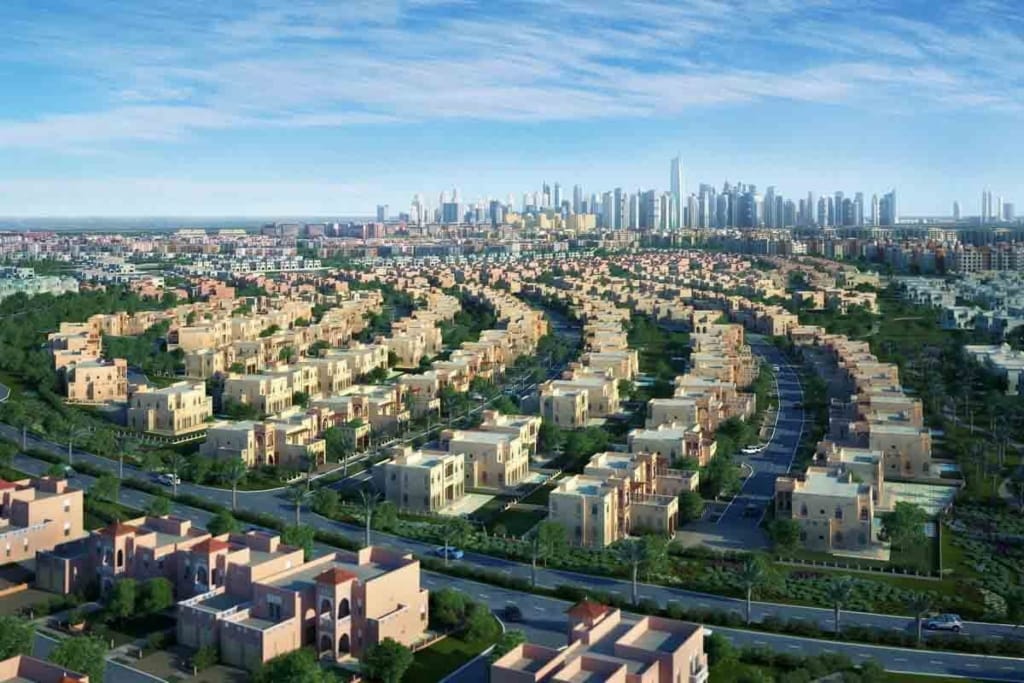
Al Furjan occupies a different position.
It is already an established residential community, while new off-plan apartment supply continues to enter the market.
Current Oplus inventory includes SAMANA California 2 in Al Furjan from AED 769,000, with studios, apartments and duplex layouts and a scheduled Q4 2026 handover.
Why the timing matters
Q4 2026 is materially different from a 2029 or 2030 project.
For a buyer investing in September 2026, a project close to scheduled completion reduces the period before:
- final inspection;
- potential occupancy;
- potential leasing;
- operating-cost visibility.
It does not eliminate project or market risk, but it changes the holding timeline.
Al Furjan suits:
An investor who wants a sub-AED 1M example inside a more developed residential district and prefers a shorter remaining off-plan period.
Main trade-off:
Established communities can also have substantial competing resale and rental stock.
That competition must be included in the exit model.
3. Jumeirah Village Triangle — For Sub-AED 1M Apartment Buyers
Jumeirah Village Triangle, or JVT, gives investors another apartment-led entry point below AED 1 million in current Oplus inventory.
Binghatti Flare at JVT is currently shown alongside Oplus’s JVT inventory from approximately AED 775,000, while ELAR1S Axis provides another current studio and 1-bedroom project comparison in the area.
For ELAR1S Axis, the current project record shows areas from 426 sq ft and Q3 2028 handover.
Why JVT belongs in the shortlist
It allows a buyer with a smaller apartment budget to compare an established residential location against newer growth corridors such as Dubai South.
The investment question becomes:
Do I prefer lower-cost exposure to a developing large-scale district, or a smaller established residential community?
That’s a better question than trying to predict which one will “go up more”.
JVT suits:
Studio and 1-bedroom buyers looking below the entry level of areas such as Dubai Hills Estate or Dubai Creek Harbour.
Main trade-off:
Small apartments can face significant competing supply.
Compare the exact building, developer, floor plan, price per square foot and future handover competition.
4. Business Bay — For Central-Dubai Apartment Exposure
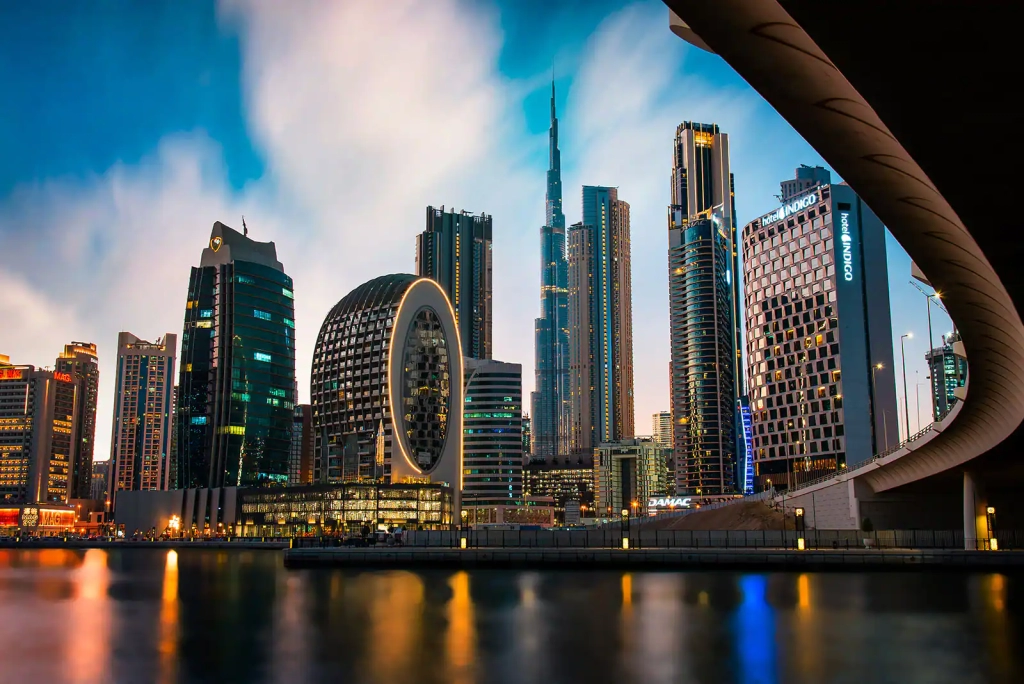
Business Bay is a different investment proposition again.
Instead of buying primarily for suburban community expansion, the buyer is choosing an established central mixed-use district beside Downtown Dubai and the Dubai Canal corridor.
Current Oplus inventory includes Canal Heights 2 in Business Bay from AED 1.23 million, with studios through larger residences and Q3 2027 handover.
Why investors shortlist Business Bay
The area gives access to a broad residential product range close to one of Dubai’s largest business and hospitality concentrations.
But don’t translate “central” into “guaranteed liquidity”.
The investor still needs to check:
- building-specific transaction activity;
- competing unit supply;
- annual rent;
- service charges;
- short-term versus long-term letting economics;
- purchase AED/sq ft.
Business Bay suits:
Buyers willing to pay more than outer-Dubai entry prices for a central apartment location.
Main trade-off:
Building selection becomes critical.
Buying the wrong apartment at an aggressive AED/sq ft can matter more than choosing the right district name.
5. Dubai Hills Estate — For Family-Oriented Apartment Demand
Dubai Hills Estate should not be evaluated using the same logic as Business Bay.
It is a large Emaar-led master community built around residential neighbourhoods, Dubai Hills Mall, parks, schools and golf-oriented areas.
Current Oplus inventory includes Parkland at Dubai Hills Estate from AED 1.5 million, offering 1–3 bedroom apartments with Q4 2028 handover.
Why this changes the tenant/buyer profile
A Dubai Hills investment can be evaluated around longer-term household demand rather than treating every unit as a short-let or city-centre product.
The buyer should examine:
- proximity to Dubai Hills Mall and park;
- school access;
- unit size;
- parking;
- long-term household suitability;
- completed and future apartment supply.
Dubai Hills Estate suits:
Buyers who want a master-community environment and can enter at a higher level than the sub-AED 1M districts.
Main trade-off:
A good community does not protect a buyer from overpaying for a particular launch.
Compare the exact project against ready and resale alternatives in Dubai Hills.
Oplus also maintains a separate Dubai Hills Estate buying and investment guide for deeper community research.
6. Dubai Creek Harbour — For a Longer-Horizon Waterfront Position

Dubai Creek Harbour appeals to a different investor again: someone specifically seeking a large Emaar waterfront master development and willing to accept a longer timeline.
Current Oplus inventory includes Valia Tower at Dubai Creek Harbour from AED 1.8 million, with 1–4 bedroom apartments and scheduled Q3 2030 handover.
The real question here is time
A 2030 handover means several years before a buyer can normally rely on completed-property rental income.
That makes it unsuitable for someone who needs cash flow next year.
But it can remain relevant to a buyer deliberately seeking:
- a long construction horizon;
- staged payments;
- waterfront master-community exposure;
- a future rather than immediate occupancy plan.
Dubai Creek Harbour suits:
Long-horizon buyers who understand they are purchasing an off-plan asset several years from completion.
Main trade-off:
Future value depends partly on how the wider district, competing stock and infrastructure develop by delivery.
Do not price those future outcomes as guaranteed today.
7. Palm Jumeirah — For Ultra-Prime Capital, Not Entry-Level Yield Hunting
Palm Jumeirah belongs in this comparison because it illustrates the opposite end of Dubai’s investment spectrum.
Current Oplus inventory includes Ocean House at Palm Jumeirah from AED 9.8 million, with 2–6 bedroom residences and Q4 2026 handover.
Other current Oplus Palm projects enter materially higher, including Como Residences and Armani Beach Residences.
What Palm Jumeirah is not
It is not a realistic alternative to a AED 600K Dubai South studio.
Putting the two in one “ROI ranking” makes little sense.
The investor profile, capital requirement, property size and exit market are completely different.
Palm Jumeirah suits:
High-capital buyers specifically seeking a globally recognised ultra-prime Dubai address.
Main trade-off:
The absolute ticket is high, and gross percentage yield is not automatically superior simply because the asset is prestigious.
Service charges and total ownership cost also matter heavily at this end of the market.
Which Dubai Area Fits Your Budget?
A budget-first shortlist is more useful than a universal ranking.
Under AED 1 million
Current Oplus examples include:
- Dubai South
- Al Furjan
- JVT
These are mostly studio and smaller-apartment strategies.
AED 1 million–2 million
Current project examples bring in:
- Business Bay
- Dubai Hills Estate
- Dubai Creek Harbour
The buyer now has more central, master-community and waterfront choices.
Want to know more about available properties? Our team is ready to answer your questions. Contact us now!
Contact us via WhatsAppAED 2 million–5 million
The decision expands significantly across larger apartments, selected townhouses and premium off-plan units throughout Dubai.
At this point, area alone is too broad: project and unit-level comparison becomes essential.
AED 9 million+
Ultra-prime markets such as Palm Jumeirah become relevant.
The investment objective usually shifts away from simply maximising headline gross yield.
Which Areas Suit Rental-Income Buyers?
Do not answer this with a generic “JVC gives 8–10%” table.
Gross yield should be calculated from actual current numbers:
Annual market rent ÷ total acquisition price × 100
Then calculate net yield after:
- service charges;
- maintenance;
- management;
- vacancy;
- furnishing where applicable;
- financing costs if relevant;
- transaction costs where included in your investment model.
Dubai Land Department provides transaction data through its Real Estate Data tools, while its Rental Index and Dubai REST platform provide official rental-market information.
Use those sources for the actual building and property type.
An area-wide marketing estimate is not enough.
Why We Removed the Old 8–10% Yield Claims
The earlier version of this guide gave broad ranges such as:
JVC 8–10%
Business Bay 7–9%
and future capital-growth projections of up to:
16%.
Those figures should not be treated as current facts without a reproducible dataset specifying:
- transaction period;
- property type;
- sale price;
- rent period;
- gross or net methodology;
- sample size.
So the updated guide does not pretend to know a universal future return.
That’s deliberate.
Which Area Is Better for Capital Growth?
No one can confirm that in advance.
Instead, investigate the conditions that can support or weaken future value.
Supply
How much competing stock is being delivered?
Purchase price
Are you entering above or below recent comparable transactions?
Infrastructure
What exists today and what is officially committed?
Developer execution
What is the project’s delivery and quality record?
End-user demand
Who is likely to buy your unit from you later?
Exit affordability
Will your future asking price remain affordable to a sufficiently large buyer pool?
Those variables are more useful than a predicted percentage.
Ready vs Off-Plan Changes the Area Decision
A buyer should also decide whether they are really choosing an area or choosing an off-plan strategy.
Off-plan advantages can include:
- construction-stage payment schedules;
- access to new layouts;
- longer time before final payment.
Off-plan drawbacks include:
- no immediate normal rental income;
- delivery risk;
- inability to inspect the finished unit;
- future competing supply;
- less certainty around eventual operating costs.
Ready-property advantages include:
- physical inspection;
- current rent evidence;
- immediate leasing potential;
- clearer service-charge history.
Ready-property drawbacks can include:
- larger immediate cash requirement;
- different financing structure;
- less developer-stage payment flexibility.
The area should be compared within the same property strategy whenever possible.
What About Mortgages?
Do not choose an AED 2 million property assuming a bank will simply fund the balance later.
Eligibility depends on:
- residency;
- income;
- existing debt;
- property status;
- valuation;
- bank policy;
- project eligibility.
If financing is part of your strategy, review Oplus’s UAE mortgage guide before selecting a project by its payment-plan headline.
How to Verify an Area Before Buying
Use this sequence.
Step 1 — Check actual transactions
Use Dubai Land Department transaction data for the relevant area and property type.
Step 2 — Check realistic rent
Use current registered-rental information and genuine comparable units.
Step 3 — Calculate gross yield
Use your actual purchase price.
Step 4 — Calculate net yield
Deduct recurring ownership and management costs.
Step 5 — Compare supply
Check current and future competing projects.
Step 6 — Check exit market
Ask who is likely to buy the same property from you in three, five or seven years.
Step 7 — Compare with another area at the same budget
A AED 1.5M investor should compare AED 1.5M options.
Not a AED 600K studio against a AED 10M Palm residence.
A Better Dubai Investment Shortlist
If the goal is lower entry price, start by examining:
Dubai South, Al Furjan and JVT.
If the goal is central apartment exposure, examine:
Business Bay.
If the goal is family-led master-community demand, examine:
Dubai Hills Estate.
If the goal is long-horizon waterfront development, examine:
Dubai Creek Harbour.
If the goal is ultra-prime ownership, examine:
Palm Jumeirah.
Those are starting shortlists, not promises of return.
What Does the Dubai Market Look Like in 2026?
Dubai Land Department reported AED 252 billion in total real-estate transactions during Q1 2026, a 31% year-on-year increase in value.
DLD also reported:
- AED 173 billion in real-estate investments;
- 57,744 investments;
- 48,448 investors;
- 29,312 new investors.
These numbers establish that the overall market remained highly active in early 2026.
They do not establish that every Dubai community will rise in value.
The investor still has to select the right asset.
Dubai’s Real Estate Strategy 2033
Dubai’s Real Estate Sector Strategy 2033 aims to increase transactions by 70%, lift the sector’s contribution to GDP and raise the total real-estate market value toward AED 1 trillion.
That matters as policy context.
But a government strategy is not a guaranteed return on an individual apartment.
Investment performance still comes down to purchase price, project, location, unit type, demand and exit.
So, What Is the Best Area to Invest in Dubai in 2026?
There isn’t one area that wins every category.
A more useful answer is:
Below AED 1M: compare Dubai South, Al Furjan and JVT.
Around AED 1M–2M: add Business Bay, Dubai Hills Estate and Dubai Creek Harbour.
Ultra-prime capital: Palm Jumeirah becomes a different category of decision.
Then narrow the choice by:
property type → purchase price → handover → payment exposure → comparable rent → service charges → exit buyer.
That process is far more reliable than selecting whichever community has the highest projected ROI in an online list.
Frequently Asked Questions
What are the best areas to invest in Dubai in 2026?
There is no universal best area. Current Oplus inventory gives investors different options including Dubai South and JVT at lower apartment entry points, Business Bay for central-city property, Dubai Hills Estate for master-community housing, Dubai Creek Harbour for longer-horizon waterfront exposure and Palm Jumeirah for ultra-prime property.
Where can I find property under AED 1 million in Dubai?
Current Oplus project examples below AED 1 million include developments in Dubai South, Al Furjan and Jumeirah Village Triangle. Prices depend on the exact release and available unit.
Is Business Bay good for investment?
Business Bay deserves consideration from buyers seeking central-Dubai apartment exposure, but returns should be calculated at building and unit level using actual purchase price, registered rent, service charges and competing supply.
Is Dubai South good for property investment?
Dubai South can suit investors prioritising a lower off-plan entry point and a longer development horizon. Airport and infrastructure expansion should be treated as context rather than a guarantee of future appreciation.
Is Dubai Hills Estate better than Business Bay?
They suit different buyer profiles. Dubai Hills Estate is a family-oriented master community, while Business Bay is a central mixed-use district. Compare the tenant or future buyer you expect to target rather than assuming one is universally better.
Is Dubai Creek Harbour a good long-term investment?
It can fit buyers deliberately seeking a longer-horizon waterfront master-community position. Current Oplus projects include handovers extending toward 2030, so it is less suitable for investors needing immediate rental income.
Is Palm Jumeirah still worth investing in?
Palm Jumeirah remains relevant to ultra-prime buyers, but its high acquisition price means it should not be compared directly with lower-cost areas using headline yield alone. Exact unit price and total ownership costs are particularly important.
What rental yield should I expect in Dubai?
Do not rely on an area-wide percentage without knowing the methodology. Calculate yield from the actual purchase price and comparable annual rent, then deduct service charges, management, maintenance and vacancy for a net estimate.
How do I check Dubai property transaction data?
Dubai Land Department provides Real Estate Data and Dubai REST tools covering transaction and market information. Investors should use the relevant area, property type and period rather than relying only on portal asking prices.
Should I buy ready or off-plan property in Dubai?
It depends on cash flow and timing. Ready properties can provide immediate inspection and rental potential; off-plan property can provide construction-stage payment schedules but adds delivery and future-supply uncertainty.
Browse Current Dubai Opportunities
You can browse current Dubai properties and projects and compare them using the same framework: budget, property type, payment exposure, handover and exit market.
If you already have two or three projects shortlisted, speak to an Oplus property adviser and compare the actual units rather than area averages.
Market and inventory data reviewed: 10 September 2026
Editorial review: Oplus International Realty Editorial Team
Sources
- Dubai Land Department — Q1 2026 Dubai real-estate market results
- Dubai Land Department — Real Estate Data
- Dubai Land Department — Rental Index
- Dubai Land Department — Dubai REST
- Dubai Land Department — Dubai Real Estate Sector Strategy 2033
- Oplus International Realty — current Dubai project database