Dubai Hills Estate is a 11-million-square-metre master-planned community developed as a joint venture between Emaar Properties and Meraas Holding — part of Mohammed bin Rashid City (MBR City), the largest master-planned development in the Middle East. In 2026, it ranks among Dubai’s most active real estate markets by transaction volume and price appreciation. Oplus International Realty covers buying, renting, and investing across both Dubai and Abu Dhabi, and this guide answers the questions buyers, tenants, and investors most frequently ask about Dubai Hills Estate.
What Is Dubai Hills Estate and Who Developed It?
Dubai Hills Estate was announced in 2013 as the first phase of MBR City. It is a joint venture between Emaar Properties — the developer behind Burj Khalifa and Downtown Dubai — and Meraas Holding, a Dubai Holding subsidiary responsible for Bluewaters Island, City Walk, and La Mer. The two developers launched the project simultaneously, with Emaar managing residential delivery and Meraas contributing land and master-planning under the broader MBR City framework.
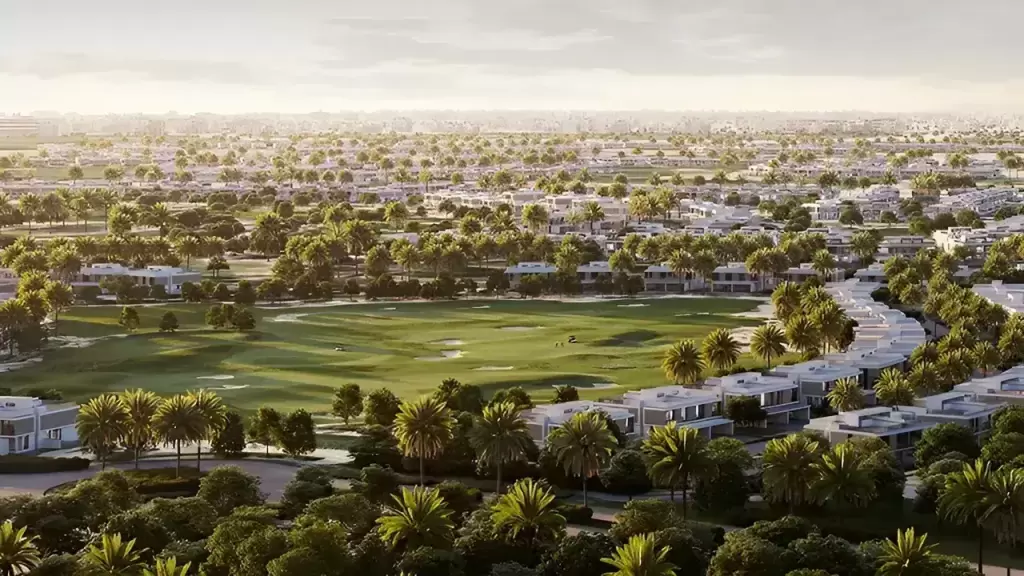
The community spans over 2,700 acres and is designed around an 18-hole championship golf course managed by Troon Golf, with 4,400+ villas and townhouses and a planned 22,000 apartments confirmed from Emaar Properties’ official project documentation. It occupies a central Dubai position at the junction of Al Khail Road (E44) and Umm Suqeim Road, within the Al Barsha South cluster.
The scale and developer pedigree explain much of the community’s investment appeal: Emaar’s master-planned communities — Emirates Living, Arabian Ranches, Dubai Marina — have consistently appreciated over 10–15-year periods after initial delivery. Dubai Hills Estate is following the same trajectory.
Location and Transport Access
Dubai Hills Estate sits along Al Khail Road (E44), with Sheikh Mohammed bin Zayed Road (E311) accessible via connecting internal routes. Neighbouring areas are Al Barsha South and Al Quoz 2.
Road access is strong. Downtown Dubai is approximately 15 minutes by car; Dubai Marina approximately 25 minutes in moderate traffic.
Metro: The community does not yet have a dedicated metro station. The closest operational stations are Equiti and Onpassive on the Red Line, approximately 18 minutes by car. Mall of the Emirates Metro Station is approximately 23 minutes away. A Metro extension to Dubai Hills Estate has been planned as part of the broader MBR City infrastructure, but no confirmed opening date has been announced as of April 2026. Residents and tenants in Dubai Hills Estate are car-dependent — this is a relevant consideration for anyone evaluating the community without a vehicle.
Property Mix: What Is Available
Dubai Hills Estate offers four primary property types:
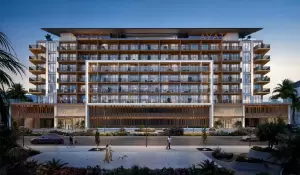
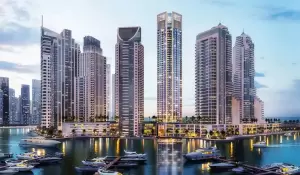
Apartments: The majority of transactions by volume. Units range from studios to three-bedroom layouts in mid-rise towers. Apartment pricing as of Q1 2026 averages AED 2,277 per square foot on secondary market transactions and AED 2,455 per square foot for off-plan units, per DLD transaction data from the past 12 months. Off-plan apartment prices have appreciated approximately 38% over the past three years.
Townhouses: A mid-tier option between apartments and villas, offering garden access and more space. Well-represented in the Maple Townhouses cluster, which is among the more affordable entry points in the community.
Villas: Villa communities include Golf Grove, Parkway Vistas, Club Villas, and Fairway Vistas, among others. Villa transactions average significantly higher than apartments on total price, but the per-square-foot metric is lower due to larger plot sizes. Villa prices range broadly from AED 2.3 million for entry-level units to AED 15 million+ for premium golf-facing configurations. A 9-bedroom mansion in the community transacted at AED 200 million in 2025, per Sotheby’s International Realty.
Golf Course Apartments: A distinct premium sub-segment of apartments facing the Dubai Hills Golf Club, commanding higher per-square-foot pricing and primarily targeting owner-occupiers and high-net-worth investors.
Investment Reality: Yields, Appreciation, and Costs
Apartments: Gross rental yields for one- and two-bedroom units in Dubai Hills Estate range from 6.5–7.5%, based on DLD transaction data. This positions the community above Downtown Dubai (5.5–6.5%) but below mid-market communities like JVC (7–8.5%). The apartment market benefits from high occupancy driven by demand from families and professionals who want the community’s lifestyle but cannot yet afford villa prices.
Villas: Gross villa yields average approximately 6%, per DLD-adjacent data from 21 villa communities tracked over the past 12 months. Individual community yields range from 3–4% (premium golf-facing stock like Club Villas) to 6%+ for more accessible townhouse configurations. Villa investors in Dubai Hills Estate typically hold for capital appreciation rather than yield — a distinction relevant to anyone modelling short-to-medium-term returns.
Service charges: The DLD Service Charge Index lists Dubai Hills Estate villas at AED 3.50 per square foot annually — low relative to apartment-heavy communities. Apartment service charges vary by tower and typically run AED 12–20 per square foot, consistent with comparable mid-tier Dubai communities.
Acquisition costs: Standard Dubai transaction costs apply — 4% DLD transfer fee, 2% agency commission, and AED 580+ for registration and admin. For a AED 2.5 million apartment, total acquisition costs outside the purchase price typically reach AED 150,000–175,000.
Is Dubai Hills Estate a freehold community? Yes. All properties in Dubai Hills Estate are designated freehold under UAE law. UAE nationals and foreign nationals can purchase with full ownership rights. There is no nationality restriction.
The Two Markets Operating Inside Dubai Hills Estate
Buyers and investors in Dubai Hills Estate are not one market — they are two.
The apartment segment is driven by investors, with yield and capital growth as the primary motivation. Strong rental demand from the professional and expat tenant base, combined with a pipeline of off-plan launches, keeps this segment active and liquid.
The villa and townhouse segment is driven by end-users: families relocating from other Dubai communities, high-net-worth residents seeking garden access and school proximity, and long-term capital preservation investors. Villa transactions are lower in volume but higher in average price, and villa owners typically hold longer.
Based on inquiries Oplus handles for Dubai-bound buyers: this distinction changes due diligence significantly. Apartment buyers should focus on building-level service charges, rental history, and off-plan delivery track record. Villa buyers should focus on plot size, community maturity, school proximity, and resale comparables — the villa market is thinner and less liquid than apartments, meaning exit timeline matters.
Amenities and Daily Life
Dubai Hills Mall: The community’s anchor retail and entertainment destination. Over 750 retail and F&B outlets across a 2 million sq.ft. gross leasable area, anchored by a large hypermarket. The Mall also includes a cinema complex, entertainment zone, and lifestyle retailers. Proximity to the Mall is one of the primary reasons residents cite for choosing Dubai Hills Estate over comparable villa communities.
Golf Club: The Dubai Hills Golf Club is an 18-hole par-72 championship course managed by Troon Golf, covering 1.2 million square metres with Downtown Dubai as its backdrop. The club is accessible to residents and non-residents through memberships and pay-and-play arrangements.
Central Park: Dubai Hills Estate Central Park spans approximately 1.9 million sq.ft. adjacent to Dubai Hills Mall, featuring cycling tracks, jogging paths, picnic areas, and children’s play zones.
Want to know the best real estate options in the UAE? Contact us today to inquire!
Contact us via WhatsAppSchools: GEMS Wellington Academy, GEMS New Millennium School, and GEMS International School all operate within or immediately adjacent to the community. School proximity is a core feature that differentiates Dubai Hills Estate from older villa communities where international school access requires longer drives.
Healthcare: Multiple clinics and medical centres operate within the community. Emirates Hospital and other established networks are accessible within a 10–15-minute drive.
Supermarkets and retail: The Dubai Hills Mall hypermarket plus several community retail outlets provide daily convenience within the community. The Mall of the Emirates is approximately 23 minutes away.
Gyms and fitness: Multiple gyms operate within the community, alongside cycling and running infrastructure built into the masterplan.
Common Misconceptions About Dubai Hills Estate
Misconception 1 — “Dubai Hills Estate is fully built.” Dubai Hills Estate is still in active development. Emaar continues to launch new apartment towers and villa phases within the masterplan. The community is transitioning from a development phase to a more mature resale market, meaning secondary market options are growing but off-plan supply is still entering. Buyers purchasing for immediate occupancy should verify that the specific unit and tower are completed and handed over.
Misconception 2 — “All properties face the golf course.” Only a specific sub-set of villas and apartments in Parkway Vistas, Club Villas, and Fairway Vistas directly face the golf course. The majority of the community’s apartment towers and villa clusters are within the masterplan but do not have direct golf views. Golf-facing properties carry a meaningful price premium.
Misconception 3 — “Villa yields in Dubai Hills Estate are high.” Villa gross yields average around 6%, with premium golf-facing clusters delivering 3–4%. For an investor modelling short-term cash flow, Dubai Hills Estate villas are not high-yield assets. They are capital appreciation and lifestyle assets with moderate yield.
Misconception 4 — “Dubai Hills Estate has metro access.” There is no operational metro station within walking distance of the community. Plans for a metro extension exist as part of MBR City’s infrastructure roadmap, but as of April 2026, the community requires private transport for most daily commuting.
Who Dubai Hills Estate Suits — and Who It Does Not
It suits:
- Families with school-age children who want prestigious school access, outdoor space, and community infrastructure in one location
- Long-term capital preservation investors with a 5–10-year horizon, particularly in the villa and townhouse segment
- Professional tenants looking for a premium lifestyle community with park access, a golf course, and Dubai Hills Mall — this tenant profile sustains apartment demand
- Investors entering at off-plan pricing with a post-completion strategy — strong demand from the tenant pool supports occupancy
It is a weaker fit for:
- Car-free buyers who rely on metro access for daily commuting
- Investors targeting maximum yield on apartments — JVC and other mid-market communities deliver higher gross yields at lower entry prices
- Buyers who need an established, fully built-out community — parts of Dubai Hills Estate remain under construction and will continue to see new supply enter through 2026 and beyond
- Short-term investors who need fast resale liquidity on villas — the villa secondary market in Dubai Hills Estate is smaller and slower than the apartment segment
For guidance on where Dubai Hills Estate fits within a broader Dubai property investment strategy, contact Oplus International Realty. For available properties across Dubai communities including Dubai Hills Estate, see our Dubai listings.
FAQs About Dubai Hills Estate
Is Dubai Hills Estate part of Mohammed bin Rashid City?
Yes. Dubai Hills Estate is the first phase of Mohammed bin Rashid City (MBR City), the largest master-planned development in the Middle East region. MBR City was envisioned by HH Sheikh Mohammed bin Rashid Al Maktoum as a city-within-a-city spanning Dubai’s central corridor. Dubai Hills Estate was the first residential district to launch within this framework, in 2013, with Emaar Properties and Meraas Holding as joint venture developers.
What are the exact price ranges for apartments and villas in Dubai Hills Estate in 2026?
Based on DLD transaction data from the past 12 months: apartments average AED 2,277 per square foot on the secondary market, with off-plan averaging AED 2,455 per square foot. Studio and one-bedroom entry points typically start from AED 700,000 for older secondary stock. Villas range broadly from AED 2.3 million for entry-level configurations to AED 15 million+ for premium golf-facing properties. A 9-bedroom mansion in the community transacted at AED 200 million in 2025 per Sotheby’s International Realty, illustrating the upper range of the market.
What are the service charges in Dubai Hills Estate?
The DLD Service Charge Index lists Dubai Hills Estate villas at AED 3.50 per square foot annually. Apartment service charges vary by building and are not published as a single community-wide figure — they typically run AED 12–20 per square foot for Dubai Hills apartment towers, consistent with comparable mid-tier communities. Always request the RERA Service Charge Certificate for the specific building before purchasing.
Is there a metro station in Dubai Hills Estate?
No operational metro station exists within walking distance. The closest Red Line stations are Equiti and Onpassive, approximately 18 minutes by car. Mall of the Emirates Metro Station is approximately 23 minutes away. A metro extension to MBR City has been planned, but no confirmed delivery date for a Dubai Hills Estate station has been announced as of April 2026. Residents are car-dependent for most daily commuting.
Can foreigners buy property in Dubai Hills Estate?
Yes. Dubai Hills Estate is a designated freehold zone under UAE law. Foreign nationals can purchase apartments, townhouses, and villas with full ownership rights. There is no nationality restriction. The 4% DLD transfer fee and standard registration costs apply to all buyers regardless of nationality. Buyers acquiring a property valued at AED 2,000,000 or more at purchase may qualify for a 10-year Golden Visa through the DLD investor residency programme.
Which schools are in Dubai Hills Estate?
GEMS Wellington Academy – Dubai Hills, GEMS New Millennium School, and GEMS International School are the primary international schools within or adjacent to the community. All three offer British or IB-aligned curricula. The concentration of GEMS campuses within the community is a key differentiator versus older villa communities in Dubai where families typically need to travel further for comparable international schooling.
How does Dubai Hills Estate compare to Arabian Ranches for investment?
Both are established Emaar-developed family communities targeting similar tenant and buyer profiles. The key differences: Dubai Hills Estate has lower villa service charges (AED 3.50/sqft) than Arabian Ranches’ older stock, has Dubai Hills Mall as a retail anchor where Arabian Ranches relies more on external retail, and is in an earlier development cycle — meaning more off-plan supply entering the market through 2026 and 2027. Arabian Ranches is a more mature community with stronger established resale liquidity and slightly higher villa rental yields. For a first-time villa buyer prioritising community maturity, Arabian Ranches is typically more settled. For buyers prioritising school access, the Golf Club, and proximity to new development infrastructure, Dubai Hills Estate has the edge.
What is the golf course in Dubai Hills Estate?
The Dubai Hills Golf Club is an 18-hole par-72 championship course managed by Troon Golf, covering approximately 1.2 million square metres through a series of valleys and wadis with Downtown Dubai’s skyline as the backdrop. The course is accessible to residents and non-residents via pay-and-play rates and membership packages. Properties directly facing the golf course — primarily in the Parkway Vistas, Club Villas, and Fairway Vistas clusters — command a premium over the community average.
What is the Central Park in Dubai Hills Estate?
Dubai Hills Estate Central Park is a 1.9-million-square-foot public green space located adjacent to Dubai Hills Mall. It includes cycling routes, jogging tracks, picnic areas, children’s play zones, and open lawns. The park is one of the key lifestyle differentiators Emaar positioned as central to the community’s concept — a functioning public park of this scale within a Dubai residential community is uncommon. Access is free for residents and visitors.
What is the total scale of Dubai Hills Estate and how many homes does it have?
Dubai Hills Estate spans over 11 million square metres (approximately 2,700 acres). According to Emaar Properties’ official project documentation, the masterplan accommodates 4,400+ villas and townhouses alongside a planned 22,000 apartments across multiple tower clusters. Substantial portions of the community are reserved for parks, golf course, roads, and retail — the green footprint is a defining feature of the design.
Written by: Oplus International Realty Editorial Team
About Oplus: Licensed UAE real estate brokerage based in Abu Dhabi, advising buyers and investors across Dubai and Abu Dhabi. RERA registered. oplusrealty.com
Last reviewed: April 2026
Sources:
- Emaar Properties official press release — properties.emaar.com — joint venture confirmation, unit counts, golf course, Dubai Hills Mall launch
- Gulf News — original joint venture announcement (Emaar and Meraas, June 2013)
- Dubai Land Department (DLD) — Service Charge Index (Dubai Hills Estate villa: AED 3.50/sqft); transaction data
- YallaValue — apartment and villa median price/sqft data citing DLD, last 12 months
- PalmObserver — apartment gross yield range 6.5–7.5%, citing DLD transaction benchmarks
- DLD / Propsearch.ae — Golf course Troon Golf management confirmation; AED 200M mansion transaction