
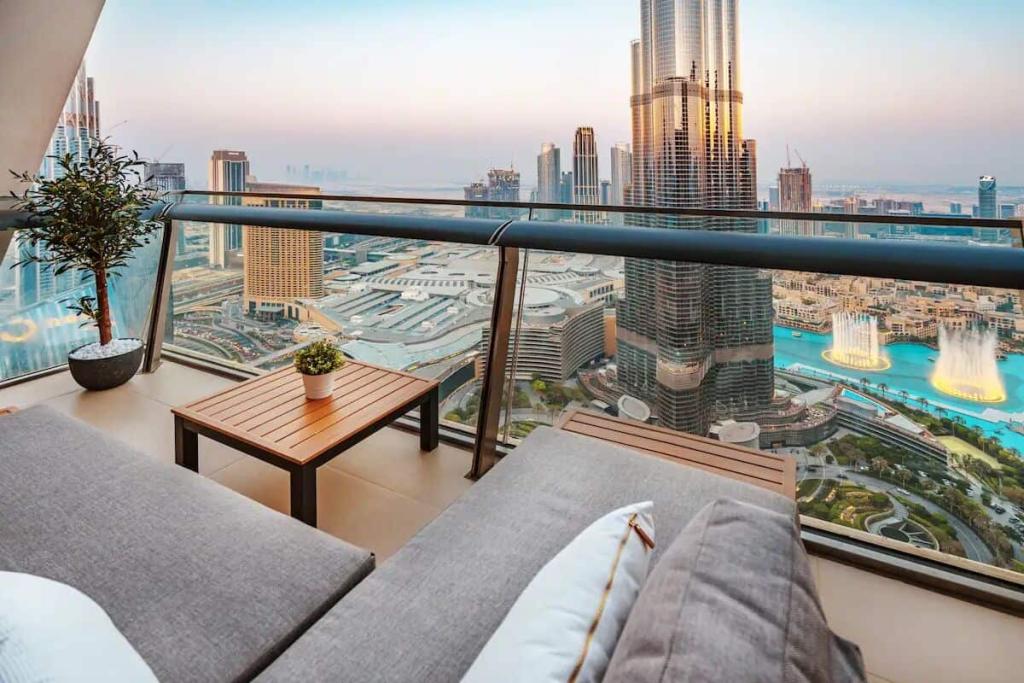
Short-term rentals in Dubai generated an average of AED 145,000 in annual gross revenue per licensed holiday home, according to data from Danube Properties citing DET market benchmarks. But gross revenue is not net yield, and the gap between the two is where most Dubai Airbnb investments either succeed or disappoint. This guide from Oplus International Realty compares six communities — Dubai Marina, Downtown Dubai, Palm Jumeirah, Business Bay, Jumeirah Village Circle, and Dubai Creek Harbour — on verified yield ranges, licensing costs, service charge drag, and the HOA risk that most investment guides skip.
What the Dubai STR Market Looks Like in 2026
A short-term rental in Dubai, formally called a holiday home, is a furnished residential unit licensed by the Department of Economy and Tourism (DET) for stays of up to 90 days per booking. The DET framework, operating under Decree No. 41 of 2013 and its 2020 Implementing By-law, requires a unit-specific permit before any listing goes live on any platform. Operating without that permit carries fines between AED 5,000 and AED 20,000 per offence, and platforms are now actively cross-referenced against DET records.
According to REIDIN data from December 2025, the citywide average gross yield for Dubai apartments on long-term leases sits at 7.03%. Well-managed short-term rental properties in prime tourism locations — Dubai Marina, Downtown, Business Bay, JBR — typically achieve gross STR returns of 8–12%, based on CBRE UAE analysis. The spread sounds compelling. The key variable is that STR management fees run 15–25% of gross revenue, and high-service-charge buildings can erode another 1–2 percentage points of net return. The headline yield and the banked yield are not the same number.
Before looking at individual communities, one point worth stating directly: the DLD 205,100 residential transactions registered in 2025 — an 18.33% year-on-year increase — reflect a market with strong capital appreciation pressure. That pressure has compressed gross long-term yields even as STR demand has grown. Understanding which side of that trade-off each community sits on is the core question for any short-term rental investor in Dubai.
Six Communities: What the Numbers Actually Show
Dubai Marina — Established Demand, Premium Service Charges
Dubai Marina is the most liquid Airbnb market in Dubai. Waterfront position, tram and metro connectivity, and year-round tourist footfall make it the default choice for investors entering the STR space. The trade-off is service charges. According to the DLD Service Charge Index, Marina towers run approximately AED 20–30 per square foot annually. On a 900-square-foot one-bedroom unit, that represents AED 18,000–27,000 per year coming off your net return before maintenance or management fees.
Based on CBRE UAE market data, Marina achieves average daily rates of AED 400–1,200 depending on season and unit type, with occupancy averaging 70–80% for well-managed listings. Gross STR yields range from 8–12% for managed properties, compared to long-term lease yields of approximately 6–7.2% per the 2026 rental yield data tracked against DLD benchmarks. Net uplift after management and service charges: approximately 1–3 percentage points above long-term leasing.
One risk specific to Marina: several towers require an Owners Association NOC confirming permission for short-term letting. DET will not grant a permit without this confirmation. Verify at building level, not area level, before purchasing for STR.
Who this suits: Investors who can deploy AED 1.5–3M per unit, prefer lower risk of vacancy, and want a property they can use personally during slower periods.
Downtown Dubai — Highest Nightly Rates, Highest Operating Costs
Downtown delivers the strongest nightly rates in the city during peak season, driven by proximity to the Burj Khalifa district and the Dubai Mall. According to CBRE UAE data, well-located one-bedroom units in Downtown average daily rates of AED 700–1,200 during the October–April peak window, with occupancy reaching 80–90% in prime season.
The problem is service charges. The DLD Service Charge Index puts Downtown towers at AED 25–35 per square foot annually — the highest in Dubai. On a 900-square-foot unit, that is AED 22,500–31,500 per year before management fees, utilities, or furnishing amortisation. A gross STR yield of 6.6% in Downtown can net to 4.5–5% once costs are properly accounted for.
Long-term lease yields in Downtown run approximately 6.0% on average, per REIDIN December 2025 data. The STR premium narrows considerably after costs.
Who this suits: Investors with AED 2M+ per unit who prioritise premium nightly rates, strong capital appreciation, and have the tolerance for higher operating costs and seasonal occupancy variance.
Palm Jumeirah — Lower Yield, Higher Revenue Per Booking
Palm Jumeirah operates differently from the rest of this list. Long-term gross yields average 4.7–5.1% on apartments, per market data tracked against DLD benchmarks. That is compressed by high purchase prices rather than weak rents. On the short-term rental side, premium villas and larger apartments regularly achieve AED 1,800+ per night for top-performing listings, with occupancy reaching 85–90% in peak season due to the island’s self-marketing appeal — private pools, beachfront access, and city views.
The Palm is a revenue-per-booking investment, not a yield-percentage investment. The investor profile it suits is someone deploying AED 3M+ who prioritises absolute cash flow, capital preservation, and possible personal use, rather than optimising percentage yield on purchase price.
Honest limitation: the Palm has supply constraints that protect existing investors but also mean new buyers pay a liquidity premium. Entry-level investors focused on yield ratios will find better percentage returns elsewhere.
Business Bay — Corporate Demand Creates Year-Round Stability
Business Bay benefits from structural corporate demand that does not depend on tourism seasonality. Regional conferences, investment summits, and corporate relocations keep occupancy more stable across the year than pure leisure destinations. This is reflected in gross STR yields of 6.9–7.3%, based on 2026 rental data tracked against DLD benchmarks, compared to long-term lease yields of approximately 6.2%.
Service charges in Business Bay run lower than Downtown — approximately AED 15–22 per square foot annually per the DLD Service Charge Index — which improves net yield meaningfully relative to its neighbour. Entry prices are also lower. A one-bedroom unit in Business Bay typically trades at AED 1.2–1.8M, versus AED 1.8–2.5M for a comparable Downtown unit.
The STR licensing process is straightforward in most Business Bay towers, with fewer HOA restrictions than established lifestyle communities. This matters for investors who want to complete licensing quickly after purchase.
Who this suits: Investors targeting a balance of corporate and leisure demand, with AED 1–1.8M per unit and a preference for year-round occupancy over peak-season spikes.
Jumeirah Village Circle — Best Percentage Yield, Lowest Entry Cost
JVC consistently ranks among Dubai’s highest long-term yield communities, with gross yields tracked between 7.59–7.82% in CBRE-adjacent broker data validated against DLD rental benchmarks. As a short-term rental market it is newer and more emerging, but the same fundamentals — lower purchase prices, stronger relative rents, improving infrastructure — apply to the STR segment.
Short-term yields in JVC run approximately 7.8–8.5% gross for well-managed listings, based on broker-reported performance cross-referenced against DLD rental index data. Service charges in JVC average AED 12–18 per square foot annually, per the DLD Service Charge Index — approximately half the rate of Downtown towers. That difference translates directly into net yield.
The guest profile in JVC tends toward budget-conscious travellers, digital nomads, and professionals on extended corporate stays. Average nightly rates are lower than Marina or Downtown, but occupancy from longer-stay guests (7–30 nights) reduces turnover costs and management time.
One honest limitation: JVC Airbnb income is more sensitive to new supply. With ongoing construction and new tower completions expected through 2026 and 2027, investors should underwrite occupancy conservatively — 65–70% annual average — rather than assuming Marina-level demand consistency.
Who this suits: Entry-level investors deploying AED 600,000–1.2M who prioritise yield percentage over absolute revenue, and who are comfortable with a less established STR market.
Dubai Creek Harbour — Future Potential With Present Risks
Dubai Creek Harbour is the most speculative community on this list for STR investment. The waterfront infrastructure is real, proximity to DXB Airport is a structural advantage, and the long-term growth case is credible. Average gross STR yields are tracking around 6.5% for early operational units.
The risk that most guides omit: Dubai Creek Harbour is a predominantly off-plan market, and many tower Owners Associations in new DCH developments have not yet confirmed their holiday home policies. Based on inquiries Oplus has received about DCH investment in Q1 2026, the most common question — and the most common unresolved point — is whether individual buildings permit short-term letting. Without a confirmed building NOC, DET will not issue a permit. Investors purchasing off-plan with STR intent should get written confirmation from the developer about future HOA policy before exchange.
Who this suits: Investors with a 3–5 year investment horizon who are comfortable with lower near-term STR income while the community matures, and who verify NOC eligibility before purchase.
Looking for the perfect property? Contact us now for a free consultation!
Contact us via WhatsAppShort-Term vs Long-Term Yields by Community — 2026
| Community | Property Type | Long-Term Gross Yield | Short-Term Gross Yield | Service Charge/sqft (DLD Index) |
|---|---|---|---|---|
| Dubai Marina | Apartment | 6.0–7.2% | 8–12% | AED 20–30 |
| Downtown Dubai | Apartment | 5.5–6.6% | 8–12% | AED 25–35 |
| Palm Jumeirah | Apartment/Villa | 4.7–5.1% | 6–8% | AED 22–28 |
| Business Bay | Apartment | 6.2–7.3% | 7–9% | AED 15–22 |
| Jumeirah Village Circle | Apartment | 7.59–7.82% | 7.8–8.5% | AED 12–18 |
| Dubai Creek Harbour | Apartment | 5.5–6.5% | ~6.5% | AED 16–24 |
Sources: REIDIN December 2025; CBRE UAE; DLD Service Charge Index. Gross yields only. Net yields are typically 1.5–3 percentage points lower after management fees, service charges, and licensing costs.
The DET Licensing Framework: What It Costs
Every holiday home in Dubai requires a DET permit per unit before it can be listed on any platform. The structure, confirmed from the DET official portal as of March 2026:
Registration fee: AED 1,520 (AED 1,500 base + AED 10 Knowledge Fee + AED 10 Innovation Fee). This is a one-time account registration fee. No annual renewal fee applies to the registration itself.
Per-unit permit fee: AED 370 per year for studio or one-bedroom units. Larger units carry higher annual permit fees, reaching AED 1,270 per year for the largest configurations. A permit issuance fee of AED 300 per bedroom applies, with a AED 300 annual renewal fee per bedroom.
Tourism Dirham: Collected from guests per occupied bedroom per night. Standard classification: AED 10 per bedroom per night. Deluxe classification: AED 15 per bedroom per night. Applies to the first 30 consecutive nights of any stay. Must be remitted to DET by the 15th of each month via the Holiday Homes 2.0 portal.
Individual owner limit: An individual can self-manage up to 8 units under a personal account. Operating more than 8 units requires a commercial trade licence with “Vacation Homes Rental” as a listed activity.
VAT: Mandatory registration with the Federal Tax Authority once taxable STR turnover exceeds AED 375,000 in any 12 months. Voluntary registration permitted from AED 187,500.
The practical cost that catches investors off guard is the management fee. Professional holiday home operators in Dubai charge 15–25% of gross revenue, per CBRE UAE data. For an investor generating AED 120,000 annually in gross revenue, that is AED 18,000–30,000 in management fees alone, before service charges, maintenance, or furnishing replacement costs.
The HOA Risk Nobody Puts in the Headline
The most undisclosed deal-breaker in Dubai STR investment is building-level policy, not area-level regulation. DET issues permits at the community level — meaning Dubai Marina is eligible as an STR zone. But individual towers within that zone may prohibit short-term letting in their Owners Association rules.
DET explicitly requires either a building NOC or proof that the building does not restrict holiday home use before issuing a unit permit. In several Marina and JBR towers, the Owners Association actively enforces bans. Investors who purchase without verifying this face a scenario where their unit is legally eligible for an STR permit under DET rules but structurally blocked by the building’s own governance.
The verification step: request written confirmation from the developer or Owners Association before signing any sales and purchase agreement where STR income forms part of the investment case. This applies equally to completed and off-plan purchases.
Three Risks to State Directly
Management dependency. A Dubai Airbnb investment is not a passive income asset without a capable operator. Platform ranking, dynamic pricing, guest vetting, and maintenance response all drive the difference between 70% and 85% occupancy. The 8–12% gross yield assumes professional management. Self-managed properties by owners who are not based in Dubai consistently underperform.
Seasonality and oversupply. Occupancy above 85% is realistic in prime areas between October and April. August is consistently the weakest month across all communities as outdoor activity drops. New supply entering JVC, Dubai South, and Business Bay through 2026 and 2027 will put incremental pressure on occupancy in mid-market communities.
Regulatory tightening. Enforcement of DET compliance — guest registration, Tourism Dirham remittance, and permit display — has intensified in 2026. DET actively cross-references platform listings against registration records. Fines for operating without a permit start at AED 5,000 per property and rise to AED 20,000 for repeat offences. Failure to register guests carries an additional AED 1,000 fine per incident.
Who Should Invest in Dubai STR — and Who Should Not
STR suits investors who:
- Have AED 600,000–3M+ per unit available, depending on target community
- Can absorb management fees of 15–25% of gross revenue without impacting viability
- Verify building HOA policy before purchase
- Have a 3–5 year investment horizon that accounts for regulatory maturation and supply cycles
STR is a weaker fit for investors who:
- Require immediate cash flow from the moment of purchase (off-plan STR income is zero until handover and licensing)
- Plan to self-manage without local presence
- Are calculating yield on gross revenue without modelling service charges and management costs
For verified listings across Dubai communities where STR licensing is confirmed, see the Dubai properties available through Oplus. For the broader Dubai investment case including off-plan and secondary market, our Dubai investment guide covers the full picture.
FAQs — Dubai Airbnb Investment 2026
Do I need a DET licence to list my Dubai property on Airbnb?
Yes. Every short-term rental in Dubai — whether listed on Airbnb, Booking.com, or any other platform — requires a DET holiday home permit per unit before listing. Operating without one carries fines starting at AED 5,000 per property, and DET actively cross-references platform listings against its permit database.
What does the DET holiday home licence cost in Dubai?
The one-time registration fee is AED 1,520. Annual per-unit permit fees start at AED 370 for studio and one-bedroom units. You also pay a Tourism Dirham per occupied bedroom per night — AED 10 for Standard units, AED 15 for Deluxe — remitted monthly to DET. VAT registration is required once taxable turnover exceeds AED 375,000 in any 12-month period.
What is the Tourism Dirham in Dubai and who pays it?
The Tourism Dirham is a nightly fee collected from guests per occupied bedroom. It is AED 10 per bedroom per night for Standard-classified holiday homes, AED 15 for Deluxe-classified homes. The fee applies for up to 30 consecutive nights per stay. Hosts collect it from guests and remit it to DET by the 15th of each month via the Holiday Homes 2.0 portal.
Can my building’s Owners Association block my short-term rental permit?
Yes. DET requires either a building NOC or confirmation that the community does not restrict holiday home use before issuing a permit. Several towers in Dubai Marina, JBR, and Downtown prohibit short-term letting under their Owners Association rules. Verify in writing with the developer or Owners Association before purchasing a property with STR income as part of your investment case.
What is the difference between gross and net STR yield in Dubai?
Gross yield is annual STR income divided by purchase price. Net yield deducts management fees (15–25% of gross revenue), annual service charges (AED 12–35 per square foot depending on community per the DLD Service Charge Index), maintenance, furnishing amortisation, and licensing fees. In a high-service-charge tower such as Downtown Dubai, net yield can be 2–3 percentage points below the gross figure. Model your investment on net yield.
Which Dubai community has the best STR yield percentage in 2026?
For yield percentage specifically, JVC delivers the strongest gross returns (7.8–8.5%) at the lowest entry price point, with the lowest service charges in the group per the DLD Service Charge Index. For absolute nightly revenue, Downtown and Palm Jumeirah lead. For balance of occupancy stability, entry price, and yield, Business Bay is a strong mid-market case. The right answer depends on your capital available, risk tolerance, and whether you prioritise yield percentage or absolute cash flow.
Can I manage my Dubai holiday home myself?
Individuals can register up to 8 units under a personal DET account without a trade licence. Self-management is legally permitted. In practice, remote self-management without local presence consistently underperforms professionally managed listings on occupancy and nightly rate optimisation. If you are not based in Dubai, a professional operator is worth the 15–25% management fee to protect occupancy performance.
What is the peak season for Dubai Airbnb bookings?
October through April is the primary peak window — cooler weather, major events, and school holidays combine to push occupancy above 85% in prime communities during this period. December is consistently the highest-revenue month. August is the softest month across all communities. Investors should use dynamic pricing to maintain occupancy in summer rather than holding to peak-season rates.
Written by: Oplus International Realty Editorial Team
About Oplus: Licensed UAE real estate brokerage based in Abu Dhabi, covering Abu Dhabi and Dubai off-plan, secondary market, and investment properties. RERA registered. oplusrealty.com
Last reviewed: April 2026
Disclaimer: This article is for informational purposes only and does not constitute financial or investment advice. Consult a RERA-licensed professional before any property decision.
Sources:
- Department of Economy and Tourism (DET) — Holiday Homes portal, DET official permit framework, Tourism Dirham fee structure (March 2026)
- Dubai Land Department (DLD) — Service Charge Index; 2025 annual residential transaction data (205,100 transactions; AED 539.9B value)
- REIDIN — December 2025 Dubai residential market yield data (apartment yield 7.03%)
- CBRE UAE — Short-term rental yield and daily rate analysis, management fee range
- DLD Decree No. 41 of 2013 — Regulatory framework for Dubai holiday homes