Dubai is officially divided into nine planning sectors, while the Dubai 2040 Urban Master Plan uses a broader hierarchy built around five main urban centres. Oplus International Realty currently maintains 53 Dubai area pages, but that number is a website navigation count — not an official total of every Dubai neighbourhood or master community.
How Many Areas Are There in Dubai?
There is no single official number that accurately answers every search for:
“How many areas are in Dubai?”
That’s because several different geographic systems are used at the same time.
Digital Dubai uses planning sectors and communities for population statistics.
Dubai 2040 uses a hierarchy extending from major urban centres down to neighbourhood level.
Dubai Land Department uses legal property areas and plots.
Property developers use master-community and sub-community names.
Residents use familiar neighbourhood names that may not match a statistical boundary exactly.
So a useful Dubai areas list should explain the hierarchy first rather than presenting an arbitrary number as the official total.
Dubai Is Officially Divided Into 9 Planning Sectors
Digital Dubai’s latest available annual population bulletin divides the emirate into nine planning sectors.
At the end of 2024, the official population estimate was:
4,248,200 residents.
The distribution was:
| Planning Sector | End-2024 Population | Share |
|---|---|---|
| Sector 1 | 547,557 | 12.89% |
| Sector 2 | 739,910 | 17.42% |
| Sector 3 | 1,511,158 | 35.57% |
| Sector 4 | 130,356 | 3.07% |
| Sector 5 | 610,687 | 14.38% |
| Sector 6 | 601,743 | 14.16% |
| Sector 7 | 19,288 | 0.45% |
| Sector 8 | 48,662 | 1.15% |
| Sector 9 | 38,839 | 0.91% |
Sector 3 alone contained more than one-third of Dubai’s resident population at the end of 2024.
But people rarely search for a home by saying:
“I want to live in Sector 3.”
For property decisions, community and neighbourhood names are far more useful.
How Dubai 2040 Organises the City
The Dubai 2040 Urban Master Plan uses a six-level urban hierarchy.
| Level | Approximate Population Role |
|---|---|
| Town / major urban centre | 1–1.5 million |
| Multi-sector | 300,000–400,000 |
| Sector | 70,000–125,000 |
| District | 20,000–30,000 |
| Community | 6,000–12,000 |
| Neighbourhood | 2,000–4,000 |
The point of this structure is not merely naming places.
It helps determine where Dubai needs:
- roads;
- public transport;
- schools;
- hospitals;
- parks;
- government services;
- commercial facilities.
This is why two locations that look equally close on a map can function very differently day to day.
Dubai’s Five Main Urban Centres
Dubai 2040 concentrates future development around five major centres.
| Urban Centre | Areas Associated With It | Primary Role |
|---|---|---|
| Historic centre | Deira and Bur Dubai | Heritage, traditional commerce, established urban fabric |
| Economic and financial centre | DIFC, Sheikh Zayed Road, Downtown Dubai, Business Bay | Business, finance and central-city activity |
| Tourism and entertainment centre | Dubai Marina and JBR | Tourism, hospitality, leisure and waterfront living |
| Expo centre | Expo City / former Expo 2020 area | Exhibitions, logistics, economic growth and housing |
| Knowledge and innovation centre | Dubai Silicon Oasis | Technology, knowledge economy and innovation |
This framework is more useful than calling every new development a new “centre of Dubai”.
There are multiple centres serving different functions.
Dubai Areas List: 53 Current Oplus Area Pages
As of 14 September 2026, Oplus’s Dubai property taxonomy contains 53 area pages.
This is not an official government count of Dubai communities. It is a current navigation structure for areas represented within the Oplus database.
The 53 can be grouped more usefully by urban character.
| Group | Current Areas |
|---|---|
| Creek, historic and older central districts | Al Hudaiba, Al Karama, Al Mankhool, Al Rigga, Al Satwa, Al Jaddaf, Bur Dubai, Deira, Mina Rashid |
| Central business and west-central areas | Business Bay, Downtown Dubai, Al Barsha, Al Manara, Al Quoz, Al Qouz Industrial Area, Al Qouz Residential Area, Al Safa, Al Wasl, Dubai Science Park |
| Coastal and waterfront areas | Dubai Islands, Jumeirah, Palm Jumeirah, Dubai Marina, Jumeirah Beach Residence, Al Mamzar, Al Sufouh, Umm Suqeim |
| Villa-led and greener residential areas | Al Barari, Al Khawaneej, Al Mizhar, Al Warqa, Arabian Ranches, Mirdif, Nad Al Sheba, The Lakes, The Meadows, The Springs |
| Master-planned apartment and west/south communities | Al Furjan, Discovery Gardens, Dubai Investment Park, Dubai Motor City, Dubai Sports City, Jumeirah Village Circle, Jumeirah Village Triangle, Jumeirah Lakes Towers, The Greens, The Views |
| East Dubai, airport-side and mixed communities | Dubai Festival City, Dubai Silicon Oasis, International City, Al Qusais, Al Twar, Muhaisnah |
This grouping is a practical decision tool, not an official planning classification.
Why Master-Community Names Make Dubai Lists Confusing
Some of Dubai’s most searched property locations are master developments rather than simple statistical-community names.
Examples include:
- Dubai South;
- Dubai Creek Harbour;
- Dubai Hills Estate;
- Emaar South;
- Expo City Dubai;
- Mohammed Bin Rashid City.
A master community can contain multiple neighbourhoods, phases or official land areas.
That is why two websites can publish different “Dubai areas lists” without either list necessarily describing the same geographic layer.
For a property buyer, the correct hierarchy is:
Dubai → area/master community → sub-community/project → building → unit.
Skipping levels causes property-location errors.
Historic Dubai: Deira and Bur Dubai
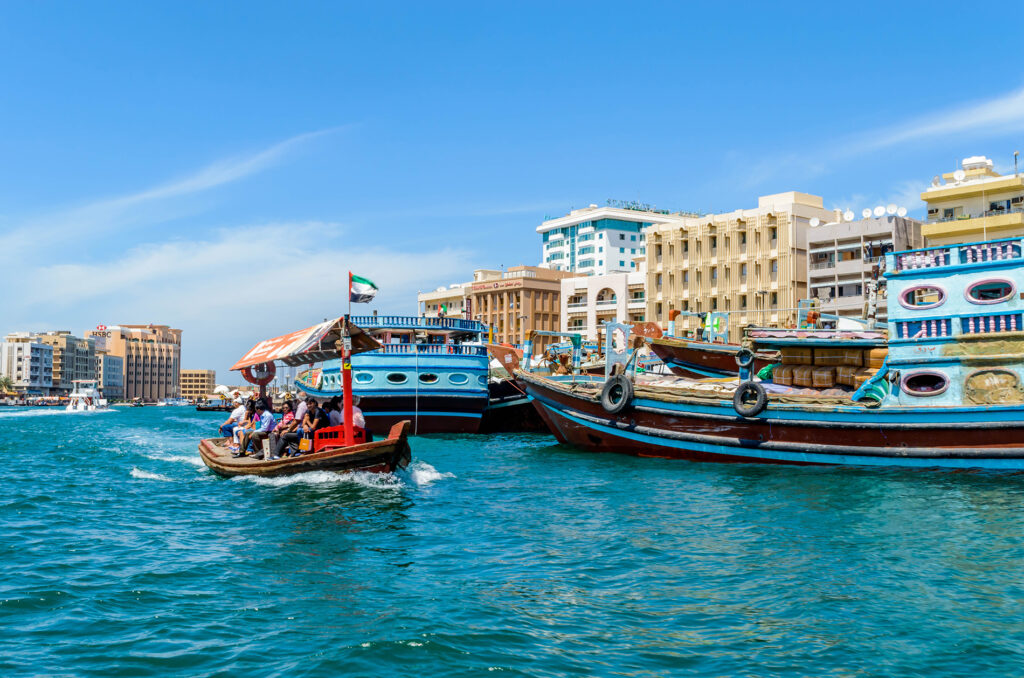
Dubai 2040 treats Deira and Bur Dubai as the city’s historic urban centre.
They remain appropriate starting points for people whose routine centres around:
- Dubai Creek;
- older commercial districts;
- traditional retail;
- established metro access;
- central-east Dubai.
But they are not identical.
Deira and Bur Dubai have different metro connections, building stock and road access.
Oplus’s Deira vs Bur Dubai comparison goes into the practical differences for renters and buyers.
Downtown Dubai and Business Bay
Downtown Dubai and Business Bay sit inside Dubai’s main economic and financial urban centre.
They suit a very different daily routine from outer villa communities.
The main decision factors are usually:
- workplace location;
- high-rise versus villa preference;
- road congestion tolerance;
- walkability around the exact building;
- proximity to metro;
- service charges if buying.
A central postcode does not automatically produce a short commute.
The final kilometre between a tower, parking exit and office can matter as much as the map distance.
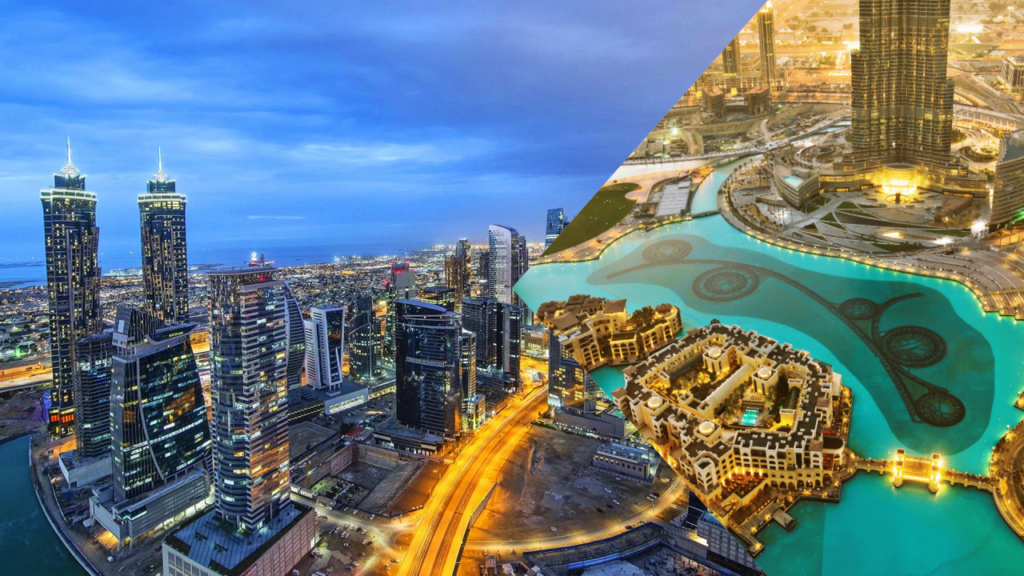
Dubai Marina, JBR and JLT
Dubai Marina and Jumeirah Beach Residence form part of Dubai 2040’s tourism and entertainment centre.
Jumeirah Lakes Towers sits immediately inland and adds a more business/residential mixed-use profile.
These areas make sense when a resident values:
- rail or tram connectivity;
- high-rise living;
- restaurants and services close to home;
- western Dubai access.
They are less appropriate for somebody whose priority is a detached villa, large private garden or low-density residential street.
Jumeirah, Umm Suqeim and Al Sufouh
These coastal areas stretch across some of Dubai’s most established beach-side residential corridors.
The housing mix differs substantially by location.
Jumeirah and Umm Suqeim have substantial villa stock, while Al Sufouh includes apartment and institutional/commercial areas.
Do not treat “near the beach” as a single property category.
A villa in Umm Suqeim and an apartment near Al Sufouh are completely different searches.
Palm Jumeirah and Dubai Islands
Both use island geography, but their development stages and property markets differ.
Palm Jumeirah is an established built environment with:
- apartments;
- villas;
- hotels;
- retail;
- hospitality.
Dubai Islands is undergoing much more active new development.
The correct buyer question is therefore not:
“Which island sounds better?”
It is:
Do I want an established island market or exposure to a district still being built out?
That timing distinction affects construction surroundings, comparable-property evidence and exit analysis.
Arabian Ranches, The Meadows, The Springs and The Lakes
These are natural starting points for buyers or renters whose search is primarily villa-led and family-oriented.
The decision should focus on:
- work commute;
- school route;
- villa size;
- plot size;
- community age;
- maintenance;
- road dependence.
A household that drives daily has a different area shortlist from somebody who requires metro access.
That should be decided before comparing properties.
Mirdif, Al Warqa and Al Mizhar
These east-Dubai residential areas are especially relevant to households whose routine points toward:
- DXB;
- eastern Dubai;
- Sharjah routes;
- schools in the wider east-Dubai corridor.
Mirdif and Al Warqa also have an important future transport change to consider.
Both lie on the route of the under-construction Dubai Metro Blue Line.
Dubai Metro Blue Line: Which Areas Change in 2029?
The Blue Line is one of the biggest future transport changes affecting several Dubai residential areas.
According to RTA’s May 2026 project update, the line runs for 30 km through 14 stations and is targeted to open on:
9 September 2029.
Its route includes:
| Area | Blue Line Role |
|---|---|
| Al Jaddaf | Connection with the Green Line at Creek |
| Dubai Festival City | New Blue Line service |
| Dubai Creek Harbour | Iconic station |
| Ras Al Khor | Route corridor |
| International City | Major interchange |
| Dubai Silicon Oasis | Blue Line service |
| Dubai Academic City | Eastern terminus corridor |
| Mirdif | New service corridor |
| Al Warqa | New service corridor |
RTA states that the line is designed to serve communities expected to have around one million residents by 2040.
What this means for a property decision
It means future public-transport access should be included in the location analysis.
It does not prove that every property near a Blue Line station will increase in value.
Station distance, construction timing, property price and future supply still matter.
Dubai Silicon Oasis
Dubai Silicon Oasis has a special position because Dubai 2040 identifies it as one of the five major urban centres.
Its role goes beyond housing.
The area combines:
- residential property;
- offices;
- technology businesses;
- education links;
- future Blue Line connectivity.
That makes it more useful to analyse as an employment-and-residential ecosystem than simply as an outer-Dubai apartment district.
Dubai Festival City and Al Jaddaf
Both sit along the future Blue Line route.
Al Jaddaf also connects into the existing Green Line network through Creek Station.
Dubai Festival City has a larger integrated mixed-use identity with residential, retail and hospitality components.
The two may look geographically close, but their housing stock and daily environment differ.
This is exactly why map proximity alone should not decide an area.
International City
International City is another area where future public transport materially changes the long-term transport picture.
Want to know the best real estate options in the UAE? Contact us today to inquire!
Contact us via WhatsAppThe Blue Line will create an interchange at International City 1 and continue through International City 2 and 3.
For residents who currently depend heavily on roads and buses, that is a meaningful future change.
But buyers should keep the date in perspective:
the target opening is 2029.
Do not price a future transport benefit as though it were available today.
Al Furjan and Discovery Gardens
These west-Dubai communities already benefit from existing metro connectivity around the Route 2020 corridor.
They can make sense for residents whose routine points toward:
- Jebel Ali;
- Expo corridor;
- Dubai Marina side;
- south-west Dubai employment districts.
Housing choice is also broader than many central districts because apartment communities sit close to villa and townhouse neighbourhoods.
Dubai Motor City and Dubai Sports City
These communities are more road-led.
That can work well for car-owning households whose daily route already centres around:
- Sheikh Mohammed Bin Zayed Road;
- Hessa Street corridor;
- Dubailand;
- nearby schools and sports facilities.
They are a weaker fit when direct metro access is non-negotiable.
That doesn’t make the areas better or worse.
It simply changes the resident profile.
JVC and JVT
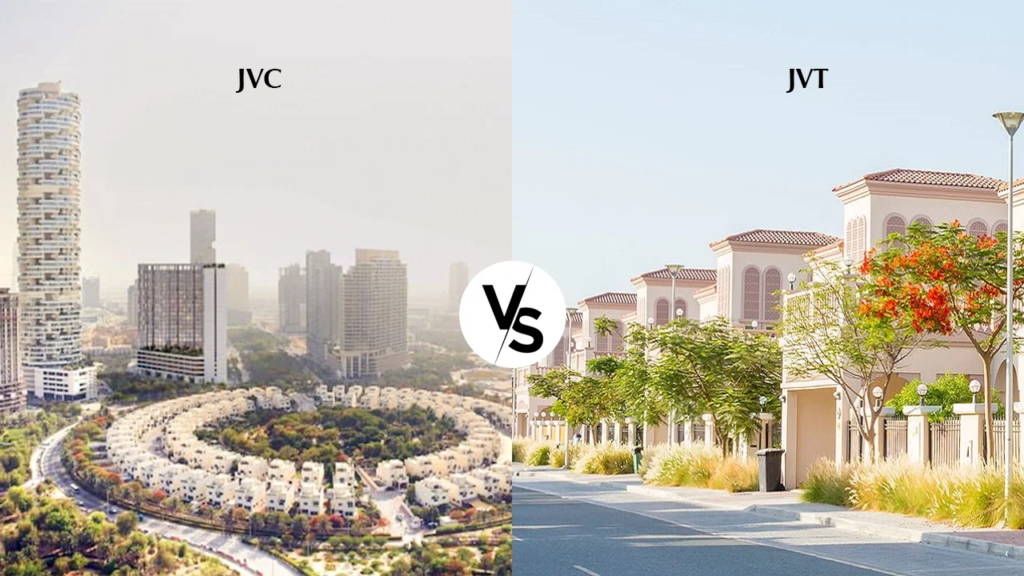
Jumeirah Village Circle and Jumeirah Village Triangle are adjacent names that are frequently confused.
They are separate communities.
JVC is much more apartment-dense in many sections, while JVT contains a stronger villa/townhouse character alongside newer apartment development.
Always verify the actual community, plot and building rather than shortening both searches to “Jumeirah Village”.
Dubai South Is Also Part of the Real Buyer Shortlist
Dubai South is important even though real-estate master-community naming does not always align neatly with statistical area directories.
It is especially relevant to people working around:
- Al Maktoum International Airport;
- Expo City;
- logistics districts;
- Jebel Ali;
- the wider south-Dubai corridor.
Its biggest trade-off remains commute.
For a deeper practical review, read the pros and cons of living in Dubai South.
Which Dubai Area Should You Choose for a Daily Commute?
Start with the workplace — not with the property portal.
| Daily Destination | Areas Worth Testing First |
|---|---|
| Downtown / DIFC / Business Bay | Downtown, Business Bay, Al Wasl, selected central metro districts |
| Dubai Marina / Internet City corridor | Dubai Marina, JLT, JBR, The Greens, The Views, Al Sufouh |
| Jebel Ali / Expo / south-west | Al Furjan, Discovery Gardens, DIP, Dubai South |
| DXB / east Dubai | Mirdif, Al Warqa, Al Qusais, Al Twar, Deira |
| Creek / Festival City / Silicon Oasis | Al Jaddaf, Dubai Festival City, International City, Dubai Silicon Oasis |
| Villa-led suburban routine | Arabian Ranches, The Meadows, The Springs, The Lakes, Nad Al Sheba |
Test the exact commute during your actual working hours.
“20 minutes on Google Maps” at midday is not evidence of a 20-minute weekday school-run commute.
Which Dubai Areas Suit Families?
Do not start with a universal “top five”.
Start with the type of family routine.
If villa space matters most
Investigate communities such as:
Arabian Ranches, The Meadows, The Springs, The Lakes, Nad Al Sheba and selected Mirdif neighbourhoods.
If metro access matters
Villa-led communities are often not the strongest fit.
Apartment-led areas around established metro corridors may be more practical.
If school location is fixed
Search around the school first.
A highly rated community can become a poor daily choice if every school journey crosses congested corridors.
Which Areas Suit Professionals Without a Car?
Prioritise the exact building-to-station journey, not the community marketing page.
Areas with established rail or tram access include parts of:
- Dubai Marina;
- JLT;
- JBR;
- Al Furjan;
- Discovery Gardens;
- Downtown;
- Business Bay;
- Deira;
- Bur Dubai.
The key word is parts.
A community can have a metro station while a specific building remains a long walk away.
Which Areas Should Investors Compare?
Investment intent should remain separate from a general Dubai communities list.
An investor needs additional evidence:
- purchase price;
- recent DLD transactions;
- rent;
- service charges;
- future supply;
- unit type;
- ready versus off-plan;
- exit liquidity.
For that specific intent, use Oplus’s Dubai investment areas comparison instead of treating this lifestyle/location guide as an ROI ranking.
Foreign Buyers: Not Every Location Question Is Only About Lifestyle
Dubai Land Department states that foreign nationals may own real estate in designated freehold areas.
That means an international buyer should verify ownership status for the exact property and plot.
DLD’s Property Status Enquiry identifies:
Freehold — purchase allowed for all nationalities
and:
Non-Freehold — purchase allowed for GCC nationalities.
Do not assume every property inside a familiar district automatically has identical ownership status.
This became even more relevant after DLD allowed eligible plots in parts of Sheikh Zayed Road and Al Jaddaf to convert to freehold ownership.
Area vs Community vs District vs Master Development
These terms are often used interchangeably in property marketing, but they can mean different things.
| Term | Practical Meaning |
|---|---|
| Planning sector | Large statistical/planning zone |
| District | Larger functional geographic area |
| Community | Official or commonly recognised residential/local area |
| Master development | Developer-led large project containing multiple sub-communities |
| Sub-community | Smaller neighbourhood or phase inside a larger community |
| Building/project | Specific development |
| Unit | The exact property being rented or purchased |
When buying, always reach the bottom of that hierarchy.
“Dubai Marina” is not enough.
You need:
community → building → unit → title/registration details.
How to Build a Three-Area Shortlist
Use five filters in this order.
| Filter | Question |
|---|---|
| Work/school | Where do you actually need to be five days a week? |
| Transport | Car, metro, tram, bus or future line? |
| Property type | Apartment, townhouse or villa? |
| Lifestyle | Waterfront, urban, quiet suburban, heritage or mixed-use? |
| Budget | What can you afford including ownership or rental costs? |
Only after these five filters should you compare individual properties.
Starting with property photos reverses the process.
A Better Example
Assume someone works near Dubai Internet City and wants a 1–2 bedroom apartment without relying heavily on a car.
A logical first shortlist may include:
Dubai Marina, JLT, The Greens and The Views.
Arabian Ranches may offer larger homes, but it fails the original transport requirement.
Now change the buyer:
Family with children, two cars and a school near Arabian Ranches.
The shortlist changes completely.
That is why there is no single “best area in Dubai”.
Do Not Choose an Area Only Because It Is New
New communities can provide:
- newer buildings;
- fresh infrastructure;
- modern layouts.
They can also come with:
- construction;
- incomplete retail;
- limited mature landscaping;
- uncertain future supply;
- longer drives while surrounding infrastructure develops.
Established communities can have older buildings but more observable:
- traffic patterns;
- rents;
- schools;
- retail;
- maintenance history.
Community maturity is a trade-off, not an automatic advantage.
Current Project Development Can Also Change an Area
A community’s property mix evolves.
Dubai Creek Harbour, Downtown Dubai, Arabian Ranches and other large Emaar-linked communities continue to receive new phases and projects over time.
Buyers researching those locations can use the Emaar Properties developer profile to understand the developer’s current project pipeline separately from the area itself.
The developer and the community are different entities.
Frequently Asked Questions
How many areas are there in Dubai?
There is no single official marketing count of Dubai areas. Digital Dubai divides the emirate into nine planning sectors for population reporting, while Dubai 2040 uses a six-level urban hierarchy extending from major centres to neighbourhoods. Property websites and developers use additional community and master-development names.
How many planning sectors does Dubai have?
Digital Dubai’s latest available annual population bulletin divides Dubai into nine planning sectors.
What are Dubai’s five main urban centres?
Dubai 2040 identifies the historic Deira/Bur Dubai centre, Downtown/Business Bay financial centre, Dubai Marina/JBR tourism centre, Expo centre and Dubai Silicon Oasis knowledge and innovation centre.
What is the difference between a Dubai area and a community?
“Area” is a broad everyday term. A community can refer to a more defined planning or residential geography, while developer master communities may contain multiple sub-communities and projects.
Which Dubai areas will the Blue Line serve?
RTA’s current route includes Al Jaddaf, Dubai Festival City, Dubai Creek Harbour, Ras Al Khor, International City, Dubai Silicon Oasis, Academic City, Mirdif and Al Warqa. The target opening date is 9 September 2029.
Which Dubai areas are suitable for families?
That depends on school, commute and property type. Villa-led starting points include Arabian Ranches, The Meadows, The Springs, The Lakes, Nad Al Sheba and selected Mirdif neighbourhoods.
Which Dubai areas have good public transport?
Parts of Dubai Marina, JLT, JBR, Downtown, Business Bay, Deira, Bur Dubai, Al Furjan and Discovery Gardens have established rail access. Always check the walking distance from the exact building.
Can foreigners buy property anywhere in Dubai?
Foreign ownership is permitted in designated freehold areas. Buyers should verify the exact property status through Dubai Land Department rather than assuming every plot in every community has identical ownership rights.
Are Dubai South and Dubai Creek Harbour official communities?
They are widely used master-development/location names in Dubai’s property market. Master-development names do not always correspond one-to-one with the statistical community hierarchy used by government datasets.
What is the best area in Dubai?
There is no universal best area. The answer changes with workplace, school, transport preference, property type, budget and whether the property is for personal use or investment.
Use the Area First, Then the Property
The useful order is:
daily route → area → community → building/project → exact unit.
If you’re still at the location stage, browse the Oplus Dubai and Abu Dhabi area guides rather than jumping directly into property listings.
For investment-specific location decisions, use the Dubai investment areas guide.
Written by: Oplus International Realty Editorial Team
Last reviewed: 14 September 2026
Editorial note: Location suitability is personal. Transport projects, planning boundaries and property ownership status should be checked against the latest official authority information before making a purchase decision.
Sources
- Digital Dubai / Dubai Data & Statistics Establishment — Population Bulletin, Emirate of Dubai 2024
- Dubai 2040 Urban Master Plan — Five Urban Centres
- Dubai 2040 Urban Master Plan — Community and urban hierarchy
- Roads & Transport Authority — Dubai Metro Blue Line project and May 2026 construction update
- Dubai Land Department — Property Status Enquiry
- Dubai Land Department — Regulation No. 3 of 2006 on foreign ownership areas
- Oplus International Realty — Dubai area taxonomy, reviewed 14 September 2026