Sheikh Zayed Road is Dubai’s primary commercial and residential highway corridor, running parallel to the Arabian Gulf coastline through the city’s commercial core. Average apartment rentals on SZR stand at AED 139,689 per year according to Dubai Land Department transactional data, with a -5% movement recorded over the past 12 months — a counter-trend to the broader Dubai market. Oplus International Realty advises clients on Dubai residential addresses regularly. This guide covers the genuine advantages, the real drawbacks, the current price picture, and who SZR actually suits.
SZR as a Real Estate Address — What It Means
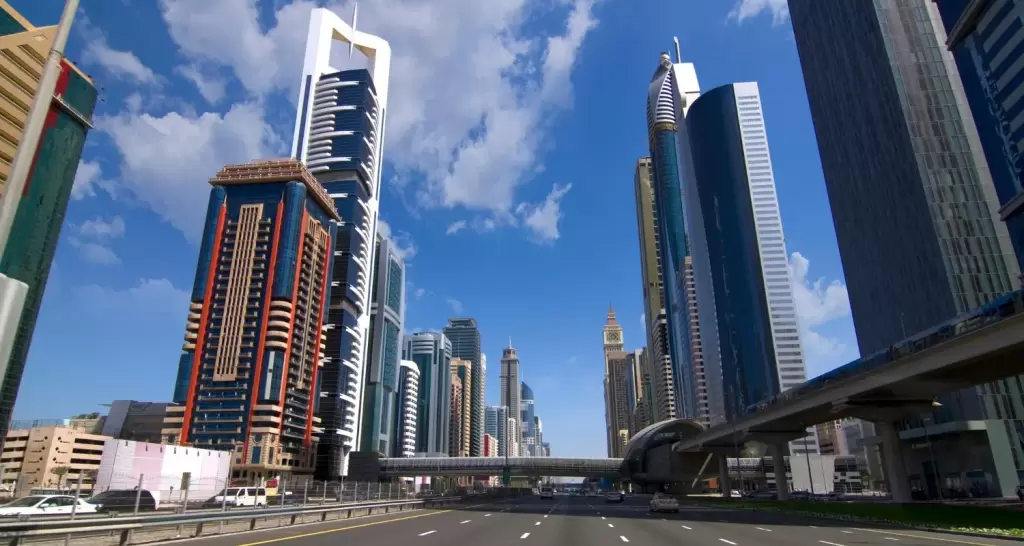
In Dubai’s property market, “Sheikh Zayed Road” as a real estate designation typically refers to the Trade Centre First and Trade Centre Second districts — the approximately 2km high-rise corridor running between the World Trade Centre roundabout and Business Bay. This stretch, characterised by walls of skyscrapers on both sides of the road, is where most SZR residential apartments are actually located.
The broader E11 highway — designated Sheikh Zayed Road through Dubai — extends further, connecting the SZR residential corridor through Al Quoz, Al Barsha, and continuing to the Abu Dhabi border and beyond. The full E11 highway spans approximately 558km across the UAE from Ras Al Khaimah to Abu Dhabi. That is the national road’s total length — not the length of SZR “in Dubai,” as some guides incorrectly state. The Dubai section of E11 is approximately 55km.
This distinction matters for buyers and renters: a property listed as “Sheikh Zayed Road” in a real estate portal typically means the Trade Centre First or Trade Centre Second corridor, not a unit in Al Barsha or Al Quoz — both of which sit along the E11 but are distinct communities with different prices and characters.
What the Numbers Say — April 2026
Based on Dubai Land Department transactional data, apartments in the SZR corridor average AED 139,689 per year in rental value, with a range from AED 48,000 to AED 1,030,000 depending on size, floor level, furnishing status, and views.
The -5% rental movement recorded over the last 12 months on SZR is the most specific data point for any resident or investor evaluating this corridor. The broader Dubai apartment rental market has been rising — citywide villa rents were up 14% year-on-year in 2025 per ADREC data, and apartment rents across central Dubai have increased across most sub-markets. SZR’s -5% movement goes against that trend. This likely reflects the age and specification of many SZR towers — largely built between 1999 and 2012 — competing with newer stock in Business Bay, Downtown Dubai, and Dubai Marina where landlords have the specification advantage.
For investors: sale prices along the SZR corridor average AED 2,800,000 per DLD-attributed transaction data, with a +15% increase year-on-year and an average of AED 2,000 per square foot. Rental yields range from 5.5% to 7.5% depending on unit type and building — with Business Bay (technically adjacent to the SZR corridor) generating the stronger end of that range at 7.5% for 1-bedroom units. The yield profile is competitive, but buyers should factor in the older building stock when modelling future rental performance against newer competition.
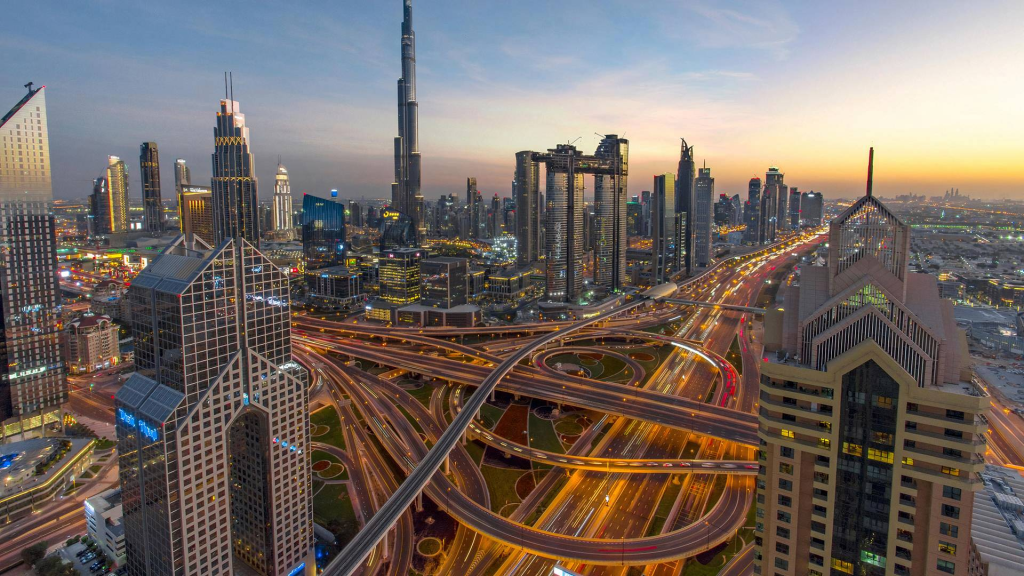
Eight Genuine Advantages of Living on SZR
1. Metro access that is genuinely convenient. The Dubai Metro Red Line has multiple stations along the SZR corridor — Emirates Towers, Financial Centre, World Trade Centre — making SZR one of the best-served residential addresses for metro-dependent daily commuters in the city. This is not marginal metro access; for residents who work in DIFC, Downtown Dubai, or Dubai Mall, the stations are within a short walk of most SZR towers.
2. DIFC and Business Bay within walking or cycling distance. For professionals working in either of Dubai’s two main financial districts, an SZR address can eliminate the daily commute entirely. This is the primary driver of demand from the professional expat population and explains why occupancy rates in SZR towers remain high despite the -5% rental adjustment.
3. Furnished and serviced apartment stock. The SZR corridor has among the highest concentration of furnished and serviced residential apartments in Dubai. For relocating professionals who want to move with a suitcase rather than a shipping container, SZR’s hotel-apartment and serviced unit inventory is a practical advantage that most areas cannot match.
4. Burj Khalifa views from upper floors. A specific subset of SZR towers — particularly those in the Trade Centre corridor on the east-facing side — offer direct Burj Khalifa views from higher floors. These units consistently command a rental premium and are a genuine lifestyle differentiator for residents who value iconic skyline views in their daily environment.
5. Restaurant depth across all price points. DIFC’s restaurant row — arguably Dubai’s most concentrated collection of high-end dining — is accessible on foot from most SZR towers. The main SZR road itself supports everything from casual international eateries to fast-food outlets. For residents who eat out regularly, the variety and proximity is a material quality-of-life factor.
6. Shopping without a car. Dubai Mall is accessible from the Burj Khalifa/Dubai Mall Metro Station — reachable via the Red Line from SZR stations without a car. Mall of the Emirates is accessible via the Red Line at Mall of the Emirates station. Oasis Centre is within a short drive. For daily grocery needs, supermarket options including Carrefour and Spinneys are accessible within or near the corridor.
7. Inter-emirate highway access. Residents who need to drive to Abu Dhabi, Sharjah, or the northern emirates have the most direct highway access in Dubai from the SZR corridor. The road connects directly to the Abu Dhabi highway, and northern emirates are reachable within 45–90 minutes depending on destination and traffic. For cross-emirate commuters who want to stay in Dubai, SZR is among the most logistically central options.
8. Hotel infrastructure for visiting guests. The SZR corridor is lined with five-star hotels — Fairmont, Conrad, Shangri-La, Sheraton, Crowne Plaza, Dusit Thani, and Gevora Hotel, which briefly held the title of the world’s tallest hotel at 356 metres upon its 2018 opening. Residents with frequent visiting family or business contacts benefit from a concentration of hotel options within walking distance of their building.
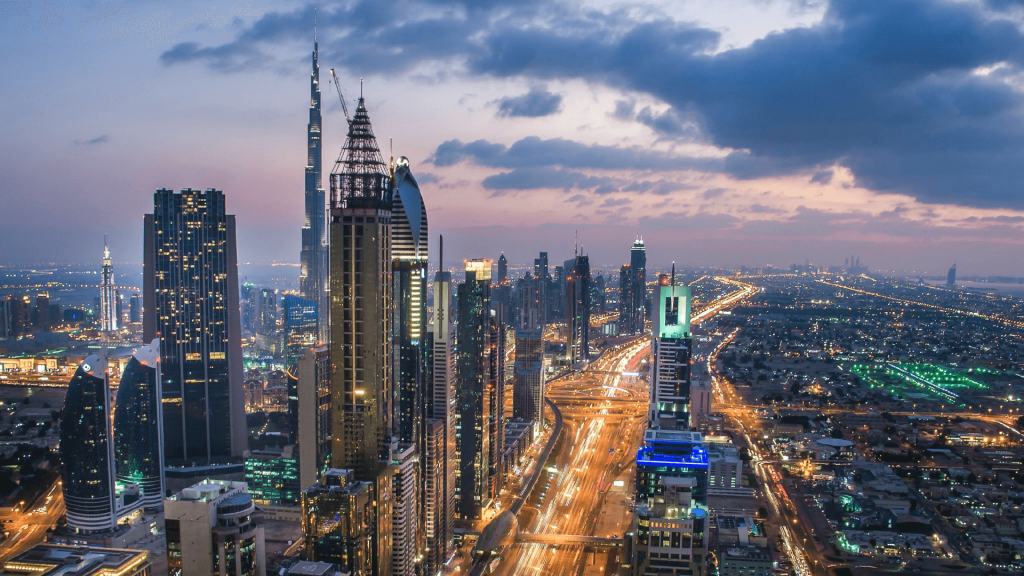
Three Drawbacks That Need Honest Treatment
Traffic is structurally difficult and daily — with a financial cost attached. SZR is one of the busiest commuting roads in the UAE. Peak-hour traffic during 7am–9am and 5pm–7:30pm is consistently heavy through the corridor, and incidents further up or down the E11 cascade quickly. For residents who commute by car within Dubai, peak-hour journeys that would take 10 minutes at midnight can take 35–50 minutes during rush hour. This is not an occasional inconvenience — it is a daily structural condition.
Want to know the best real estate options in the UAE? Contact us today to inquire!
Contact us via WhatsAppThe financial element most area guides omit: SZR has multiple Salik (electronic toll) gates operational along the corridor. For daily drivers, monthly Salik costs accumulate meaningfully and should be factored into the real cost of living on SZR versus a non-tolled residential area. Oplus recommends residents who drive daily calculate their expected monthly Salik spend based on their specific journey before assuming SZR is a cheaper central address than alternatives.
Visitor parking is genuinely limited. Most SZR buildings allocate parking to residents at a defined ratio. Surface and street parking near the towers is scarce. Guests arriving by car face consistent difficulty finding parking, particularly in the evenings. This is a recurring issue rather than a periodic one and is worth discussing with building management before committing to a unit if regular guests arriving by car is a feature of your lifestyle.
Building age and specification vary significantly. The SZR corridor was developed predominantly between 1999 and 2012. Tower quality, elevator efficiency, building management responsiveness, and common area specification across this stock vary considerably. Some buildings are well-maintained with active management and recent refurbishment; others show their age in HVAC systems, lobby presentation, and maintenance response times. The -5% rental movement partly reflects the market pricing older stock at a discount against newer inventory elsewhere. Prospective renters should inspect the specific building — not just the unit — before committing, paying particular attention to elevator wait times, generator backup coverage, and service charge history.
Who SZR Suits — and Who Should Look Elsewhere
SZR is well suited for: DIFC and Business Bay professionals who value a sub-15-minute car commute or metro-connected journey to work. Relocating expats who want a furnished, immediately liveable apartment without setting up utilities and furniture from scratch. Metro-dependent residents who travel daily on the Red Line for work or leisure. Business visitors who regularly host guests from abroad and want hotel-level accommodation within walking distance. Investors seeking rental yield in an established, high-occupancy corridor with proven long-term demand.
SZR is a harder fit for: Families with children who need schools and play space within walking distance — SZR does not have schools on the road itself, and the surrounding environment is commercial rather than residential in character. Residents who drive every day and are sensitive to traffic delays and Salik toll costs. Those seeking newer building stock with contemporary specifications — most SZR towers are 10–25 years old. Anyone prioritising community feel and green space — SZR is an urban commercial corridor, not a residential neighbourhood in the conventional sense.
For buyers comparing SZR to adjacent communities, browse Dubai apartments available through Oplus, and consult the Oplus Dubai investment guide for a broader yield and transaction comparison across Dubai’s central corridor.
Frequently Asked Questions
What is the average apartment rental on Sheikh Zayed Road Dubai?
Based on Dubai Land Department transactional data, the average apartment rental on Sheikh Zayed Road is AED 139,689 per year. The range runs from AED 48,000 per year for smaller studios to AED 1,030,000 for large, high-floor units. DLD transactional data shows a -5% movement in SZR rentals over the past 12 months.
What rental yield can investors expect on SZR?
Rental yields in the SZR corridor range from 5.5% to 7.5% depending on unit type and building. Business Bay, adjacent to the SZR corridor, generates 7.5% gross yield on 1-bedroom units. Average sale prices in the SZR corridor are approximately AED 2,800,000 with a +15% year-on-year movement, at an average of AED 2,000 per square foot, per DLD-attributed data.
How long is Sheikh Zayed Road in Dubai?
The E11 highway designated as Sheikh Zayed Road within Dubai extends approximately 55km. The full E11 spans approximately 558km across the UAE from Ras Al Khaimah to Abu Dhabi — this is the national highway’s total UAE length, not the length of the road within Dubai. In real estate terms, “Sheikh Zayed Road” as an area refers specifically to the Trade Centre First and Trade Centre Second districts — a 2km high-rise corridor between the WTC roundabout and Business Bay.
Which Dubai Metro stations serve Sheikh Zayed Road?
The Dubai Metro Red Line has several stations along the SZR corridor, including World Trade Centre, Emirates Towers, and Financial Centre stations. These provide direct metro access to DIFC, Downtown Dubai, and the broader Red Line network — from Dubai International Airport to Dubai Marina.
Are there schools near Sheikh Zayed Road?
There are no schools directly on Sheikh Zayed Road itself. Multiple schools are within a 10–15 minute drive, serving a range of curricula. Residents with school-age children should verify current registration availability and commute time from their specific building to their target school before choosing an SZR address.
Is the traffic on Sheikh Zayed Road as bad as its reputation?
During off-peak hours, SZR traffic is manageable and the road provides fast city-wide access. During weekday peak hours — approximately 7am–9am and 5pm–7:30pm — congestion is consistent and significant. Residents who drive daily should test their specific journey at actual commute times before committing to an apartment. Multiple Salik toll gates are also active on SZR — monthly toll costs should be factored into budgeting.
Which malls are on or near Sheikh Zayed Road?
Dubai Mall is in Downtown Dubai, accessible via metro from SZR stations. Mall of the Emirates is in Al Barsha, reachable via Red Line. Oasis Centre is nearby. Ibn Battuta Mall is in Jebel Ali — accessible but a longer drive. Marina Mall is in Dubai Marina and is not on the SZR corridor.
What types of apartments are available on SZR?
Studios, 1-bedroom, 2-bedroom, 3-bedroom, and 4-bedroom apartments are available across the SZR corridor, in both furnished and unfurnished configurations. A significant proportion of the stock is furnished or serviced — a differentiating feature of SZR versus most other Dubai residential areas. Amenities in most towers include rooftop pools, gyms, covered parking, and concierge services.
Written by: Oplus International Realty Editorial Team
About Oplus: Licensed UAE real estate brokerage based in Abu Dhabi, covering Abu Dhabi and Dubai off-plan, secondary market, and investment properties. RERA registered. oplusrealty.com
Last reviewed: April 2026
Disclaimer: This article is for informational purposes only and does not constitute financial or investment advice. Consult a RERA-licensed professional before any property decision.
Sources Dubai Land Department (DLD) — transactional rental data for Sheikh Zayed Road apartments (via Bayut DLD feed); average rental AED 139,689/year; -5% movement over 12 months DLD-attributed sale price data — average AED 2,800,000, AED 2,000/sqft, +15% YoY (June 2025, Tier 2 citing DLD) RTA Dubai — Salik toll gate locations along E11/SZR Roads and Transport Authority (RTA) / Dubai Metro — Red Line station locations on SZR CTBUH / Emporis — Gevora Hotel height and world’s tallest hotel record (2018)