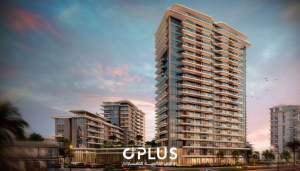

An AED 600,000 budget can support different approaches to Dubai real estate investment, from buying a lower-priced apartment to using mortgage finance or investing through property funds. The decision depends on whether AED 600,000 is your total available cash or only part of a larger purchase. Oplus International Realty examines the actual costs, financing limits, ownership structures and risks behind each approach.
First, Decide What Your AED 600,000 Budget Means
The same budget can produce very different outcomes depending on how it is allocated.
| Investment approach | What AED 600,000 represents | Main consideration |
|---|---|---|
| Buy a ready apartment with cash | Purchase price plus transaction costs and reserves | The property price must leave room for closing costs |
| Buy an off-plan apartment | Initial and future payments toward the purchase price | The full payment schedule must be affordable |
| Buy with a mortgage | Equity contribution, closing costs and financing expenses | Loan eligibility and ongoing repayments |
| Property crowdfunding | Capital invested through a platform or investment structure | Legal rights, fees and exit restrictions |
| Real estate investment trusts | Capital used to purchase fund units or shares | Market price, fund risk and distributions |
| Property tokenisation | Capital allocated through an authorised tokenised structure | Regulatory status, legal rights and liquidity |
If AED 600,000 is all the money available, committing the entire amount to a property’s advertised price can leave the purchase underfunded.
For a direct purchase, the first calculation should be the total cash needed to complete the transaction.
How Much Property Can AED 600,000 Buy With Cash?
Dubai Land Department’s sale-registration service lists registration charges equivalent to 2% of the sale value for the seller and 2% for the buyer. It also lists title-deed, map, knowledge, innovation and service-partner charges.
Which party ultimately bears the combined registration cost depends on the applicable transaction arrangements and agreement. Buyers should confirm the allocation before signing.
For illustration, consider a ready residential apartment transferred through a Real Estate Registration Trustee, with these assumptions:
- The buyer bears the full combined 4% registration charge.
- Agency commission is assumed at 2% of the property price, plus 5% VAT on that service. This is a modelling assumption, not a government-set commission.
- The transaction uses the DLD service-partner charge of AED 4,000 plus VAT for a sale valued at AED 500,000 or more.
- The applicable apartment map, title-deed, knowledge and innovation fees are included.
This scenario produces the following estimates.
| Apartment price | Modelled purchase costs | Total cash required | Cash remaining from AED 600,000 |
|---|---|---|---|
| AED 500,000 | AED 35,220 | AED 535,220 | AED 64,780 |
| AED 540,000 | AED 37,660 | AED 577,660 | AED 22,340 |
| AED 550,000 | AED 38,270 | AED 588,270 | AED 11,730 |
| AED 600,000 | AED 41,320 | AED 641,320 | AED −41,320 |
These are calculated examples, not property listings or final conveyancing quotations. They exclude possible developer NOC charges, legal services, outstanding service-charge adjustments, furnishing, repairs, utility deposits and other transaction-specific expenses.
DLD also publishes a separate Dubai Now transfer service with different service charges and eligibility conditions. The fees therefore cannot be treated as identical across every transaction route.
Example: Buying a Ready Apartment for AED 550,000
The modelled costs break down as follows:
| Item | Amount |
|---|---|
| Property purchase price | AED 550,000 |
| Combined DLD sale registration charge, assumed paid by buyer (4%) | AED 22,000 |
| Assumed agency commission including VAT (2.1%) | AED 11,550 |
| DLD service-partner fee including VAT | AED 4,200 |
| Title-deed issuance | AED 250 |
| Apartment map | AED 250 |
| Knowledge and innovation fees | AED 20 |
| Estimated total cash | AED 588,270 |
That leaves AED 11,730 of the original budget before any other expenses. For many buyers, such a small remaining balance would warrant reconsidering the purchase price or adding a separate reserve.
The lesson is not that AED 550,000 is the correct price to pay. It is that a property’s asking price and its cash-to-close requirement are different figures.
The official fee schedule is available from the Dubai Land Department.
Option 1: Buy a Ready Apartment for Rental Income
A ready apartment is the most direct way to own a completed residential asset within a limited budget, provided a suitable property is available at an affordable price.
A buyer can inspect the building, study its maintenance condition and examine existing rental and sale records before making a decision.
For a cash-funded investment, the practical screening range under the example above is below the full AED 600,000 allocation. The exact price ceiling should reflect the negotiated fee allocation, property-specific charges and desired cash reserve.
Where should investors look?
Instead of relying on a list of advertised studio prices, investors can screen established and developing apartment markets such as International City, Dubai Investments Park, Dubai Production City and selected parts of Dubai South.
These are research areas, not a verified list of currently available apartments under AED 600,000. Availability, legal ownership status, building condition and current transaction prices must be established for each shortlisted property.
A location belongs on the final shortlist only when a comparable ready unit meets the total cash limit.
The Dubai Land Department’s Real Estate Data service is a starting point for reviewing registered sale and rental activity. Asking prices should be checked separately, because advertised properties are not the same as completed transactions.
What to inspect before buying
A low entry price is not a substitute for due diligence.
Check the title deed and permitted ownership rights, service-charge history, cooling arrangements, lift and building condition, parking allocation, any existing tenancy and the number of comparable units available for rent or resale.
A cheaper apartment can become expensive if it requires major repairs or has unusually high ongoing costs.
For a rental investment, a ready property may become income-producing after a tenant is secured and the applicable lease arrangements are in place. Rental income is not automatic at completion.
Option 2: Use AED 600,000 as Equity for a Mortgage
A mortgage can give an investor access to a higher-priced property, but the applicable loan-to-value limit depends on the borrower’s category and intended property use.
The UAE Central Bank’s mortgage regulations distinguish between an expatriate’s first owner-occupied home and a second, subsequent or investment property.
For expatriates, the regulations set a maximum 60% loan-to-value ratio for second, subsequent or investment properties. A qualifying first owner-occupied property below AED 5 million falls under a different category, with a maximum 80% ratio.
These are regulatory ceilings, not guaranteed loan offers. A bank may approve less or decline the application based on income, existing debts, credit assessment and the property.
An Investment-Mortgage Example
Assume an expatriate applies for a 60% mortgage on a ready investment apartment.
| Purchase price | Equity at 40% | Mortgage at 60% | Modelled initial cash requirement* |
|---|---|---|---|
| AED 1,000,000 | AED 400,000 | AED 600,000 | AED 467,220 |
| AED 1,200,000 | AED 480,000 | AED 720,000 | AED 559,720 |
| AED 1,500,000 | AED 600,000 | AED 900,000 | AED 698,470 |
*Illustrative initial cash requirement includes the equity contribution, an assumed buyer-funded 4% sale registration charge, assumed agency commission of 2% plus VAT, the modelled sale-registration fixed fees and a 0.25% mortgage-registration charge on the loan amount. It excludes separate mortgage-registration trustee charges, other mortgage-related deed or administration charges where applicable, bank processing and valuation fees, insurance and cash reserves. It is not a final lender or DLD quotation.
The example demonstrates a common budgeting error: using AED 600,000 entirely as the 40% deposit on a property worth AED 1.5 million leaves no cash for transfer or financing expenses.
A bank’s approved valuation may also differ from the agreed purchase price, changing the amount of equity required.
DLD publishes a mortgage-registration fee of 0.25% of the mortgage value and lists additional charges for the relevant registration route. Those need to be included in the final transaction quotation.
Mortgage repayments create another obligation after purchase. The buyer must assess interest or profit rates, repayment terms, insurance, possible vacancy and whether rental income can cover ongoing costs.
Read the Oplus Dubai Mortgage Eligibility Guide for a more detailed explanation of buyer categories.
Option 3: Buy Off-Plan Through a Payment Schedule
Off-plan property may allow an investor to make staged payments rather than pay the full purchase price immediately.
However, an affordable first instalment does not make the full property affordable.
A buyer with AED 600,000 should compare the total contracted price with every payment due before, at and after handover. The schedule must be assessed alongside applicable registration expenses and other contractual costs.
Example: A Payment Plan Is Not a Price Discount
Suppose a hypothetical off-plan apartment costs AED 800,000, with an initial payment of 25%.
The first instalment would be AED 200,000, but the remaining purchase-price obligation would still be AED 600,000.
That is AED 800,000 in total purchase-price payments before transaction costs. It does not fit an AED 600,000 total lifetime cash budget without another verified source of funding.
This is a mathematical illustration, not an advertised developer payment plan.
What must be checked?
The investor should establish the developer’s project registration, contractual payment milestones, escrow arrangements, cancellation provisions and stated completion date.
Delivery dates are projections until the property is completed and handed over. Future rent and resale prices are uncertain.
Dubai Land Department’s initial-sale registration service provides details of the off-plan registration process.
Where mortgage finance is considered for off-plan purchases, the Central Bank’s published framework sets a maximum loan-to-value ratio of 50% across borrower categories. This does not mean that a lender must offer finance for every project or at every construction stage.
An off-plan purchase may be appropriate for someone with a longer funding horizon and enough future income to meet the instalments. It is less suitable when the buyer has only the initial payment available and no reliable plan for the balance.
Option 4: Invest in Property Without Buying an Entire Unit
A person with AED 600,000 does not have to commit the whole amount to one apartment.
There are regulated investment structures that provide exposure to real estate without the same type of direct ownership.
| Model | What the investor generally holds | Main risk to evaluate |
|---|---|---|
| Property crowdfunding | An interest under the platform’s legal investment structure | Asset concentration, platform structure and exit limitations |
| Real estate tokenisation | Rights defined by a tokenised investment and its legal documentation | Regulatory scope, ownership rights and secondary-market liquidity |
| REITs | Units or shares in a real estate investment vehicle | Fund valuation, market-price movements and distribution risk |
These models are not legally interchangeable with a Dubai Land Department title deed for an individually owned apartment.
Property crowdfunding
Property investment crowdfunding platforms can pool investor capital into real estate transactions.
The Dubai Financial Services Authority maintains a public register of authorised firms. For example, its register identifies Stake Properties Limited as authorised to operate a property investment crowdfunding platform.
That regulatory entry establishes the firm’s listed authorisation; it does not guarantee any particular property offering, return or exit date.
Before investing, examine the contract to determine which legal entity holds the property, what rights the investor receives, how income and fees are calculated, and whether investments can be sold before the planned exit.
Check the DFSA public register rather than relying exclusively on a platform’s marketing claims.
Real estate tokenisation
Dubai Land Department announced Phase II of its real estate tokenisation project in February 2026, including a controlled secondary-market mechanism.
The Virtual Assets Regulatory Authority subsequently clarified that Phase II operates under controlled regulatory testing and evaluation. Participation or promotion by a business should not be assumed authorised merely because it refers to the DLD initiative.
Tokenised exposure does not guarantee that an investor can sell whenever desired or that the token gives the same rights as directly holding an individual title deed.
Review the instrument’s legal documentation, custody arrangements, approved provider status, trading restrictions and available buyer market.
Real estate investment trusts
REITs invest in real estate through a managed investment structure. Depending on the fund and its listing, investors can gain property-market exposure without purchasing and managing an individual unit.
Dubai Financial Market provides information about REIT investment products.
A REIT investor faces investment-fund and securities-market risks. Distributions are not guaranteed, and the market value of the units may fall even when the underlying properties continue to generate rent.
This approach can be worth comparing when diversification and ease of portfolio management matter more than direct property control.
What About Hotel Apartments and Holiday Homes?
Hotel apartments and serviced accommodation are sometimes marketed to investors with relatively modest entry budgets.
The commercial terms can be very different from those of a conventional residential lease.
For a hotel-operated unit, examine whether the buyer acquires individual property rights, how the operator agreement works, what fees are deducted, whether income is pooled, and whether the owner can occupy or exit the arrangement.
Do not treat an advertised return as a guaranteed net return.
For a conventional residential apartment intended for short-term holiday letting, Dubai’s Department of Economy and Tourism operates the applicable holiday-home registration and permitting framework. A low purchase price alone does not establish permission to run short-term accommodation.
See the Dubai DET hospitality services information before making revenue assumptions.
How to Compare Returns on a Small Property Budget
The most attractive-looking percentage is not necessarily the best investment.
Gross rental yield is calculated by dividing annual rental income by purchase price. Net rental yield should also account for operating expenses and acquisition costs.
Relevant expenses can include building service charges, maintenance, management, insurance, vacancy allowances and purchase expenses.
A financed investment also requires a separate assessment of loan payments and actual cash invested. Cash-on-cash return should not be confused with gross or net rental yield.
Use registered transactions, not one advertised ROI figure
When comparing two apartments, use the same observation period, property type, bedroom count, location level and price basis.
An advertised sale price combined with an estimated rent does not prove an achieved rental yield.
Likewise, asking prices, recorded transactions and developer projections should not be treated as equivalent evidence.
Investors should also examine resale liquidity: the number of comparable competing units, past sale activity and the potential costs of selling.
The Dubai Market Context in Late 2026
An investor’s entry price matters more when market conditions are changing.
Savills’ October 2026 review reported approximately 34,500 Dubai residential transactions in Q3 2026, down 4% quarter on quarter, with transaction value of AED 70.8 billion.
The report also described stronger ready-property transaction activity and a 16% quarter-on-quarter rebound in rental activity.
It noted softer headline pricing while finding relatively stable like-for-like pricing, highlighting differences between market-wide averages and comparable property performance.
Looking ahead, Savills identified more than 525,000 homes scheduled for delivery during 2027–2030. That is a future supply schedule, not a count of completed homes or a guarantee that every planned unit will be delivered on time.
For a budget-conscious investor, competing supply, financing conditions and building-specific rental demand are reasons to test assumptions carefully rather than rely on a city-wide appreciation forecast.
Read the Savills Dubai Residential Market Report Q3 2026.
Which Strategy Is Most Suitable for AED 600,000?
The answer depends on the investor’s income, risk tolerance, time horizon and preference for direct ownership.
| Investor priority | Strategy to examine first | Reason to reconsider |
|---|---|---|
| Own a completed rental property without debt | Ready apartment bought for cash | Closing costs and weak building economics |
| Buy a higher-value ready property | Mortgage-backed purchase | Financing risk and monthly commitments |
| Spread payments across time | Off-plan purchase | Future instalments or completion risk |
| Invest without managing tenants | Crowdfunding or REITs | Different legal rights, fees and exit risks |
| Seek professionally operated accommodation exposure | Hotel-apartment structure | Operator contracts and uncertain net income |
| Maintain access to part of the money | Compare liquid securities and retain cash | Price volatility and no direct title ownership |
Direct property ownership concentrates capital in one physical asset. Fund investment can spread exposure, depending on the vehicle, but introduces a different set of market and governance risks.
Neither approach is inherently safer or more profitable.
Questions Investors Ask About an AED 600,000 Budget
Can a non-resident buy a property in Dubai?
Non-residents may acquire qualifying property rights in Dubai’s designated ownership areas, subject to the applicable legislation and registration requirements.
DLD’s sale-registration service includes passport documentation for eligible non-resident foreign buyers. The specific property’s title and ownership eligibility must still be verified.
Does AED 600,000 qualify for a Dubai property Golden Visa?
A single property purchased for AED 600,000 does not meet the AED 2 million property-value threshold stated in DLD’s real estate investor Golden Visa service.
Other residence categories have separate rules and should not be confused with the property-investment route.
Is a ready apartment better than off-plan?
A ready apartment can be physically inspected and assessed against existing rental evidence. Off-plan purchases may spread payments over time but involve completion and future-market uncertainty.
The better option depends on the full purchase economics rather than whether the apartment is new or completed.
Can I invest AED 600,000 without taking a mortgage?
Yes. A cash purchase may be possible if the property price, agreed transaction costs and reserves fit within the budget. Alternatively, a person can consider eligible investment funds or regulated fractional structures without purchasing an entire property.
Final Assessment
An AED 600,000 investment budget offers more than one route into Dubai real estate, but the advertised property price is only the beginning of the financial assessment.
For a direct cash purchase, the budget needs to cover transfer costs and a practical reserve. For a mortgage purchase, it must also cover financing expenses and remain affordable after loan repayments. For off-plan property, the complete future payment schedule matters more than the initial instalment.
Crowdfunding, tokenisation and REITs offer different forms of exposure, not automatic substitutes for a directly registered property.
The most defensible decision is the one based on verified legal rights, transaction evidence, full costs and realistic downside scenarios.
Oplus International Realty can help you assess how a Dubai property purchase fits your budget and ownership requirements. Contact the Oplus team to discuss your options.
Sources
- Dubai Land Department — Property Sale Registration
- Dubai Land Department — Real Estate Data
- Dubai Land Department — Mortgage Registration
- Dubai Land Department — Initial Sale Registration
- Central Bank of the UAE — Regulations Regarding Mortgage Loans
- Federal Tax Authority — Standard VAT Rate
- Savills — Dubai Residential Market Report Q3 2026
- Dubai Financial Services Authority — Stake Properties Limited Public Register Entry
- Dubai Land Department — Real Estate Tokenisation Phase II
- Virtual Assets Regulatory Authority — Real Estate Tokenisation Pilot Alert
- Dubai Financial Market — REITs
- Dubai Land Department — Golden Visa Application for Property Investors
By Oplus International Realty Editorial Team