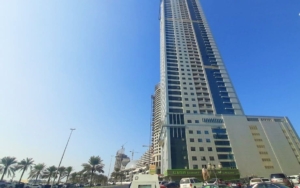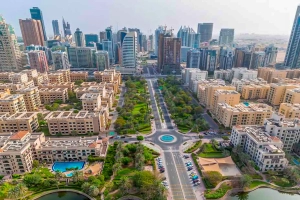

Approximately 3.5 million Indians live in the UAE according to the Federal Competitiveness and Statistics Centre — the single largest expat nationality in the country and the dominant demographic in Abu Dhabi’s rental market. Indian families and professionals in Abu Dhabi concentrate across eight communities that differ sharply in rent, school access, and commute reality. Oplus International Realty maps the key options below.
What the June 2026 ADREC Rent Freeze Means for Indian Renters
Before looking at specific areas, one policy development changes the current calculation: in June 2026, ADREC froze residential rent increases across Abu Dhabi, preventing landlords from raising rents on existing contracts until further notice. If you are renewing a lease, your landlord cannot legally apply an upward adjustment.
The freeze reflects the pace of rent growth since 2023. Abu Dhabi’s average asking rent reached AED 163,000 per year as of Q1 2026, according to ValuStrat data published alongside ADREC Q1 figures — a city-wide average that masks wide variation between areas. For Indian families deciding between communities right now, the freeze locks in current pricing and removes one layer of short-term uncertainty.
The freeze does not cap rents on vacant units. If you are signing a new lease rather than renewing, current market rates apply and negotiation is still relevant.
Choosing Your Area: Four Practical Questions
Based on inquiries Oplus received from Indian renters and buyers in the first half of 2026, school proximity is the most consistent deciding factor after budget — specifically whether an Indian curriculum school with a Good or above ADEK rating sits within a 10-minute drive of the home. Community familiarity (the presence of other Indian families) ranks second. Before shortlisting communities, four questions help focus the search.
1. School-run distance. Which area puts you within 10 minutes of your preferred Indian curriculum school? MBZ City and Al Mushrif have clear answers. Al Reem Island does not.
2. Commute tolerance. Abu Dhabi’s main employment clusters sit near the Corniche, Al Maryah Island, and Khalifa City’s industrial zones. How long a daily commute is manageable? The spread between a 10-minute commute from Al Muroor and a 40-minute commute from Al Reef is real, not marginal.
3. Space versus budget. A 2-bedroom apartment in Al Muroor costs roughly half what the equivalent configuration costs in Al Reem Island. The trade-off is building quality and amenity access.
4. Cheque structure. Some older communities, including Al Muroor, still expect a single annual cheque. Newer developments typically accept four cheques or more. This affects cash flow planning.
Apartment Communities — Rents and Trade-offs at a Glance
Five Abu Dhabi communities consistently attract Indian expat renters. Al Muroor offers the lowest studio rents in central Abu Dhabi at approximately AED 26,000 per year. Al Reef starts at AED 56,000 with limited commute practicality. Al Reem Island starts at AED 69,000 and offers the deepest resale liquidity of the five. Rental ranges below reflect the ADREC rental index as of Q2 2026.
| Area | Studio (AED/yr, approx.) | Indian School Proximity | Commute to Central Abu Dhabi | Key Trade-off |
|---|---|---|---|---|
| Al Muroor | ~26,000 | 10 min to Al Mushrif schools | 10–15 min | Older building stock; limited amenities |
| Khalifa City | ~34,000 | Schools present on E10 corridor | 25–30 min | Traffic congestion at school hours |
| Al Mushrif | ~37,000 | Immediate (St. Joseph’s on-area) | 10–15 min | Limited supply of larger units |
| Al Reef | ~56,000 | 30+ min | 35–40 min | No practical public transport |
| Al Reem Island | ~69,000 | 15–20 min | 15–20 min | Service charges add cost; older towers |
Rental ranges are approximate, consistent with the ADREC rental index (adrec.gov.ae/en/property_and_index). Verify exact current rates before signing. Figures reflect market averages as of Q2 2026.
Al Reem Island
Al Reem Island is the most recognisable address for Indian professionals seeking a modern apartment. ADREC’s 2025 market report classifies it as an “Established Core” area, meaning rental demand is deep and resale liquidity is higher than most other areas in the emirate. Supermarkets, nurseries, Sorbonne University Abu Dhabi, and a growing dining scene are within the community. Studios start around AED 69,000 per year, with 3-bedroom apartments reaching approximately AED 169,000 at the upper end.
The honest trade-off: service charges vary widely between buildings. Older towers on Al Reem carry annual levies that can add AED 15,000–20,000 on top of rent. Always request the service charge statement before signing. Parking is also tight in older sections of the island.
Khalifa City
Khalifa City runs along Sheikh Zayed Bin Sultan Street (E10) and functions as Abu Dhabi’s suburbs — master-planned, spacious, and family-oriented. For Indian families with school-age children, Indian curriculum schools along the E10 corridor are a practical draw. Studio apartments start at approximately AED 34,000 per year — the most affordable of the five communities in this guide after Al Muroor.
The commute is the trade-off. Central Abu Dhabi employment is 25–30 minutes under normal conditions. The E10 is consistently congested during the 7:30–8:30am and 2:30–3:30pm school runs. Families with fixed office hours should budget 20 extra minutes each way on those windows.
Al Muroor
Al Muroor is the most affordable option in central Abu Dhabi. Studios start around AED 26,000 per year, and the location puts residents within 10–15 minutes of the Corniche and Al Maryah Island employment clusters. Mushrif Mall and Zayed Sports City are both nearby.
Building stock is older. Many units lack the gym and pool facilities that newer communities offer. Indian families willing to trade amenity access for location and lower rent consistently find Al Muroor the most efficient option in the city centre.
Al Mushrif
Al Mushrif draws Indian families specifically because St. Joseph’s School — an ADEK Very Good-rated CBSE institution established in 1967, with annual fees from AED 6,170 — sits within the community. Al Nahda International School is also nearby. Studios start around AED 37,000 per year. The school proximity is the strongest practical argument for this area over Al Muroor.
One constraint: supply of larger units is limited. Families searching for a 3-bedroom in Al Mushrif in good condition should begin looking 60–90 days before target move-in, particularly before the September school intake when demand spikes.
Al Reef
Al Reef sits approximately 35km from central Abu Dhabi along the airport road. Studios start around AED 56,000 per year, and gross rental yields for Al Reef apartments approach the highest in Abu Dhabi for investors — making it more relevant to buyers than to renters who commute daily to the city.
The practical limitation is infrastructure. Public transport is limited. Without a car, everyday life is impractical. The nearest Indian curriculum schools are at least a 30-minute drive. Al Reef suits remote workers, investors, and families who prioritise space and lower cost over city access.
Villa Communities for Indian Families
The three villa communities most consistently chosen by Indian families in Abu Dhabi vary in price, school proximity, and neighbourhood maturity.
| Area | 3-Bed Villa (AED/yr, approx.) | School Proximity | Key Trade-off |
|---|---|---|---|
| MBZ City | ~120,000–129,000 | Excellent — multiple Indian schools within area | Traffic; villa quality varies widely |
| Rabdan | ~175,000 | 20–25 min | Fewer dining and retail amenities |
| Al Raha Gardens | ~190,000 | 20–25 min to MBZ schools | Prices have risen sharply since 2023 |
Sources: ADREC rental index; ValuStrat Q1 2026 data. Verify current rates at adrec.gov.ae before signing.
Want to know the best real estate options in the UAE? Contact us today to inquire!
Contact us via WhatsAppMohammed Bin Zayed City
Mohammed Bin Zayed City (MBZ City) is the default villa destination for Indian families in Abu Dhabi. GEMS United Indian School, Global Indian International School, and Abu Dhabi Indian School — founded in 1975 to serve the Indian community in the emirate — are all accessible within or close to the area. 3-bedroom villas start around AED 120,000–129,000 per year.
MBZ City’s scale is its double edge. Villa sizes range from compact compound units to large standalone properties, but quality varies between developments. Internal roads carry heavy school-hour traffic. Inspect the specific property and compound carefully before committing. For families with children in Indian curriculum schools, the school density in MBZ City makes the school-run calculation simpler than anywhere else in Abu Dhabi.
Al Raha Gardens and Rabdan
Al Raha Gardens is a gated, family-oriented community near Yas Island and Abu Dhabi International Airport. 3-bedroom villas start around AED 190,000 per year. The candid caveat: rental prices in Al Raha Gardens have risen sharply since 2023, and the area now sits at the upper end of the Indian family renter budget — families who considered it an affordable option two years ago may find it a different proposition today.
Rabdan offers quieter residential living with solid highway connectivity across the city. 3-bedroom villas start around AED 175,000 per year, with larger 5-bedroom configurations reaching approximately AED 332,000 at the high end. The trade-off is amenity density: dining, retail, and entertainment are spread out, and the community lacks the self-contained feel of MBZ City.
Indian Schools in Abu Dhabi — Which Area Puts You Closest
School proximity is the deciding factor for most Indian families choosing between communities. The table below lists confirmed Indian curriculum schools with known ADEK ratings for the 2025–2026 academic year. Verify current fees and ratings directly with each institution before enrolment.
| Area | School | Curriculum | ADEK Rating | Annual Fees (AED) |
|---|---|---|---|---|
| Al Mushrif | St. Joseph’s School | CBSE | Very Good | 6,170–10,640 |
| Mussafah | The Model School | CBSE | Good | 4,600–7,200 |
| Central Abu Dhabi | Abu Dhabi Indian School (ADIS) | CBSE | Verify current | Verify current |
| MBZ City | GEMS United Indian School | CBSE | Verify current | Verify current |
| MBZ City | Global Indian International School | CBSE | Verify current | Verify current |
| Khalifa City | [Multiple CBSE schools] | CBSE | Various | Various |
Sources: ADEK school inspection records (adek.gov.ae); stjosephsschool.ae; adisuae.com. Ratings and fees subject to annual revision.
ADEK inspection ratings are published at adek.gov.ae and updated each academic year. Three schools in Abu Dhabi currently hold a Very Good rating under the Indian curriculum — the ADEK rating above Good — making them meaningfully different from the broader CBSE school pool.
If Renting Feels Expensive — What Indian Nationals Should Know About Buying
For Indian nationals who have been in the UAE for a year or more and meet income criteria, buying in freehold zones in Abu Dhabi is worth calculating properly in the current market. Al Reem Island, Al Reef, Khalifa City, and Al Raha Gardens are all designated investment zones where non-UAE nationals, including Indian nationals, can purchase freehold property.
The UAE Golden Visa links directly to property ownership: purchases at or above AED 2 million per UAE official guidance qualify the buyer for a 10-year renewable residency visa. Upper-end 2-bedroom apartments in Al Reem Island and select Khalifa City villas can reach this threshold. Al Reef entry-level apartments and smaller MBZ City villas typically do not.
Practical points for Indian buyers: the UAE permits full repatriation of sale proceeds; there is no capital gains tax on property; non-resident financing is available but typically requires a 25–30% deposit and different documentation than resident mortgages. The ADREC rental index at adrec.gov.ae serves as a useful baseline for checking whether an asking price reflects current market rents before committing.
Oplus covers Abu Dhabi’s main investment zones across our Abu Dhabi property areas section. Our Oplus guide to the ADREC rental index explains how to use the official tool to benchmark any property you are evaluating before signing a rental contract or making an offer.
Frequently Asked Questions
Does the June 2026 ADREC rent freeze apply to new leases or only to renewals?
The ADREC freeze announced in June 2026 prevents landlords from raising rents on existing contracts — it stops upward adjustments for tenants already in occupation. New leases for vacant units are not capped; the current market rate applies. Indian expats signing a first contract in a property should still negotiate, as the freeze protects existing tenants rather than setting a cap on what landlords can ask for empty units.
Can Indian nationals buy freehold property in Abu Dhabi?
Yes. Non-UAE nationals, including Indian nationals, can purchase freehold property in designated investment zones across Abu Dhabi. Al Reem Island, Al Reef, Khalifa City, and Al Raha Gardens are among the eligible areas. Purchases at or above AED 2 million per UAE official guidance qualify for the 10-year UAE Golden Visa. The UAE permits full repatriation of sale proceeds, and there is no capital gains tax on property.
What documents do Indian expats need to rent an apartment in Abu Dhabi?
Standard requirements include a valid Emirates ID, passport copy, UAE residence visa, and proof of income — typically an employment contract or salary certificate. Some landlords also request a No Objection Certificate from the employer. Indian nationals moving directly from India will need to obtain UAE residency through employer sponsorship before most landlords will accept a long-term tenancy application.
Is Al Reem Island or Khalifa City the better choice for an Indian family with school-age children?
Khalifa City is generally the stronger choice for families with children in Indian curriculum schools, given the school presence along the E10 corridor — though the commute to central Abu Dhabi is 25–30 minutes daily. Al Reem Island suits families without school-age children or those choosing a non-Indian curriculum; studios start at roughly double Khalifa City’s rate, but the commute to central employment is 15–20 minutes. Budget and school need together determine the right answer.
Is public transport practical for Indian expats living in Al Reef?
No. Al Reef sits approximately 35km from central Abu Dhabi with limited bus connectivity. The community was designed for car-owners. Indian expats who rely on public transport should prioritise Al Muroor, Al Mushrif, or Al Reem Island — all of which have better bus access and are more walkable for daily errands within the community itself.
What is a realistic annual rental budget for an Indian family of four in Abu Dhabi in 2026?
A family of four renting a 2-bedroom apartment in Al Muroor or Al Mushrif needs approximately AED 79,000–96,000 per year. In Khalifa City, the same configuration runs AED 102,000–118,000. Those preferring a 3-bedroom villa in MBZ City should budget approximately AED 120,000–130,000 per year before utilities. Indian curriculum school fees add AED 6,000–20,000 per child annually depending on the school and grade.
Can Indian expats in Abu Dhabi transfer money back to India freely?
Yes. The UAE imposes no restrictions on outward remittances. Indian expats can transfer any portion of their income to India through licensed exchange houses or bank transfers. Exchange rates vary between providers, and it is worth comparing across at least two exchange houses for larger transfers. Al Muroor and MBZ City have particularly dense concentrations of Indian-run exchange houses with competitive rates.
Are Indian grocery stores and restaurants available across these communities?
Yes, across all eight communities in this guide. Al Muroor and MBZ City have the highest density of Indian grocery stores and restaurants. Al Reem Island and Khalifa City both have large supermarkets stocking Indian ingredients. Al Reef has fewer options immediately within the community; most residents shop at stores along the airport road. The Lulu Hypermarket chain, popular with Indian expat families, has branches accessible from all of the communities covered here.
Written by: Oplus International Realty Editorial Team
About Oplus: Licensed UAE real estate brokerage based in Abu Dhabi, covering Abu Dhabi and Dubai off-plan, secondary market, and investment properties. RERA registered. oplusrealty.com
Last reviewed: June 2026
Disclaimer: This article is for informational purposes only and does not constitute financial or investment advice. Consult a RERA-licensed professional before any property decision.
Sources
Federal Competitiveness and Statistics Centre, UAE — Indian community in UAE, 2026 estimates
ValuStrat / Savills — Abu Dhabi average asking rents Q1 2026, cited alongside ADREC data
ADREC (Abu Dhabi Real Estate Centre) — Rental index tool: adrec.gov.ae/en/property_and_index; June 2026 residential rent freeze announcement
ADREC — 2025 Abu Dhabi Real Estate Market Report (area classification and transaction data)
St. Joseph’s School, Al Mushrif — ADEK rating and fees: stjosephsschool.ae
Abu Dhabi Indian School — Founded 1975, official site: adisuae.com
ADEK (Abu Dhabi Department of Education and Knowledge) — School inspection ratings 2024–2025: adek.gov.ae