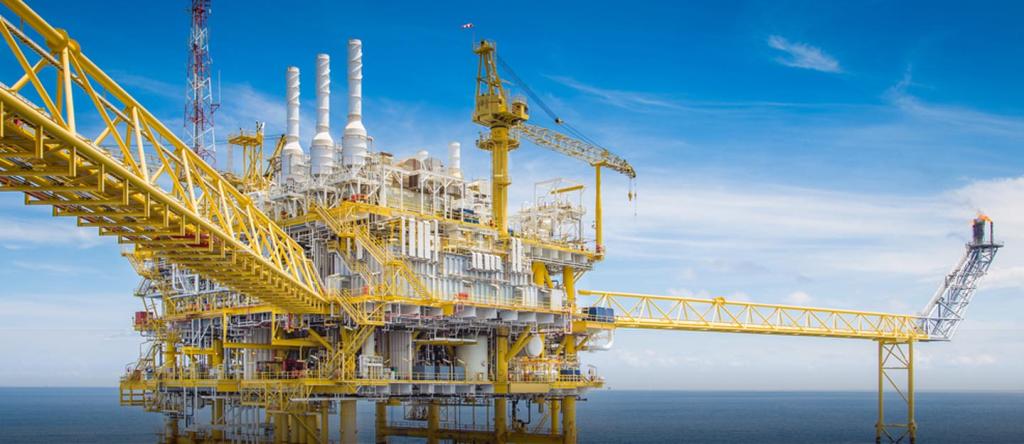
The UAE holds over 97.8 billion barrels of proven oil reserves, placing it among the world’s top five oil-reserve nations according to OPEC’s 2024 Annual Statistical Bulletin. Those reserves are distributed across six emirates, each governed by a separate regulatory body. Oplus International Realty covers this infrastructure context because energy dominance directly shapes economic stability, population growth, and property demand across Abu Dhabi and Dubai.
UAE Oil and Gas: Who Controls What
Three state-owned bodies manage the majority of production. Abu Dhabi National Oil Company (ADNOC) operates most onshore and offshore fields across Abu Dhabi through subsidiary joint ventures. Dubai Petroleum Establishment (DPE) manages Dubai’s five offshore fields in the Arabian Gulf. Sharjah National Oil Corporation (SNOC) oversees Sharjah’s onshore and offshore concessions.
Crude oil was first discovered in the UAE in 1958 at the Murban Bab Oil Field in Abu Dhabi. That single discovery set off a sequence of offshore and onshore finds that now spans every emirate except Fujairah, which focuses on refining and storage.
Abu Dhabi Oil Fields: Largest Reserves, Highest Output
Abu Dhabi accounts for the majority of UAE production. Its fields range from shallow-water offshore platforms to deep onshore operations in the desert interior.
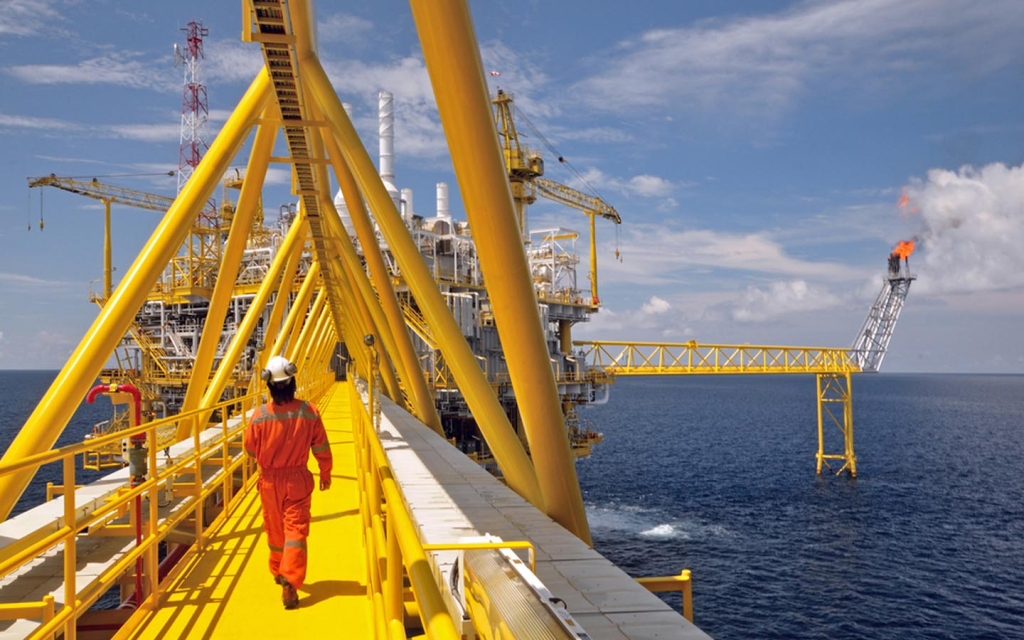
Umm Shaif Oil Field
Umm Shaif was discovered in 1958 and developed through a joint venture between British Petroleum and what is now TotalEnergies, operating as Abu Dhabi Marine Areas Ltd. ADNOC now manages and operates the field. According to ADNOC’s published field data, Umm Shaif holds total proven reserves of approximately 3.9 billion barrels and produces around 300,000 barrels per day.
Bu Hasa Oil Field
Discovered in 1962, Bu Hasa is operated by ADNOC through Abu Dhabi Company for On-Shore Oil Operations. ADNOC’s official technical documentation lists Bu Hasa’s total proven reserves at 6.52 billion barrels with a production capacity of 600,000 barrels per day, making it one of the higher-output onshore fields in the region.
Bab Oil Field
The Bab Oil Field is an onshore asset closely linked to the broader Murban field system. It contributes to the Murban crude blend that supports UAE global oil export contracts. Bab’s output feeds into Abu Dhabi’s flagship crude grade, which is priced on the Tokyo Commodity Exchange and serves as a benchmark for Middle Eastern light crude.
Upper Zakum Oil Field
Upper Zakum sits 84 kilometres north-west of Abu Dhabi city. It is operated by ZADCO, a joint venture between ADNOC, ExxonMobil, and the Japan Oil Development Company. The field covers approximately 1,200 square kilometres of shallow water, contains around 450 wells, and reaches between 7,000 and 8,000 feet below the seabed.
ADNOC’s stated production capacity for Upper Zakum is over 750,000 barrels per day. Ongoing investment under ADNOC’s 2030 production expansion plan targets an increase to one million barrels per day. Upper Zakum is consistently ranked among the largest offshore oil fields in the world by reserve volume.
Lower Zakum Oil Field
The Lower Zakum field, discovered in 1963 and operated by ADNOC Offshore, holds total proven reserves of approximately 17.2 billion barrels according to ADNOC’s official field documentation. It is the lower geological segment of the same Zakum structure as Upper Zakum, but managed under a separate operating company and concession structure.
Habshan Oil and Gas Field
Habshan is both a producing oil field and the origin point of the Abu Dhabi Crude Oil Pipeline (ADCOP), which runs 370 kilometres from Habshan to the Fujairah terminal on the Gulf of Oman. This route bypasses the Strait of Hormuz, giving the UAE an alternative export corridor. Habshan is also a large-scale sulphur producer, processing sour gas extracted during oil production.
Asab, Sahil, Shah, and Nasr Fields
Several additional fields operate across Abu Dhabi’s onshore and offshore zones. Asab produces oil and associated gas. Sahil is an onshore field in the western region. Shah is known for its sour gas and condensate volumes. The Nasr field is a more recent offshore development. The SARB complex adds further offshore capacity to the Abu Dhabi portfolio.
Ghasha Gas Field
The Ghasha Ultra-Sour Gas Project is an offshore development targeting gas and condensate volumes from reservoirs with high hydrogen sulphide content. The project runs alongside capacity expansion programmes at Bu Hasa, Asab, and Habshan under ADNOC’s gas self-sufficiency agenda, which targets full gas independence for the UAE by 2030.
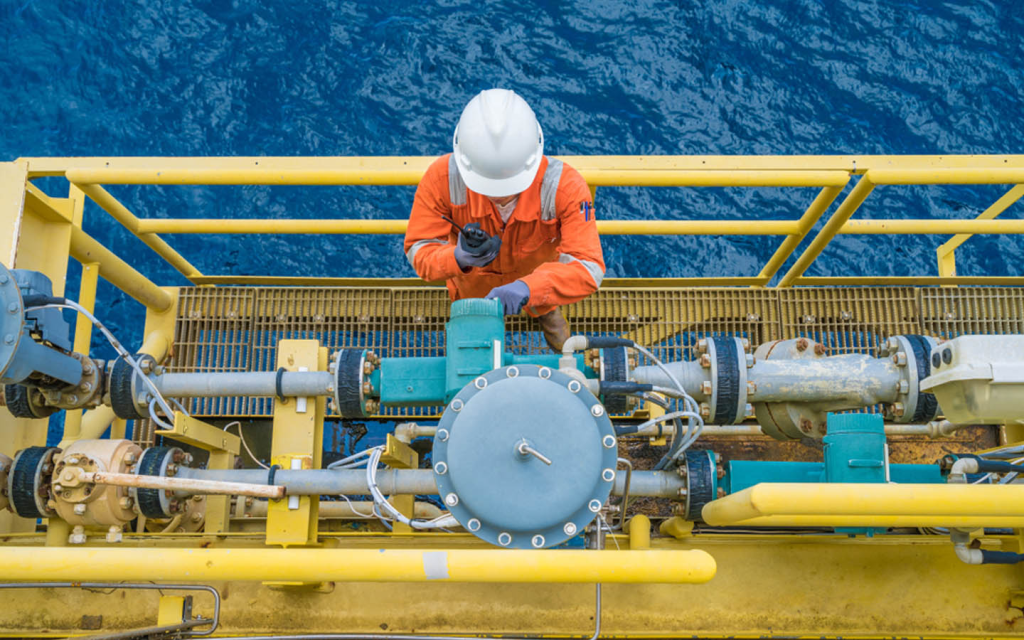
Dubai Oil Fields: Five Offshore Assets, One Operator
All five of Dubai’s oil fields are located offshore in the Arabian Gulf and managed exclusively by Dubai Petroleum Establishment (DPE).
Fateh Field
Fateh is Dubai’s oldest producing oil field. Named after Sheikh Rashid bin Saeed Al Maktoum, it was discovered in 1966 and began production in 1969. The field infrastructure includes 47 platforms — 31 satellite wellhead platforms, 16 central complex platforms — and 75 subsea pipelines.
South West Fateh Field
The South West Fateh field was discovered in 1972 and reached production within three years. Its infrastructure comprises 23 platforms, including 13 satellite wellhead platforms and 10 bridge central complex platforms.
Rashid Field
Discovered in 1973 and operational from 1979, Rashid is the smallest of Dubai’s five fields. It runs three platforms and six subsea pipelines. Crude extracted at Rashid is transferred to the Fateh field for processing.
Falah Field
The Falah field started production in 1978, six years after its 1972 discovery. Four platforms and nine underwater pipelines form the field infrastructure. Like Rashid, Falah routes its crude to South West Fateh for further processing.
Jalilah Field
Jalilah is the newest of Dubai’s five offshore fields. It operates two platforms and three subsea pipelines. No specific production figures have been published by Dubai Petroleum for this field.
Jebel Ali Gas Field
The Jebel Ali Gas Field is a major offshore discovery stretching across waters between Dubai and Abu Dhabi. Estimated reserves of around 80 trillion cubic feet of gas were announced — a volume that, if confirmed during development, would position it among the largest gas discoveries in the Middle East.
Oplus cannot confirm a commercial production start date for Jebel Ali. No public timeline has been confirmed by Dubai Petroleum or UAE energy authorities as of April 2026. Investors and developers referencing this field in feasibility analyses should treat all timelines as speculative until a formal development decision is announced.
Want to know the best real estate options in the UAE? Contact us today to inquire!
Contact us via WhatsAppSharjah Gas Fields
Sharjah’s energy assets are primarily gas-focused and spread across onshore and offshore concessions.
The Zora gas field, discovered in January 1979, sits within the Sharjah Western Offshore Concession block. It is operated by Dana Gas.
SNOC manages the Sajaa Assets, which include the Sajaa field, Moveyid, and the Kahaif natural gas and condensate fields. In January 2020, SNOC announced the discovery of the Mahani oil field in Sharjah.
The Al Hadiba Gas Field is the most recent onshore discovery in the Sharjah system. Located near the Sajaa area, it was confirmed through exploration wells Hedebah-01 and Hedebah-02. Al Hadiba contains both natural gas and condensates and is designated Sharjah’s fifth onshore gas field, directly supporting Sharjah’s stated goal of reducing energy import dependency.
Ras Al Khaimah: Saleh Field
The Saleh field in Ras Al Khaimah is located in the Strait of Hormuz. It was discovered in 1964 by Union Oil, a US-based company. Production did not begin for two decades. Output peaked in 1986 at approximately 70 million cubic feet of gas per day and 13,000 barrels of condensate per day.
Umm Al Quwain Gas Field
The Umm Al Quwain (UAQ) gas field sits 20 kilometres off the emirate’s coast. Its production capacity reaches up to 92 million standard cubic feet per day (MMscfd) of wet gas. Field Atlantis, a unit of Sinochem Corporation, handles development and operations.
Fujairah: Refining and Storage, Not Production
Fujairah has no producing oil or gas fields. Its role in the UAE energy supply chain is downstream — two refineries and 17 oil terminals handle storage, refining, and bunkering. The Fujairah terminal is the endpoint of the ADCOP pipeline from Habshan, making it a key node in Abu Dhabi’s Strait of Hormuz bypass strategy.
Onshore vs Offshore UAE Oil Fields: The Core Difference
Onshore fields in the UAE are located in desert terrain, primarily in Abu Dhabi’s western and inland regions. Access and logistics costs are lower, but the crude grades vary from light to sour depending on the reservoir. Offshore fields sit under the Arabian Gulf and require fixed platforms, floating storage units, or subsea infrastructure — significantly higher capital expenditure. Offshore fields tend to hold larger reserve volumes, particularly in Abu Dhabi’s Zakum complex.
What This Means for UAE Property and Investment
Energy production revenues fund infrastructure, population growth, and urban expansion across Abu Dhabi and Dubai. Abu Dhabi’s real estate market — including master-planned communities on Yas Island, Saadiyat Island, and Al Reem Island — is directly funded through ADNOC revenues channelled via the Abu Dhabi government. Fields with active expansion programmes, like Upper Zakum and Ghasha, signal sustained capital inflows into Abu Dhabi over the medium term.
For buyers and investors researching Abu Dhabi property with a long investment horizon, Oplus recommends reviewing Abu Dhabi’s energy production targets alongside ADREC transaction data — both tell the same story about demand trajectory.
Explore Abu Dhabi property investment options on the Oplus Abu Dhabi real estate page or read the Oplus guide to investing in Abu Dhabi. To discuss how UAE economic infrastructure affects your property search, contact an Oplus agent directly.
FAQ
Which emirate has the most oil reserves in the UAE?
Abu Dhabi holds the largest share of UAE oil reserves by a wide margin. The Lower Zakum field alone holds approximately 17.2 billion barrels of proven reserves according to ADNOC’s official field data, and the Upper Zakum complex adds further significant volume. Abu Dhabi’s total proven reserves represent the majority of the UAE’s approximately 97.8 billion barrel national total as reported by OPEC.
Does every UAE emirate have oil or gas production?
No. Fujairah does not produce oil or gas. Its contribution to the energy sector is in downstream refining, bunkering, and storage, with two refineries and 17 oil terminals. Ajman also has no significant producing fields. Productive emirates include Abu Dhabi, Dubai, Sharjah, Ras Al Khaimah, and Umm Al Quwain.
Who owns the oil fields in Dubai?
All five of Dubai’s offshore oil fields — Fateh, South West Fateh, Rashid, Falah, and Jalilah — are managed by Dubai Petroleum Establishment (DPE), which is a government entity. Dubai Petroleum also oversees any associated subsea infrastructure and pipeline networks connecting these fields to processing facilities.
What is the Jebel Ali Gas Field and when will it produce?
The Jebel Ali Gas Field is a large offshore discovery in UAE waters between Dubai and Abu Dhabi, with estimated reserves of around 80 trillion cubic feet of gas. As of April 2026, no commercial development timeline or production start date has been officially confirmed by Dubai Petroleum or UAE energy authorities. Any projected timelines in circulation are speculative.
How does the Abu Dhabi Crude Oil Pipeline (ADCOP) affect the UAE energy supply?
The ADCOP pipeline runs approximately 370 kilometres from the Habshan field in Abu Dhabi to the Fujairah terminal on the Gulf of Oman. It gives Abu Dhabi an export route that bypasses the Strait of Hormuz entirely, reducing exposure to potential disruptions in that waterway. The pipeline has a capacity of 1.5 million barrels per day and is a strategic asset in Abu Dhabi’s energy security framework.
What is the difference between ADNOC, ZADCO, and ADNOC Offshore?
ADNOC is the Abu Dhabi National Oil Company — the parent entity overseeing all Abu Dhabi production. ZADCO (Zakum Development Company) is a joint venture between ADNOC, ExxonMobil, and the Japan Oil Development Company, created specifically to operate the Upper Zakum field. ADNOC Offshore is an ADNOC subsidiary that operates several offshore concessions including the Lower Zakum field and the SARB complex.
Can members of the public visit UAE oil fields?
Active oil fields in the UAE are not open to the public. All producing sites are classified as secure industrial infrastructure. Entry is restricted to employees and approved contractors. Some insight into UAE energy history is available through official exhibitions and museum installations in Abu Dhabi, but drilling sites and offshore platforms have no public access programme.
About This Article This guide was produced by the Oplus International Realty editorial team, a licensed UAE real estate brokerage headquartered in Al Nahyan, Abu Dhabi. Production figures and field data are drawn from ADNOC official documentation, OPEC annual statistics, Dana Gas published reports, and publicly available UAE government energy announcements. Data is accurate as of April 2026. Oplus advises buyers and investors across Abu Dhabi and Dubai on property acquisition, off-plan investment, and market analysis.
Sources
- ADNOC official field fact sheets — adnoc.ae
- OPEC Annual Statistical Bulletin 2024 — opec.org
- Dana Gas investor disclosures — danagas.com
- Sharjah National Oil Corporation official releases — snoc.ae
- UAE Ministry of Energy and Infrastructure — moei.gov.ae
- ADNOC Offshore operational data — adnoc.ae/offshore