

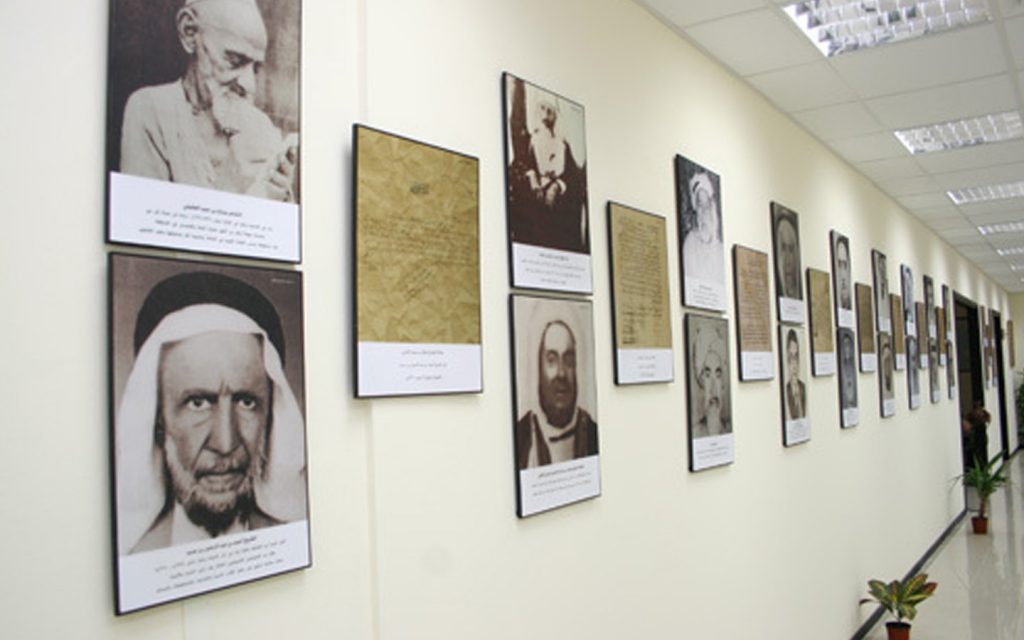
Juma Al Majid Center for Culture and Heritage in Deira houses more than 350,000 books and a large collection of rare manuscripts, according to the center’s official information. It is not a typical public library. The center is built mainly for researchers, postgraduate students, and people working with heritage and archival material.
What Juma Al Majid Center actually is
Juma Al Majid Center for Culture and Heritage was established in 1989 as a specialist institution focused on preserving manuscripts, documents, and cultural records. Its role is closer to a research and archival center than a general-use library. That distinction matters, because many readers expect a standard borrowing library and arrive with the wrong idea.
Why the center matters
The center has value because it brings together rare printed works, manuscripts, periodicals, maps, and archival material that would be difficult to access through ordinary library systems. For anyone studying Arabic heritage, Islamic history, manuscript culture, or Gulf archival material, this creates a serious research advantage.
How it differs from a public library in Dubai
The biggest difference is purpose.
A public library is designed for reading, borrowing, and broad community access. Juma Al Majid Center is designed for documentation, preservation, specialist reference use, and academic support. That means the average casual visitor may find it interesting, but researchers are the people who benefit most from it.
Library size and collection depth
According to the center’s published information, the main library contains around 350,000 books in subjects such as Arab heritage, Islamic studies, Arabic language, and Arab-Islamic history. The collection also includes books in Arabic, English, Persian, and French.
The center also states that it has acquired material from more than 80 private libraries in different countries. That adds depth beyond what a standard city library usually offers.
Its periodicals collection is also notable, with roughly 7,000 titles and a very large archive of issues across multiple languages.
Manuscripts are the center’s strongest asset
The manuscripts division is one of the main reasons the center stands out. Based on the article’s source material, the center includes:
- More than 8,000 original manuscripts
- Around 15,000 stored titles across different subject areas
- Around 9,000 microfilms covering more than 80,000 titles
- More than 33,000 digital manuscripts
That scale makes it more than a niche archive. It is a serious reference institution for manuscript-based work.
Preservation and restoration work
The preservation and restoration department appears to be a major part of the center’s identity. The article states that damaged manuscripts, newspapers, maps, and magazines are restored there, and that storage conditions are controlled between 15 to 20 degrees Celsius with humidity between 50 to 60 percent.
That matters because the center is not only collecting heritage material. It is actively preserving it. For archival institutions, that is a stronger trust signal than collection size alone.
What researchers can actually use
The center is not only about storage. It also supports research activity through several practical functions:
- Guidance for researchers looking for relevant manuscripts
- Cataloguing and classification support
- Access to digital and physical archival material
- Photocopying and document-copy services
- Communication with outside libraries when material is needed for research
This makes the center useful for more than browsing. It functions as a working research support environment.
Who should visit the center
This center is a strong fit for:
- Academic researchers
- Postgraduate students
- Historians
- Heritage specialists
- Anyone working on Arabic manuscripts or archival studies
It can also suit readers with a serious interest in cultural history, but it is not designed primarily as a tourist attraction or casual reading destination.
Who may not benefit much
This is where the original article needed more honesty.
The center is not the right fit for someone who simply wants a comfortable public library, a general reading space, or a light cultural outing. It is also not the ideal place for readers expecting a normal borrowing system. Its strength is depth, not convenience.
That limitation is important, and many competing articles skip it.
Sections and departments inside the center
The article describes several parts of the institution, including:
National Heritage Section
This section focuses on UAE and GCC historical material, including books, maps, photographs, and documents. It helps preserve regional cultural memory and gives researchers access to material beyond ordinary reference collections.
Preservation, Processing, and Restoration Department
This department handles restoration, repairs, rebinding, and preservation work for manuscripts and printed material. It also appears to play a role in training and exhibitions related to restoration practice.
Manuscripts Department
This is one of the most important parts of the center. It covers acquisition, researcher support, cataloguing, storage, and copying. For specialists, this is likely the main reason to use the institution.
Studies, Publications, and Foreign Affairs
This area supports the center’s publishing, translations, reports, and cultural relations with institutions outside the UAE.
Researchers Services Section
This section supports scholars with access to information, internet-based searches, and copies of relevant documents.
Location in Dubai
The center is located on Salahuddin Road, Deira. That places it in one of Dubai’s older and historically significant urban districts, closer in character to heritage-focused destinations than to newer lifestyle zones.
Verified operational details
Location: Salahuddin Road, Deira, Dubai
Opening hours:
Departments: 07:30 am – 05:00 pm (Monday to Friday)
Reading Hall: 07:30 am – 07:30 pm (Saturday to Friday)
Phone:
+971-4-608-4220
Email:
[email protected]
Operational details should only stay in the final version if they are confirmed directly from the official source on the publication date.
Final verdict
Juma Al Majid Center for Culture and Heritage is one of Dubai’s most valuable specialist research institutions for manuscripts, archives, and Arab-Islamic heritage material. Its strength is not broad public appeal. Its strength is depth, preservation, and academic usefulness.
That makes it highly relevant for researchers and serious heritage readers, but less suitable for casual visitors looking for a standard library experience.
FAQ
Not in the usual sense. It is better understood as a specialist research and heritage institution. It contains books and reference material, but its main value lies in manuscripts, archives, preservation work, and support for academic research rather than general public borrowing.
The center is most useful for researchers, postgraduate students, historians, and heritage specialists. Anyone working with Arabic manuscripts, archival studies, Islamic history, or Gulf cultural material is likely to benefit more than a casual visitor.
Yes. Based on the source material you provided, the center holds thousands of original manuscripts, digital manuscripts, and microfilm records. This is one of its strongest features and one of the main reasons it stands out from normal libraries.
Possibly, but the experience may be limited for people who are not doing serious research. The center is not built as a tourist attraction or a general reading library, so casual visitors may not get as much value from it as academic users do.
Its main difference is purpose. It focuses on preservation, cataloguing, research support, and manuscript access rather than ordinary borrowing or community reading. That makes it more specialized and more useful for research-driven visits.
No. The article states that the center includes books and periodicals in several languages, including Arabic, English, Persian, and French. Even so, its strongest identity remains rooted in Arabic heritage and related historical material.
Yes. The National Heritage Section appears especially relevant for people researching the UAE and the wider GCC. It includes documents, maps, books, and photographic material linked to regional history and cultural preservation.