

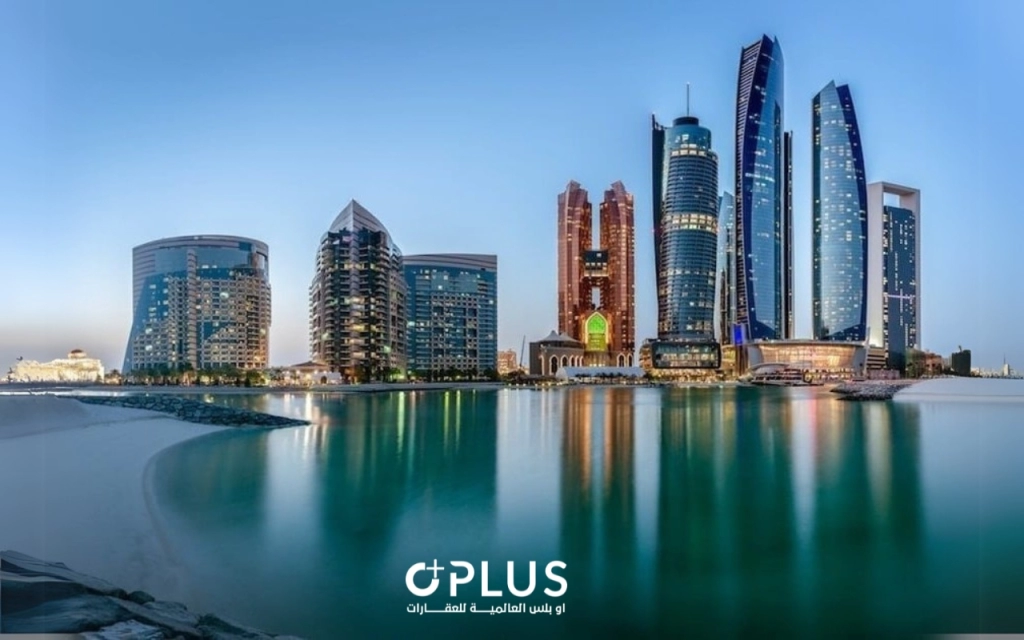
The future of real estate in Abu Dhabi looks firm rather than speculative. According to Abu Dhabi Real Estate Centre, the emirate recorded AED 142 billion in total transaction value in 2025, up 44% year on year, while long-term supply projections point to market stability through 2030.
The short answer
Abu Dhabi’s real estate future is likely to stay positive over the next few years, with the strongest momentum in prime housing, off-plan communities, and Grade A offices. The main support comes from population growth, foreign capital, tight supply in top locations, and the emirate’s long-cycle planning model. Savills says residential sales passed 20,000 transactions in 2025, while CBRE says office occupancy reached close to 98% with rents up 12% year on year.
Why the market has room to keep growing
The strongest base case is not just higher transaction value. It is the mix behind it. ADREC says foreign investment drove 69% of Abu Dhabi’s overall market growth in 2025, and residential sales rose 67% to AED 76 billion. That matters because markets with deeper outside capital usually have more resilience than markets driven by one local demand pool.
Savills adds another layer to that picture. It says Abu Dhabi posted its strongest residential year on record in 2025, with Q4 marking the highest quarterly transaction volume on record. That kind of finish usually supports momentum into the next cycle rather than pointing to a sharp drop straight after.
Residential real estate should stay the main growth engine
Housing looks set to remain the clearest growth story. Savills says off-plan sales accounted for 70% of total residential sales in 2025 and 80% of Q4 activity, while average sales rates increased 15% year on year. CBRE also says residential transaction volumes surged 50% and values rose 61% versus 2024, with overall residential values up nearly 32%.
That points to a future where new master-planned communities, branded homes, and waterfront districts keep drawing most of the attention. It also suggests the next phase of growth may remain strongest in areas where new launch activity meets lifestyle demand.
Office demand looks tighter than many buyers expect
Abu Dhabi’s office future looks stronger than its older image as a slower corporate market. CBRE says average office occupancy reached close to 98% in 2025 and rents rose 12% year on year, with demand especially strong in ADGM where Grade A supply remains limited.
That is a major signal. When office demand stays ahead of quality supply, the effect usually goes beyond leasing. It improves the case for mixed-use development, investor interest in commercial assets, and land values around top business clusters.
The next phase will likely be more selective
The future is positive, but it will not be equal across every segment. Prime and well-located stock should keep outperforming. Older or less differentiated projects may not move at the same pace. CBRE says tight supply conditions and structural demand expansion continue to support residential momentum heading into 2026, while Savills says limited near-term supply should keep supporting demand.
That means selection matters more now. In the next phase, the winner is less likely to be “anything in Abu Dhabi” and more likely to be assets with one of three strengths: location, quality, or scarcity.
What supports the long-term outlook to 2030
ADREC’s 2025 market report is one of the clearest signals for the long view. It says long-term supply projections indicate sustained stability through 2030. That is important because it points to managed growth rather than a loose development cycle.
This is where Abu Dhabi often differs from faster-moving markets. The emirate tends to benefit from a steadier planning model, stronger institutional backing, and a lower-noise launch environment. That can limit short bursts of speculation, but it can also improve long-hold confidence.
The strongest demand themes to watch
Three themes are likely to shape the next few years.
Looking for the perfect property? Contact us now for a free consultation!
Contact us via WhatsAppFirst, prime residential demand should stay active, especially where new launches offer strong lifestyle positioning. Savills says apartments made up 67% of total transactions in 2025, while villa and townhouse demand strengthened in Q4.
Second, foreign capital should remain important. ADREC says foreign investment was a major driver of 2025 growth.
Third, prime office stock should stay tight unless new Grade A completions arrive at scale. CBRE points to new development initiatives, including Maryah East and One Maryah Place, as signs of confidence in the capital’s commercial sector.
The main risk
The positive story does not remove risk. The most obvious risk is that buyers assume every asset will rise with the market. That is rarely how mature growth cycles work. Another risk is affordability pressure if prices and rents keep rising faster than household or occupier budgets. JLL noted in late 2025 that landlord-favourable office conditions were likely to continue until meaningful new supply enters the market.
So the future looks good, but it looks strongest for scarce product, high-quality stock, and places where end-user demand is real.
Who Abu Dhabi real estate suits in the next cycle
This market should suit long-term investors, end-users focused on quality communities, and buyers who prefer lower volatility than a faster-flipping market. It should suit pure short-term speculators less, because Abu Dhabi’s strength is usually compounding value over time rather than instant spikes across the board. That reading fits the official ADREC outlook and the tighter-supply view from CBRE and Savills.
Final view
The future of Abu Dhabi real estate looks positive through the rest of 2026 and into the wider 2030 horizon. The best case is built on real demand, foreign capital, controlled supply, and a growing split between prime assets and average stock. The market still needs careful project selection, but the broad direction remains favourable.
FAQ
The approved sources reviewed here point to a positive outlook rather than a one-year spike. ADREC says long-term supply projections indicate stability through 2030, while CBRE and Savills both describe strong demand conditions carrying into 2026.
In many cases, yes. Abu Dhabi tends to reward patient capital more than fast speculation because growth is usually tied to planning, infrastructure, and institutional demand rather than constant short-cycle launches. That matches the steady outlook described by ADREC, CBRE, and Savills.
Residential looks strongest at the broad market level, especially off-plan and prime projects, while Grade A offices also look well supported because occupancy is high and supply is tight. That conclusion is supported by CBRE’s office data and Savills’ residential results.
Yes. ADREC says foreign investment drove 69% of overall market growth in 2025, which makes international demand one of the clearest future support factors for the market.
It could affect weaker projects, but the approved sources reviewed here do not point to a loose market in the near term. ADREC sees stability through 2030, and Savills says limited near-term supply should continue supporting demand.
The biggest opportunity appears to be in high-quality assets where supply is limited and demand is deep. That includes prime homes, well-positioned off-plan communities, and Grade A offices in top business zones.