

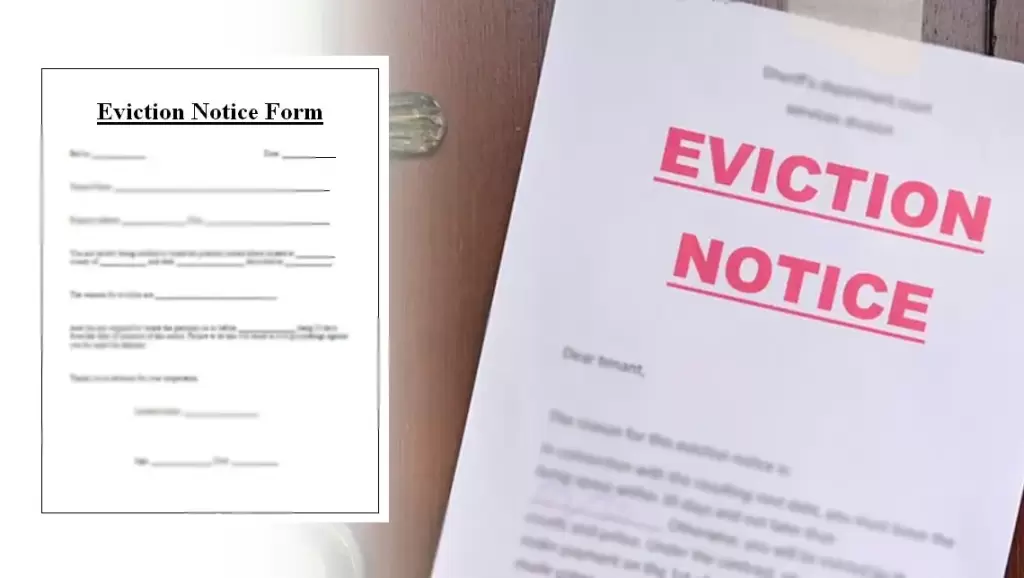
Dubai eviction notices are governed by Article 25 of Law No. 26 of 2007, amended by Law No. 33 of 2008, which defines when a landlord may legally remove a tenant from a property. The law separates eviction into two main categories: eviction during the lease due to tenant breach and eviction at lease expiry for legitimate reasons such as sale or personal use.
In most non-breach situations, landlords must provide 12 months’ advance eviction notice, served through a notary public or registered mail. If eviction is based on tenant breach — such as non-payment of rent — the tenant must be given 30 days to remedy the violation before legal action can begin.
These regulations are enforced through Dubai’s Rental Dispute Settlement Centre (RDSC) under the Dubai Land Department, which reviews eviction claims and issues binding decisions.
Understanding the correct eviction rules helps both landlords and tenants avoid costly disputes and ensures compliance with Dubai’s tenancy regulations.
When can a landlord legally issue an eviction notice in Dubai
A landlord can only evict a tenant if the reason falls within the specific circumstances listed in Article 25 of Dubai’s tenancy law.
Eviction is permitted only in two scenarios:
1️⃣ Eviction during the lease due to tenant breach
This occurs when the tenant violates contractual obligations.
2️⃣ Eviction at lease expiry for lawful non-breach reasons
These include sale of the property, personal use by the owner, demolition or major renovation.
Dubai law does not allow arbitrary eviction, meaning landlords cannot remove tenants simply because they want to increase rent or change tenants.
This strict framework ensures stability in Dubai’s rental market and protects both parties from unfair removal.
Article 25 Dubai tenancy law explained
Article 25 divides eviction rules into two legal categories that determine both the eviction grounds and notice period.
| Eviction Type | Scenario | Notice Period |
|---|---|---|
| Tenant breach | Non-payment of rent, illegal use, subletting | 30 days |
| Non-breach eviction | Sale, personal use, demolition, renovation | 12 months |
The notice must clearly state:
- Legal reason for eviction
- Property details
- Tenant and landlord names
- Vacating deadline
If these elements are missing, the eviction notice may be invalidated by the Rental Dispute Settlement Centre.
Eviction during the lease: tenant breach cases
A landlord may evict a tenant during the active lease if a recognized breach occurs.
Valid breach grounds include:
- Failure to pay rent after receiving written notice
- Subletting without landlord permission
- Illegal use of the property
- Severe structural damage to the property
- Violating municipal planning rules
- Leaving commercial property vacant for extended periods
However, eviction is not immediate.
For example, if the tenant fails to pay rent, the landlord must first issue a written demand notice giving 30 days to settle the payment.
If the tenant does not comply within that period, the landlord may then file a case at the Rental Dispute Settlement Centre.
Eviction at lease expiry: the 12-month rule
When there is no tenant breach, eviction can only occur at the end of the lease contract and requires a 12-month advance notice.
The most common legal grounds are:
- Property sale
- Personal use by the owner or a first-degree relative
- Major renovation requiring vacancy
- Property demolition or reconstruction
Dubai law requires that this notice be served through a notary public or registered mail.
If the notice is sent by email, WhatsApp or informal communication, it is not legally valid.
Additionally, landlords claiming personal use must prove they do not own another suitable property for the same purpose.
How eviction notices must be legally served in Dubai
The eviction notice must follow strict procedural rules.
Valid service methods include:
Notary Public
A notarized eviction notice is the most common and legally reliable option.
Registered mail or courier
Delivery confirmation must be available as proof.
Informal channels such as email, SMS, or WhatsApp do not meet the legal requirements under Dubai tenancy law.
Looking for the perfect property? Contact us now for a free consultation!
Contact us via WhatsAppThe notice must also be written in Arabic or accompanied by a certified legal translation.

Step-by-step eviction process through the Rental Dispute Centre
If a tenant refuses to vacate after a valid eviction notice, the landlord must follow a legal process.
Step 1
Confirm a valid ground under Article 25.
Step 2
Serve eviction notice through notary or registered mail.
Step 3
Allow the required notice period (30 days or 12 months).
Step 4
File a case at the Rental Dispute Settlement Centre (RDSC).
Step 5
Attend hearings and submit documentation.
Step 6
Receive court judgment.
Step 7
If necessary, enforcement is handled by the Execution Department.
Tenants may remain in the property until a legal eviction order is issued.
Tenant rights and legal protections in Dubai
Dubai law provides significant protection to tenants.
Tenants have the right to:
- Receive proper eviction notice
- Challenge eviction in court
- Stay in the property until a judgment is issued
- Claim compensation for unlawful eviction
For example, if a landlord evicts a tenant claiming personal use but then rents the property to another tenant, the original tenant may claim financial compensation.
Landlords also cannot change locks, disconnect utilities, or remove belongings without a court order.
Such actions may result in legal penalties.
Common eviction mistakes landlords make
Even valid eviction cases can fail due to procedural errors.
Common mistakes include:
- Sending eviction notice through WhatsApp or email
- Issuing less than 12 months’ notice
- Attempting mid-contract eviction without breach
- Claiming personal use while owning other suitable property
- Failing to obtain renovation permits
- Removing tenants without court authorization
These mistakes can lead to case dismissal and possible compensation claims.
FAQ — Eviction Notice Dubai
If eviction is based on tenant breach, the landlord must give 30 days written notice. If eviction occurs at lease expiry for reasons such as sale or personal use, the landlord must provide 12 months’ advance notice.
Only if the tenant violates the lease agreement. Examples include non-payment of rent, illegal use of the property or unauthorized subletting.
No. Dubai law requires eviction notices to be served through notary public or registered mail. Informal communication channels are not legally valid.
Yes. Tenants can file a case at the Rental Dispute Settlement Centre if they believe the eviction notice is unlawful.
The landlord must file an enforcement case with the Rental Dispute Settlement Centre, which may issue a legal eviction order.
Yes. However, the landlord must give 12 months’ notarized notice before the contract expiry.
Yes, but the landlord must prove that the renovation requires the property to be vacant and must obtain municipality approvals.
Yes. If a landlord violates eviction rules — for example claiming personal use but re-renting the property — tenants may claim compensation.
Conclusion
Evictions in Dubai follow a strict legal framework under Article 25 of the tenancy law, designed to balance landlord rights with tenant protections.
Two key rules dominate the system:
30-day notice for tenant breach cases
12-month notarized notice for non-breach eviction
Failure to follow the correct procedure — including proper notice delivery — can invalidate the eviction and expose landlords to legal claims.
For both landlords and tenants, understanding these rules is essential before starting or responding to an eviction process.